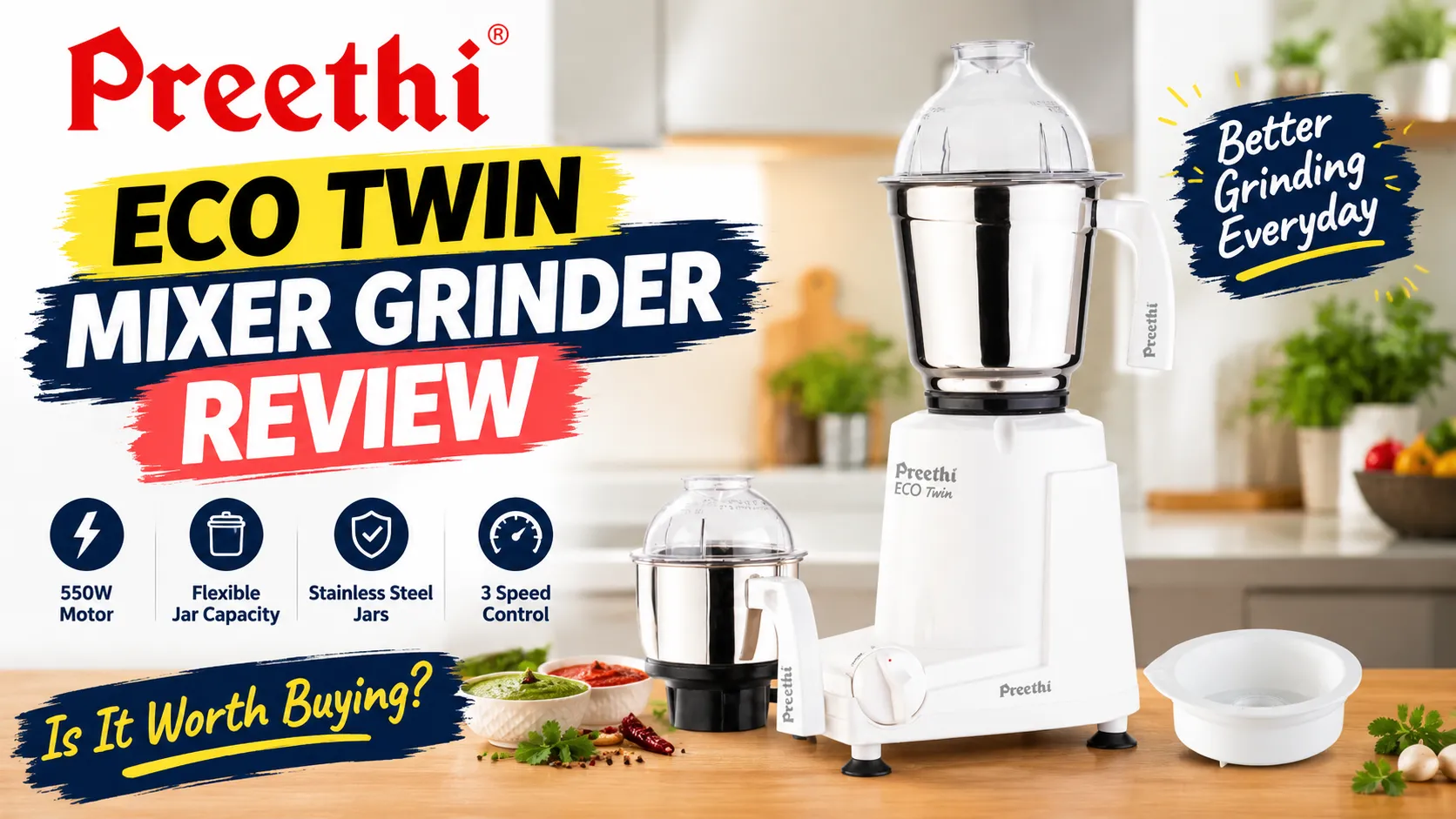
Preethi Eco Twin Mixer Grinder Review: Features, Pros, Cons & Is It Worth Buying?

Preethi Eco Twin Mixer Grinder Review
If you regularly prepare chutneys, grind spices or make pastes for Indian cooking, a mixer grinder can save time in the kitchen. But choosing the right one isn’t just about motor power. Jar capacity, grinding needs, electrical compatibility and warranty support matter too.
The Preethi Eco Twin Mixer Grinder is a conventional mixer grinder with a 550W motor, stainless-steel jars and a flexible jar-capacity system. However, there’s an important detail buyers should know before ordering: the documented MG 146 version operates at 110V AC, so it isn’t suitable for direct connection to a standard Indian 230V socket.
In this Preethi Eco Twin Mixer Grinder Review, we’ll examine its specifications, practical uses, advantages, limitations, customer feedback and alternatives to help you decide whether it’s the right appliance for your kitchen.
ReviewSpot editorial note: This is a research-based review, not a hands-on test. Specifications are based on the available MG 146 manual and published retailer information. We haven’t independently tested its grinding performance or verified a current Indian-market price.
Overall Verdict
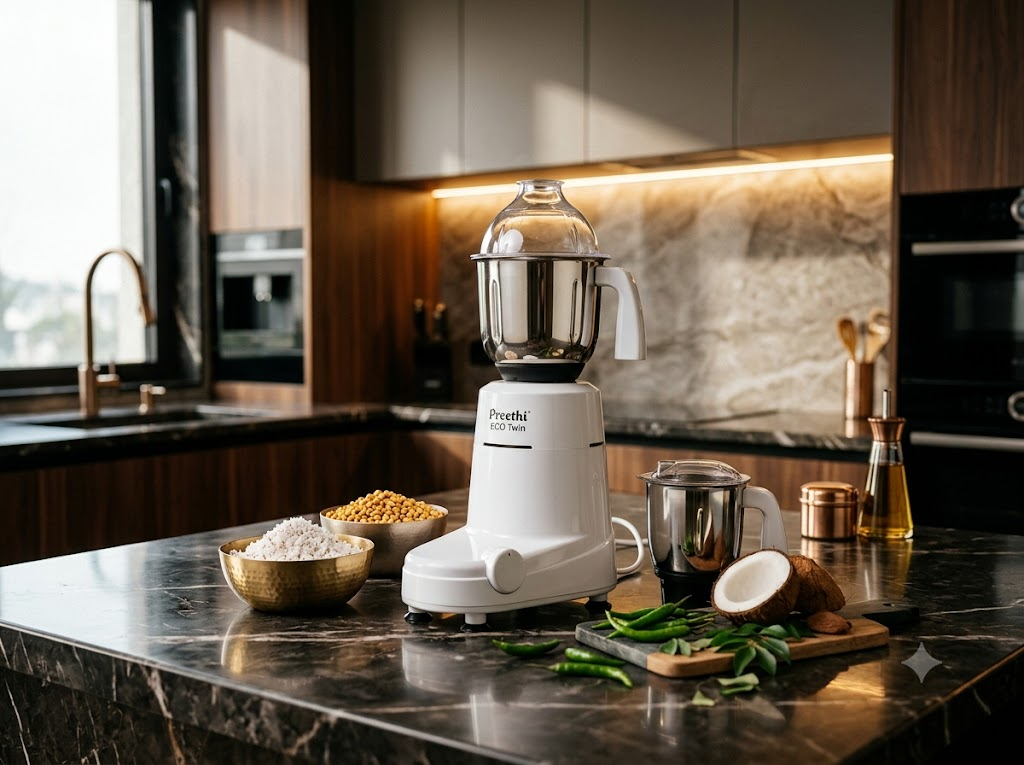
The Preethi Eco Twin offers a straightforward mixer-grinder design with a 550W motor, stainless-steel jars and three-speed control. Its flexible lids allow smaller jar configurations, which can be useful when preparing modest quantities of spices or chutney.
However, the available MG 146 manual specifies 110V AC at 60Hz. Buyers in India should not purchase this version for direct use with a standard 230V household supply.
Our recommendation: Consider the Eco Twin only if the exact version’s electrical rating matches your supply and the seller provides suitable warranty and service support. For an Indian household, a compatible domestic model such as the Philips HL7756/00 or another 230V mixer grinder is a more practical starting point.
| Review detail | Our assessment |
|---|---|
| Product | Preethi Eco Twin MG 146 |
| Motor | 550W |
| Jar configuration | Two main jars with flexible capacity options |
| Best for | Daily grinding preparing chutneys and making pastes for Indian dishes |
| Main advantage | Motor suitable for most of the grinding with 2 lightweight jars. |
| Main concern | Need to check warranty and electrical specifications match your location. |
| Warranty | One year listed in the MG 146 manual |
| Price | Mostly sold in USA/Canada market at price of $123.95 |
Quick Buying Decision
Who Should Consider the Preethi Eco Twin?
- Buyers who want a simple mixer grinder for routine food preparation.
- People who prepare small quantities of chutney and dry spices.
- Buyers who value a conventional three-speed rotary control.
- Households with an electrical supply compatible with the exact model.
- Buyers who can confirm warranty coverage and access to replacement parts.
Who Should Skip It?
- Indian buyers looking at the 110V MG 146 for direct use with a 230V socket.
- People who need a clearly documented domestic warranty and service arrangement but cannot verify one for the offered unit.
- Households that regularly prepare large quantities of batter and need a more heavy-duty setup.
- Buyers who want additional food-processing or juicing attachments.
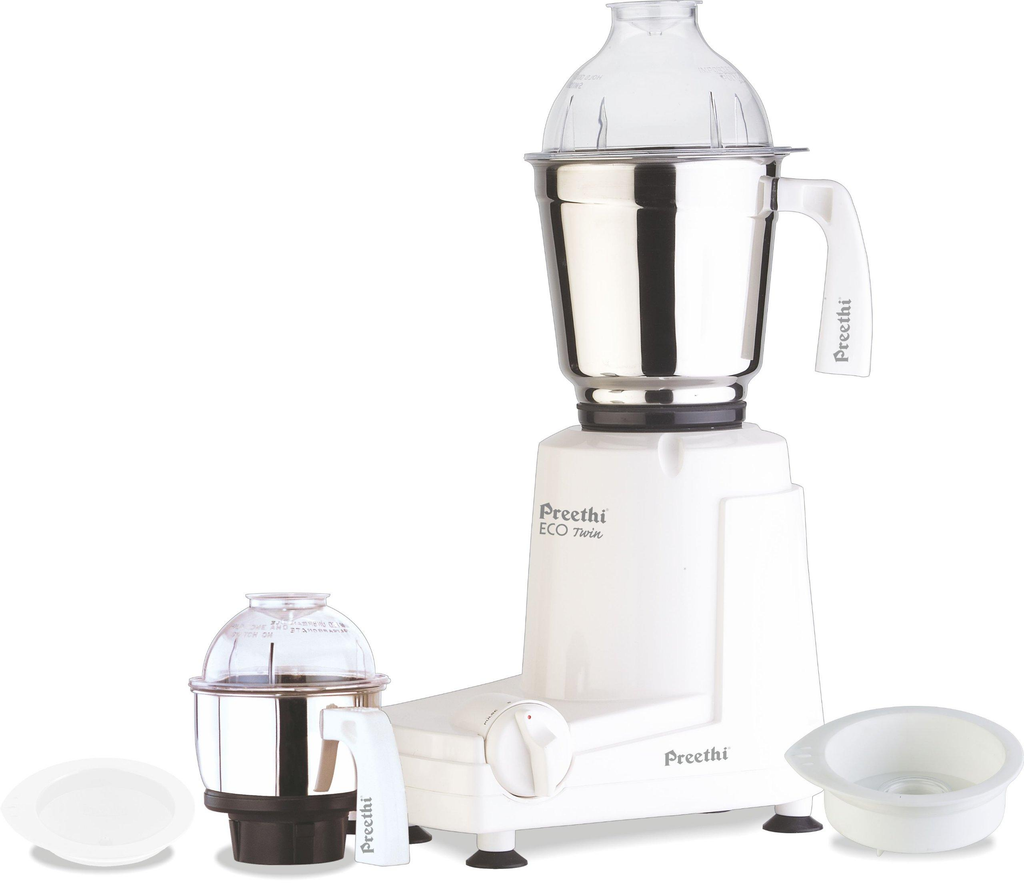
Preethi Eco Twin Mixer Grinder: Specifications
The MG 146 instruction manual lists the following technical details. Its jar capacities refer to nominal jar sizes; the recommended working quantity is lower and depends on whether you’re grinding wet or dry ingredients.
Before buying, understand how motor power, jar capacity and blade design affect everyday grinding.
| Specification | Preethi Eco Twin MG 146 |
|---|---|
| Brand | Preethi |
| Model number | MG 146 |
| Motor power | 550W |
| Rated voltage | 110V AC, 60Hz |
| Motor speed without load | Approximately 18,000 RPM |
| Motor speed under load | Approximately 10,500 RPM |
| Speed control | Three speeds and inching function |
| Main jar | 1.5L |
| Main jar with flexi lid | 1.0L |
| Smaller jar | 0.5L |
| Smaller jar with flexi lid | 0.3L |
| Jar material | Stainless steel |
| Blade material | Stainless steel |
| Body material | ABS plastic |
| Dome material | Polycarbonate |
| Power cord | Approximately 2 metres |
| Rated operating specification | 30-minute rating stated in the manual |
| Weight | Approximately 4kg gross |
| Product dimensions | Not clearly specified in the manual |
| Warranty | One year stated in the available manual |
| Country of manufacture | India, according to the manual |
Source: Preethi Eco Twin MG 146 instruction manual and warranty document.
Jar capacity versus working capacity: The manual lists a 1.5L main jar, but its rated capacity for wet grinding is 0.4L. For the 0.5L chutney jar, the listed wet-grinding capacity is 0.2L. These distinctions matter because the nominal jar size isn’t the same as the amount of food you should process at once.
The manufacturer also specifies that the MG 146 should be connected to a 110V AC supply only. Do not connect it directly to an Indian 230V socket.
Different blade designs serve different purposes, so learn about mixer grinder blade types before choosing a model.
Pros and Cons of the Preethi Eco Twin Mixer Grinder
| Pros 👍 | Cons 👎 |
|---|---|
| 550W motor for routine grinding tasks on the documented variant | Not necessarily the right choice for frequent heavy-duty grinding |
| Two jars cover common small- and medium-batch preparation | Fewer jar options than some three-jar alternatives |
| Smaller jar configuration is useful for chutneys and spices | Small batches may still need scraping or repositioning, depending on ingredients |
| Stainless-steel jars and blades are listed | Stainless steel alone doesn’t guarantee long-term durability |
| Simple, conventional mixer-grinder design | Customer reviews mention noise and some product-specific issues |
| Worth comparing if priced competitively | Current Indian price, warranty and domestic variant need verification |
| Compact jar arrangement may suit a kitchen with limited storage | Not a food processor; it won’t replace every chopping or slicing appliance |
If you’re comparing affordable models, see our guide to the best mixer grinders under ₹3,000 before choosing one.
The biggest drawback to consider
The biggest concern isn’t simply the motor rating. It’s whether you’re buying the correct regional variant and whether its jars, warranty and electrical specifications match your needs.
A good price is not a bargain if the product arrives with incompatible voltage requirements or if replacement parts and after-sales support are difficult to obtain.
Also, don’t judge the product solely by the number of watts. A well-designed 500W mixer can suit routine cooking better than a poorly matched higher-wattage model. Your ingredients and intended use matter more than the number printed on the box.
4. What Customers Are Saying About the Preethi Eco Twin
Customer reviews offer useful clues, but they aren’t controlled product tests. They can also refer to different versions, sellers and purchase periods.
What customers like
The Walmart listing for the 550W Eco Twin shows an overall rating of 4 out of 5 from 56 ratings, alongside 36 written reviews at the time the page was retrieved. The reviews include both positive and negative experiences for below tasks.
- Grinding spices and nuts
- Everyday Indian cooking
- Wet and dry grinding
- Ease of cleaning
- Useful jar sizes
What customers don’t like
- Noise: Some customers describe the mixer as loud. Noise is common with mixer grinders, but the actual sound level of this model hasn’t been independently measured here.
- Lid fit and handling: A MouthShut reviewer reported needing to hold a jar lid down while operating the appliance. Another Walmart reviewer described the lids as tight to open and close. These are individual reports, not proof that all units have the same issue.
- Inconsistent experiences: Walmart reviews include complaints about a unit that didn’t work on arrival, a poor batter result, and a loose switch. A separate listing also contains a report of a blade chipping. These complaints warrant checking seller reputation, return eligibility and warranty coverage, but they don’t establish a verified defect rate.
Why the Preethi Eco Twin May Be Worth Considering
The main appeal of the Eco Twin is its straightforward approach to everyday grinding. It doesn’t rely on a long list of attachments or complicated controls.
Its practical value depends on the ingredients you prepare, the quantity you need and whether the model is electrically compatible with your kitchen.
1. 550W Motor for Everyday Grinding
The Eco Twin MG 146 uses a 550W universal motor. Its manual lists approximate speeds of 18,000 RPM without a load and 10,500 RPM under load.
These figures help describe the motor, but they don’t independently establish grinding quality. Blade geometry, ingredient quantity, moisture and jar design also affect the result.
For buyers who prepare ordinary spices, chutneys and pastes, a conventional mixer grinder may be sufficient. If you regularly grind large batches or thick mixtures, compare the Eco Twin with models designed for more demanding workloads.
2. Flexible Jar Capacities
One of the model’s more distinctive features is its flexi-lid arrangement.
The main jar has a nominal capacity of 1.5L, which can be reduced to 1.0L using the relevant lid. The smaller jar has a nominal capacity of 0.5L and can be configured for 0.3L use.
This arrangement may help when you prepare smaller batches and don’t want to use a large jar for every task.
However, don’t confuse smaller nominal capacity with a guarantee of finer grinding. The results still depend on the ingredients and the quantity being processed.
3. Stainless-Steel Jars and Blades
The manual specifies stainless-steel jars and stainless-steel blade assemblies.
Stainless steel is a practical material for frequent food preparation. It is generally straightforward to wash and doesn’t require the same handling as fragile glass containers.
Still, the material alone doesn’t establish how long the couplers, blade assembly, lids or seals will last. Proper cleaning, drying and maintenance remain important.
4. Three-Speed Control and Inching
The MG 146 has a rotary switch with three speeds and an inching function.
The inching function allows brief operation rather than running the motor continuously. This can be useful when following recipes that call for short pulses.
The control system is relatively simple, but it doesn’t offer the convenience of programmable settings or automatic grinding modes.
5. A Conventional Mixer-Grinder Design
If you primarily need grinding rather than chopping, slicing, shredding or juicing, a conventional mixer grinder can be a sensible appliance category.
You don’t necessarily need to pay for features you won’t use. But compare the complete package before deciding that a simpler design offers better value.
For Indian households, the key condition remains the same: the model’s voltage and warranty must match your requirements.
What Can the Preethi Eco Twin Handle?
The manual describes the main jar as suitable for dry grinding, wet grinding and liquidising, while the smaller jar is intended for smaller grinding quantities.
| Kitchen task | Our assessment | What to consider |
|---|---|---|
| Dry spice grinding | Intended use | Work in suitable batches and keep the jar dry |
| Chutney preparation | Intended use | The smaller jar is useful for modest quantities |
| Ginger-garlic paste | Potentially suitable | Batch size and moisture affect consistency |
| Wet masala | Intended use | Follow the working-capacity limits |
| Dosa or idli batter | The manual includes wet-grinding instructions | Frequent large-batch users should compare more heavy-duty alternatives |
| Large quantities of food | Less convenient with limited working capacity | Consider larger working capacity or a different jar configuration |
| Juicing and food processing | Not established as dedicated functions of the documented configuration | Check the included accessories rather than assuming they are supplied |
For Dry Masalas
The manual includes dry grinding of ingredients such as roasted cereals, rice, pulses, chilli and spice mixtures.
For better results, keep the jar and ingredients dry when preparing powders. Process suitable quantities rather than filling the jar to its maximum nominal capacity.
For Chutneys
The smaller jar is designed for small quantities of wet and dry grinding. That can be convenient for preparing chutney or spice mixtures without using the larger jar.
However, the manual lists a 0.2L wet-grinding capacity for the 0.5L jar. If you frequently prepare larger quantities of coconut chutney, check whether that working capacity suits your household.
For Dosa and Idli Batter
The manual includes instructions for wet grinding ingredients used in dosa, idli and similar preparations.
That doesn’t guarantee the model will produce the consistency or batch size every household expects. If you prepare batter frequently, compare the rated working capacity, motor specifications and operating instructions of compatible alternatives.
For Daily Cooking
The Eco Twin’s basic design may appeal to buyers who need conventional grinding rather than a multifunction food processor.
But for buyers in India, a correctly rated 230V mixer grinder with a clearly documented local warranty is generally the more practical option than importing a 110V appliance.
What We Like
- 550W motor on the documented MG 146 version.
- Stainless-steel jars and blade assemblies.
- Three-speed rotary control and inching function.
- Flexi-lid arrangement for smaller nominal jar capacities.
- Manual instructions covering common dry- and wet-grinding tasks.
- Conventional design without an unnecessarily complex control system.
Potential Limitations
- The documented MG 146 is rated for 110V AC, not direct use with India’s standard 230V supply.
- Its listed working capacities are substantially lower than the nominal jar sizes.
- Only two main jars are described in the basic configuration.
- The available manual lists a one-year warranty, which may not reflect the terms of every regional listing.
- Current Indian pricing and local availability have not been verified.
- There is no independent hands-on performance assessment in this review.
- Buyers seeking dedicated food-processing or juicing functions should verify whether those accessories are actually included.
Preethi Eco Twin vs Philips HL7756/00 vs Sujata Dynamix 900W
For an Indian buyer, the most useful comparison isn’t necessarily with three similarly named products. It’s with appliances that offer different combinations of motor power, jars, electrical compatibility and warranty.
The following comparison uses the Bajaj Rex 500W, Philips HL7756 750W and Preethi Zodiac Black 750W. These are alternative models, not products that have been independently tested against the Eco Twin in this review.
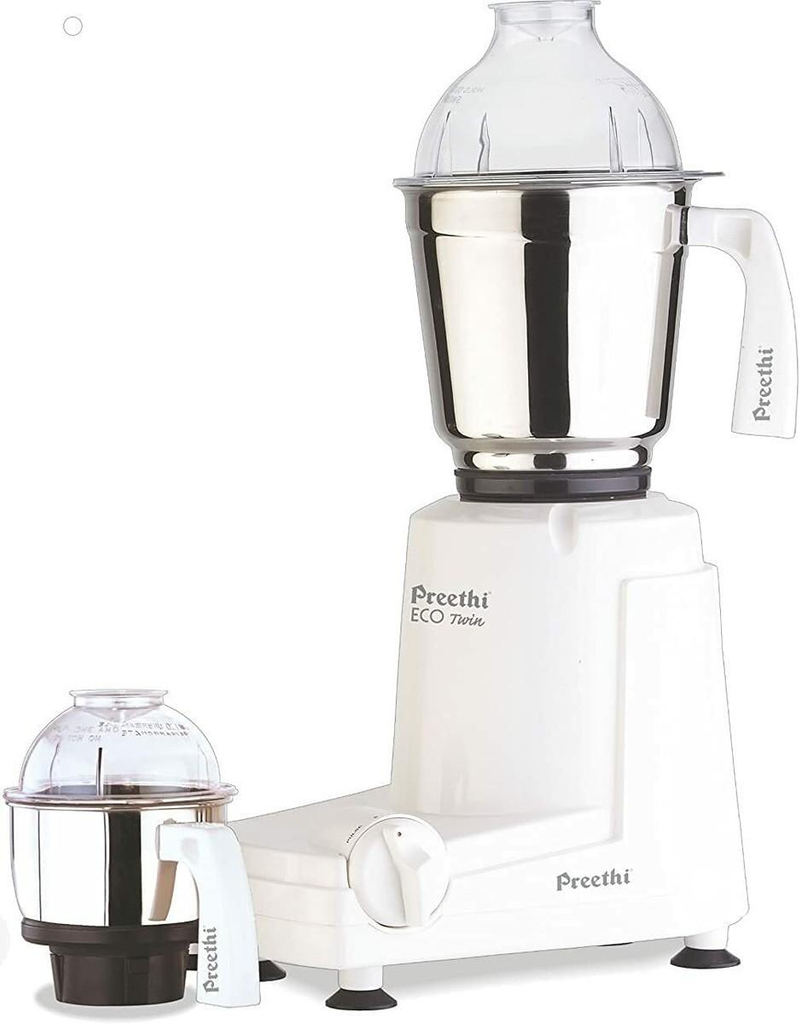
Preethi Eco Twin
Two-jar, 550W documented variant
A simple configuration for everyday grinding. The key concern for Indian buyers is verifying that the exact unit is rated for domestic electrical supply.
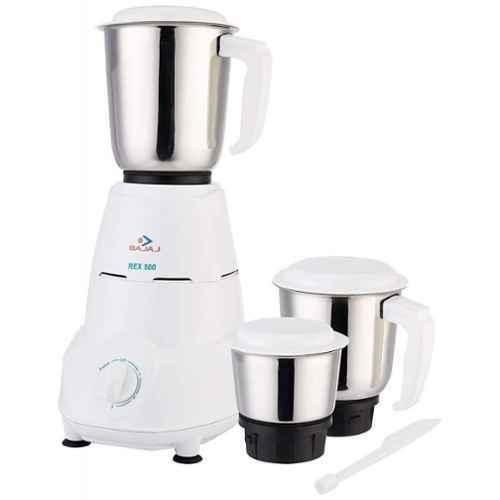
Bajaj Rex 500W
500W · Three jars
An alternative for buyers who want dedicated wet-grinding, dry-grinding and chutney jars. Bajaj lists a 1-year product warranty.
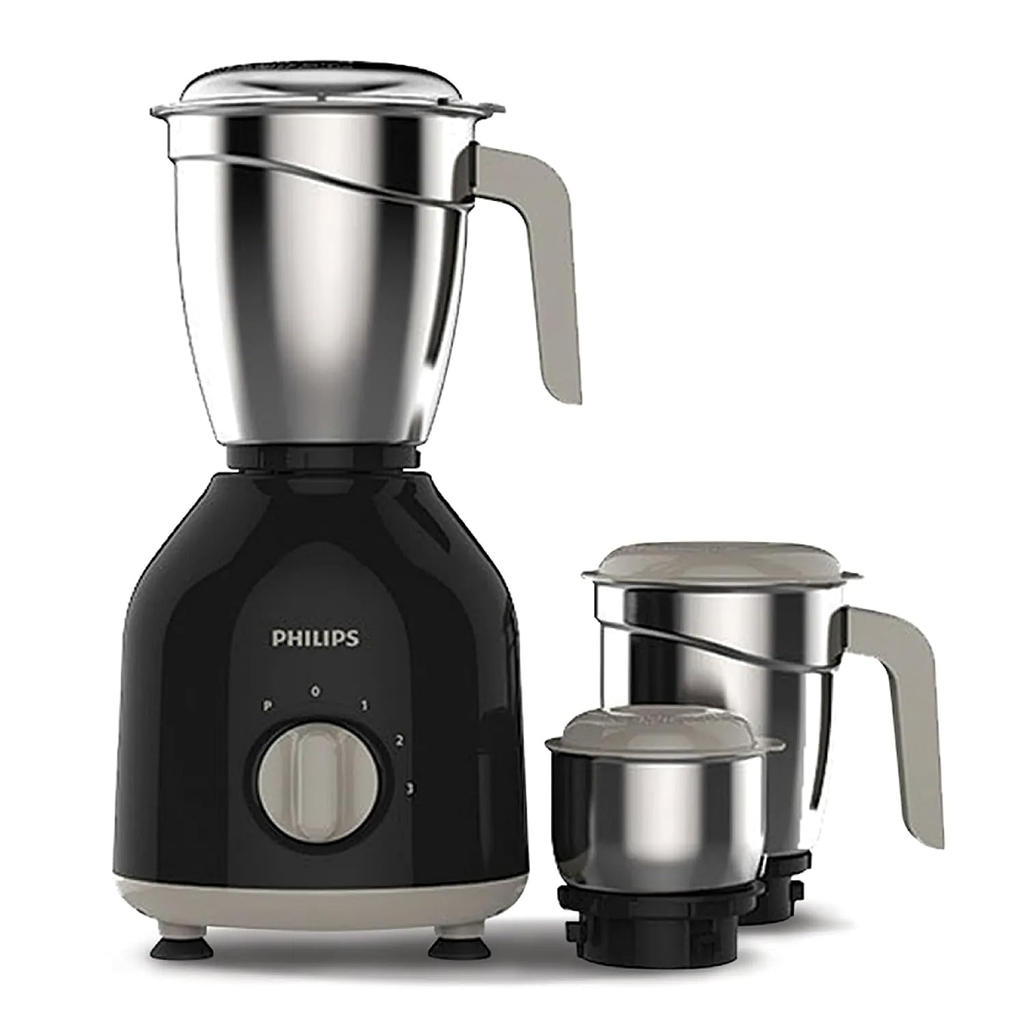
Philips HL7756
750W · Three jars
The official Indian specifications list three jars, 230V operation and a 2-year product warranty. The manufacturer also describes its ventilation system and grinding capabilities.
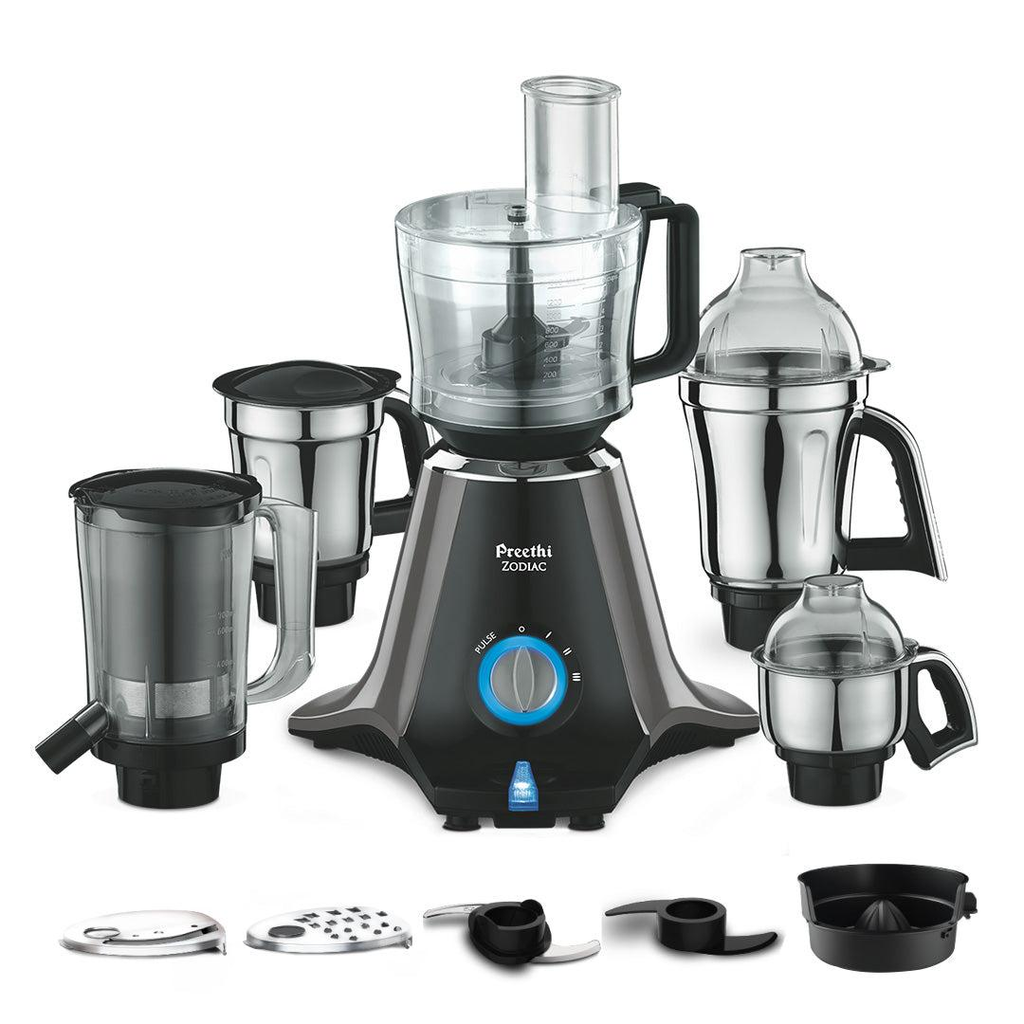
Preethi Zodiac Black
750W · Chef jar plus four jars
A more feature-rich option for buyers who want additional food-preparation functions. Preethi lists a 2-year product guarantee, 5-year motor warranty and lifelong free service for this model on its official store
Detailed comparison table
| Feature | Preethi Eco Twin | Bajaj Rex 500W | Philips HL7756 | Preethi Zodiac Black |
|---|---|---|---|---|
| Motor power | 550W on documented US/Canada variant | 500W | 750W | 750W |
| Jar configuration | 2 jars | 3 jars | 3 jars | Chef jar + 4 jars |
| Voltage | 110V on documented North American variant | Verify exact listing | 230V | Verify exact listing |
| Warranty | Confirm exact variant | 1-year product warranty | 2-year product warranty | 2-year product guarantee and 5-year motor warranty listed |
| Standout feature | Two-jar arrangement | Separate jars for different tasks | 750W motor and ventilation system | Additional jars and food-preparation features |
| Price | Current Indian price not verified | Check current listing | Check current listing | Check current listing |
| Best suited to | Routine grinding if compatible | Buyers who want three jars | Buyers who want a higher-wattage, three-jar option | Buyers who need more versatility |
Sources: official brand specifications and the retailer listing for the Eco Twin. Warranty terms and package contents should be confirmed for the precise model and seller.
Compare more options in our guide to the best mixer grinders in India, including models for different cooking needs.
Which One Should You Choose?
Choose the Philips HL7756/00 if you want a conventional mixer grinder for everyday Indian cooking, including chutneys, masalas and moderate wet grinding. Its official specifications document 230V operation and a two-year product warranty.
Choose the Sujata Dynamix if your household regularly needs more demanding grinding tasks and you value its larger motor and jar configuration. Its 900W rating and manufacturer-stated 90-minute running specification are not independent proof of superior results for every ingredient.
Consider the Preethi Eco Twin only when the precise version is compatible with your electrical supply and the warranty and service arrangements are clear. For a typical Indian buyer, the documented 110V MG 146 is not the version I’d recommend for direct household use.
Is the Preethi Eco Twin Worth the Money?
That depends on the version, its actual selling price and what you need it to do.
A low purchase price isn’t necessarily good value if the product requires an unsuitable power supply, has unclear warranty coverage or lacks accessible replacement parts.
Before buying, compare:
- The total purchase price, including delivery and any import costs.
- Voltage and frequency printed on the rating plate.
- Included jars, lids and other accessories.
- Warranty duration and the country where it is valid.
- Availability of replacement jars, blades, seals and couplers.
- Return eligibility if the delivered model differs from the listing.
We couldn’t verify a current Indian-market price for the exact MG 146 version. We therefore won’t suggest a target price that could mislead buyers.
Check the latest listing only after confirming the model number and electrical rating.
ReviewSpot Recommendation
- Best for: Routine grinding when the exact version matches the electrical supply.
- Useful feature: Flexible jar capacities for different batch sizes.
- Main concern: The documented MG 146 is a 110V model.
- Not recommended for: Direct connection to a standard Indian 230V socket.
- Alternative for everyday Indian cooking: Philips HL7756/00.
- Alternative for heavier grinding: Sujata Dynamix 900W.
Frequently Asked Questions
1. Is the Preethi Eco Twin a good mixer grinder?
It has a straightforward design and specifications intended for common grinding tasks. However, whether it’s a good purchase depends on your cooking needs, the exact version and electrical compatibility.
2. How many watts is the Preethi Eco Twin?
The documented MG 146 version has a 550W motor.
3. How many jars come with the Preethi Eco Twin?
The basic MG 146 configuration describes two main jars, with flexi lids that allow smaller nominal capacities. Confirm the package contents of the specific listing before purchasing.
4. Can I use the Preethi Eco Twin in India?
The documented MG 146 manual specifies 110V AC at 60Hz and instructs users to connect it only to a 110V supply. It should not be plugged directly into a standard Indian 230V socket. Look for a version explicitly rated for your supply.
5. Is the Preethi Eco Twin suitable for chutneys?
The manual identifies the smaller jar for small quantities of wet and dry grinding. Whether its capacity suits your household depends on the amount you prepare.
6. Can it grind dosa and idli batter?
The manual includes instructions for wet grinding ingredients used for dosa, idli and similar dishes. That does not establish its performance for every batter recipe or large batch. Check the working capacity and operating instructions.
7. What is the warranty on the Preethi Eco Twin?
The available MG 146 manual lists a one-year warranty. Confirm the terms for the exact unit, seller and country of purchase before ordering.
8. Is the Preethi Eco Twin noisy?
Some published customer reviews describe the model as noisy. Those reports are anecdotal, and an independently measured sound level was not available for this review.
9. What is the current price of the Preethi Eco Twin in India?
A current, verified Indian selling price for the exact MG 146 version wasn’t available. Check the live listing, but verify voltage, warranty and total landed cost before comparing prices.
10. Preethi Eco Twin vs Philips HL7756/00: Which is better?
For a typical Indian household, the Philips HL7756/00 is the more straightforward option to evaluate because its official specifications list 230V operation, a 750W motor, three jars and a two-year product warranty. The Eco Twin MG 146’s flexible jar configuration may be useful, but its documented 110V rating is a major limitation for direct use in India.
11. Is the Preethi Eco Twin suitable for heavy-duty grinding?
The manual describes a 550W motor and a 30-minute rating. Buyers who regularly process large batches or thick mixtures should compare appliances designed for heavier workloads rather than assuming the Eco Twin is suitable for every demanding task.
12. Should I buy the Preethi Eco Twin on Amazon?
Only after confirming that the listing matches the exact version you want. Check the model number, voltage, included accessories, seller, warranty and return terms. For an Indian kitchen, do not buy the documented 110V version for direct use with a 230V supply.
Final Recommendation
The Preethi Eco Twin has a straightforward design, stainless-steel jars, a 550W motor and a flexible jar-capacity arrangement. Its manual describes common dry- and wet-grinding applications.
However, specifications must be interpreted in context. The documented MG 146 operates at 110V AC, and that makes electrical compatibility the first buying consideration for an Indian household.
If you’re shopping in India, I’d prioritise a domestic 230V mixer grinder with a clear warranty and readily available service support. The Philips HL7756/00 and Sujata Dynamix are useful alternatives to compare based on workload, jar configuration and budget.
If you find a different Eco Twin variant, verify its model number and rating plate before applying this review’s specifications to it.
Sourabh researches and writes about home appliances, kitchen appliances, and common appliance problems to help readers make informed buying decisions. He covers mixer grinders, refrigerators, air conditioners, washing machines, and appliance troubleshooting.
At ReviewSpot, Sourabh compares manufacturer specifications, product features, warranty information, pricing, and customer feedback to turn technical appliance information into practical buying advice. His goal is to help readers understand their options, avoid costly mistakes, and choose products that fit their needs and budget.
ReviewSpot distinguishes manufacturer information, customer feedback, and editorial analysis, and does not describe products as hands-on tested unless they have actually been tested.