

How to Reduce Mixer Grinder Noise? 15 Simple Ways to Make Your Kitchen Quieter

Mixer grinders are among the most useful kitchen appliances, but they are also among the noisiest. Whether you’re preparing a morning smoothie, grinding spices, or making dosa batter, the loud sound can disturb family members, neighbors, and even pets.
In many cases, excessive noise is a sign that the appliance needs some basic care and attention that many owners overlook.
The good news is that you don’t have to live with the noise. In many cases, simple adjustments such as placing the appliance on a stable surface, tightening loose parts, cleaning the blades, or using an anti-vibration mat can significantly reduce the sound level.
Read: Best Mixer Grinder Buying Guide 2026 – Wattage, Problems & Comparisons
How to Reduce Mixer Grinder Noise
To reduce mixer grinder noise:
- Place the mixer grinder on a flat and stable surface.
- Use a rubber or anti-vibration mat underneath the appliance.
- Ensure the jar is locked properly before use.
- Tighten loose screws and components.
- Clean and sharpen the blades regularly.
- Replace worn couplers and damaged bearings.
- Avoid overloading the jar.
- Use the correct jar for each task.
- Keep the motor and ventilation areas clean.
- Service the mixer grinder periodically.
If the noise suddenly becomes much louder than usual, inspect the appliance for loose parts, damaged blades, worn bearings, or motor problems.
Why Is Your Mixer Grinder So Noisy?
Before learning how to reduce mixer grinder noise, it helps to understand what causes the sound in the first place. A sudden increase in noise is often accompanied by other performance issues that can affect grinding efficiency.
A mixer grinder’s motor spins the blades at extremely high speeds, often between 18,000 and 25,000 RPM. This high-speed operation naturally creates noise. However, when the sound becomes unusually loud, rattling, grinding, or vibrating, there’s usually an issue that needs attention.
Common causes of excessive mixer grinder noise:
- Loose jars or lids
- Dull or damaged blades
- Worn couplers
- Faulty motor bearings
- Overloaded jars
- Uneven kitchen countertops
- Loose internal components
- Lack of regular maintenance
15 Effective Ways to Reduce Mixer Grinder Noise
1. Place the Mixer Grinder on a Stable Surface

Many people overlook this simple solution. If your mixer grinder sits on an uneven countertop, vibrations increase and make the appliance sound much louder than it actually is.
Always place the mixer grinder on:
- A flat countertop
- A sturdy table
- A vibration-free surface
Avoid placing it on plastic stools, lightweight tables, or unstable platforms.
2. Use an Anti-Vibration Mat
One of the easiest ways to reduce mixer grinder noise is to place a rubber mat underneath it. A thick rubber mat absorbs vibrations before they travel through the countertop.
You can use Rubber mats. Silicone mats. Thick mouse pads or Anti-vibration appliance pads. Many users notice an immediate reduction in noise after using this simple trick.
3. Check Whether the Jar Is Locked Properly
A jar that isn’t seated correctly often produces rattling sounds. Before switching on the appliance Ensure the jar is fully locked, Check the lid fit and Verify the jar base is secure.
Even a slight misalignment can create unnecessary noise.
4. Avoid Overloading the Jar
Overloading is one of the biggest reasons mixer grinders become noisy. For smoother operation, grind ingredients in smaller batches whenever possible. When too many ingredients are added:
- The motor works harder
- Blades struggle to rotate
- Vibrations increase
- Noise levels rise significantly
5. Add Enough Liquid During Wet Grinding
When preparing chutneys, purees, or batters, insufficient liquid forces the blades to work harder. Adding a small amount of water can improve grinding efficiency and reduce noise.
This often causes:
- Motor strain
- Excessive vibration
- Louder operation
6. Inspect the Blades
Damaged or bent blades can create unusual sounds. Check for Bent edges, cracks, rust or excessive wear. If the blades appear damaged, replacement is usually the safest option.
Sharp blades allow ingredients to process more efficiently, reducing the workload placed on the motor.
7. Keep the Blades Sharp
Dull blades don’t cut ingredients efficiently. As a result Grinding takes longer, The motor experiences extra load and Noise increases.
Regular blade maintenance helps maintain performance while reducing strain on the motor.
8. Tighten Loose Screws
Over time, vibrations can loosen screws inside the appliance. A loose screw can create Rattling sounds. Buzzing noises or Excessive vibration
Inspect visible screws periodically and tighten them if necessary.
9. Check the Coupler
The coupler connects the motor to the jar. A worn coupler often causes Clicking sounds, Grinding noises poor blade rotation.
If the coupler looks cracked or worn, replacing it is usually inexpensive and can significantly reduce noise.
10. Clean the Motor Ventilation Area
Dust accumulation around the motor can affect performance. When airflow becomes restricted The motor heats up, Efficiency drops, Noise may increase.
Use a dry brush or cloth to keep ventilation openings clean.
11. Use the Correct Jar for the Task
Different jars are designed for different purposes. Using a small chutney jar for heavy grinding or a large jar for tiny quantities can increase vibration and noise.
Always match the jar to the intended task.
12. Don’t Run the Mixer Grinder Continuously
Running the appliance for extended periods can overheat the motor. Instead Grind in short intervals, Allow cooling breaks and Follow manufacturer recommendations
This protects the motor and keeps noise levels under control.
13. Replace Worn Bearings
Motor bearings naturally wear out over time. Signs of bearing problems include High-pitched squealing, Metal-on-metal sounds or Rough operation
If you notice these symptoms, professional servicing may be required.
14. Inspect the Motor for Damage
A damaged motor can become significantly louder than normal. Warning signs include Burning smell, Sparking, Excessive heat or Sudden increase in noise
If you notice these symptoms, stop using the appliance until it is inspected.
15. Schedule Regular Maintenance
Like any appliance, mixer grinders benefit from routine maintenance.
Regular servicing helps:
- Identify worn parts early
- Improve efficiency
- Extend appliance lifespan
- Reduce operational noise
A well-maintained mixer grinder typically runs smoother and quieter than a neglected one.
Mixer grinder noise level setting
Most of us never think about noise until the mixer grinder is running full blast at 6 AM and the whole house wakes up. Truth is, noise level depends a lot on the motor type and the RPM setting you’re using running a mixer grinder at the highest speed for a hard item like coffee or whole spices will always sound louder than running it on a low or medium speed for something softer like a smoothie or wet batter.
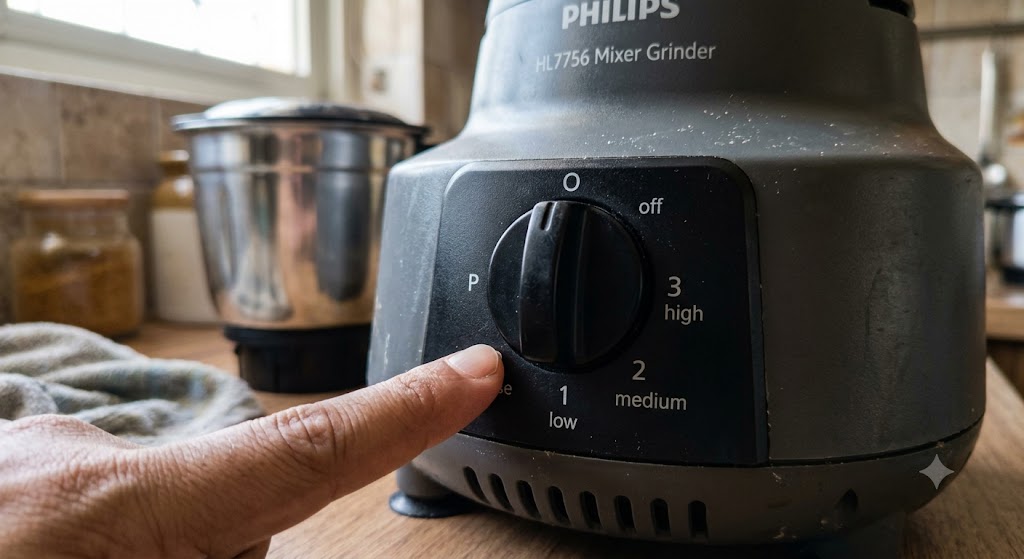
If your model has multiple speed settings, using the right speed for the right job isn’t just about better grinding, it also keeps the noise down quite a bit. A 3-speed mixer used smartly (low for batters, medium for chutneys, high only when really needed) is almost always quieter day-to-day than blasting everything on full speed out of habit.
It also helps to check the noise rating before buying, if the brand mentions it, since some motors are simply built quieter than others even at the same wattage. And here’s a small but useful tip nobody tells you: placing the mixer grinder on a flat, sturdy surface rather than a wobbly stand reduces a good chunk of the rattling noise too sometimes the problem isn’t the motor at all, it’s the vibration from an uneven base.
Signs That the Noise Indicates a Serious Problem
Not all noise is normal. If you notice any of these below symptoms, discontinue use until the issue is diagnosed.Watch for these warning signs:
- Sudden increase in noise
- Grinding metal sounds
- Burning smell
- Excessive vibration
- Sparks near the motor
- Difficulty rotating blades
- Motor stopping unexpectedly
Can You Make a Mixer Grinder Completely Silent?
Unfortunately, no.
Mixer grinders use high-speed motors that naturally generate sound. Even premium models produce noticeable noise during operation.
However, by following the tips in this guide, you can significantly reduce mixer grinder noise and prevent it from becoming unnecessarily loud.
FAQs:
Is it normal for a mixer grinder to be noisy?
Yes. Mixer grinders operate at very high speeds, so some noise is expected. However, sudden increases in noise may indicate a problem.
Why has my mixer grinder suddenly become louder?
Common reasons include loose parts, worn couplers, damaged blades, bearing wear, or motor issues.
Does a rubber mat really reduce mixer grinder noise?
Yes. A rubber or anti-vibration mat absorbs vibrations and can noticeably reduce noise levels.
Can dull blades increase noise?
Yes. Dull blades force the motor to work harder, which can increase both noise and grinding time.
When should I replace my mixer grinder?
If repair costs are high, the motor is failing, or the appliance experiences repeated issues, replacement may be the more economical option.
Final Thoughts:
If you’ve been wondering how to reduce mixer grinder noise, start with the simple fixes first. Place the appliance on a stable surface, use an anti-vibration mat, avoid overloading the jar, and keep the blades and motor in good condition. These small changes can make a surprising difference.
Remember that some noise is normal, but excessive noise is often your mixer grinder’s way of telling you something needs attention. With proper care and regular maintenance, you can enjoy smoother operation, better performance, and a much quieter kitchen.
Related Posts:
- How To Sharpen Mixer Grinder Blades
- Mixer Grinder Maintenance Checklist: Easy Tips to Prevent Costly Repairs
- 5 Common Mixer Grinder Blade Problems Troubleshooting
- 10 Best Mixer Grinders in India Under 3000
Sourabh researches and writes about home appliances, kitchen appliances, and common appliance problems to help readers make informed buying decisions. He covers mixer grinders, refrigerators, air conditioners, washing machines, and appliance troubleshooting.
At ReviewSpot, Sourabh compares manufacturer specifications, product features, warranty information, pricing, and customer feedback to turn technical appliance information into practical buying advice. His goal is to help readers understand their options, avoid costly mistakes, and choose products that fit their needs and budget.
ReviewSpot distinguishes manufacturer information, customer feedback, and editorial analysis, and does not describe products as hands-on tested unless they have actually been tested.