
Refrigerator Electricity Consumption in India: How Much Power Does Your Fridge Really Use?

A refrigerator is one of the few appliances in your home that works 24 hours a day, 365 days a year. Because it never stays completely switched off, many people assume it is the biggest reason for a high electricity bill.
Modern refrigerators are designed to be energy-efficient. Thanks to inverter compressors, improved insulation, and better cooling technology, today’s refrigerators consume much less electricity than older models.
Whether you’re planning to buy a new fridge or simply want to reduce your electricity bill, understanding refrigerator electricity consumption can help you make a better decision.
Refrigerator Electricity Consumption
A typical refrigerator in India consumes 100 to 500 kWh (units) of electricity per year, depending on its size, capacity, star rating, compressor type, and usage habits.
| Refrigerator Type | Annual Electricity Consumption | Monthly Consumption |
|---|---|---|
| 180–220 L Single Door | 100–180 kWh | 8–15 units |
| 230–300 L Double Door | 180–320 kWh | 15–27 units |
| 300–450 L Frost-Free | 250–400 kWh | 21–33 units |
| Side-by-Side Refrigerator | 350–550 kWh | 29–46 units |
A modern 5 Star inverter refrigerator can consume 30–50% less electricity than an older conventional refrigerator.
What Is Refrigerator Electricity Consumption?
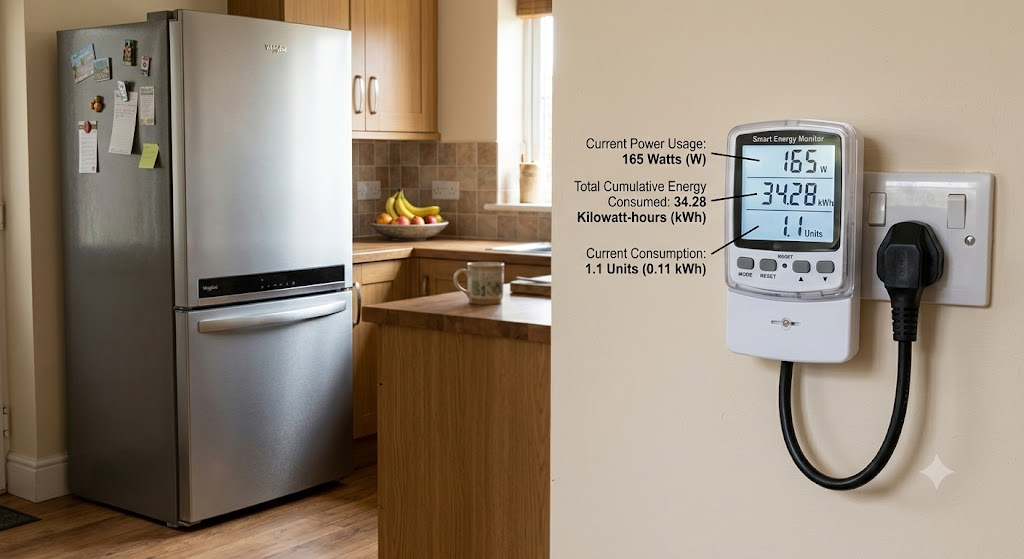
Refrigerator electricity consumption refers to the amount of electrical energy a refrigerator uses to keep food fresh and frozen.
Electricity is measured in kilowatt-hours (kWh), also called units.
For example:
- 1 kWh = 1 unit of electricity
- If your refrigerator uses 1 kWh daily, it consumes about 30 units per month.
- Your electricity bill depends on how many units you use and the tariff charged by your electricity provider.
How Much Electricity Does a Refrigerator Use?
The electricity used depends on:
- Refrigerator size
- Compressor technology
- BEE Star Rating
- Usage habits
- Outside temperature
- Refrigerator age
Here’s an average estimate.
| Refrigerator Capacity | Annual Consumption | Monthly Units |
|---|---|---|
| 180 L | 100–150 kWh | 8–13 |
| 190 L | 110–170 kWh | 9–14 |
| 200 L | 120–180 kWh | 10–15 |
| 250 L | 180–250 kWh | 15–21 |
| 300 L | 220–300 kWh | 18–25 |
| 350 L | 260–350 kWh | 22–29 |
| 450 L | 320–450 kWh | 27–38 |
| 600 L Side-by-Side | 400–550 kWh | 33–46 |
Refrigerator Electricity Consumption Calculator
You can easily estimate your refrigerator’s electricity cost using this formula.
Electricity Cost = Annual Consumption (kWh) × Electricity Rate per Unit
Example 1
Annual Consumption = 180 kWh
Electricity Rate = ₹8 per unit
Annual Cost = 180 × ₹8 = ₹1,440
Monthly Cost = ₹120
Example 2
Annual Consumption = 300 kWh
Electricity Rate = ₹9 per unit
Annual Cost = ₹2,700
Monthly Cost = ₹225
This simple calculation helps you compare different refrigerator models before buying.
Refrigerator Electricity Cost Per Month
| Monthly Units | Electricity Rate | Monthly Cost |
|---|---|---|
| 10 | ₹8 | ₹80 |
| 15 | ₹8 | ₹120 |
| 20 | ₹8 | ₹160 |
| 25 | ₹8 | ₹200 |
| 35 | ₹8 | ₹280 |
| 45 | ₹8 | ₹360 |
If electricity costs ₹10 per unit in your city, simply multiply the monthly units by 10.
Refrigerator Power Consumption by Capacity
Single Door Refrigerator
Single-door refrigerators usually consume the least electricity because they have a smaller cooling area. Typical consumption:
- 100–180 kWh/year
- Ideal for 1–3 family members
Double Door Refrigerator
Double-door refrigerators provide larger storage while maintaining good energy efficiency.
Typical consumption:
- 180–320 kWh/year
Suitable for families of 3–5 members.
Frost-Free Refrigerator
These refrigerators automatically prevent ice build-up.
Although they consume slightly more electricity than direct cool models, modern inverter technology keeps consumption under control.
Average usage:
250–400 kWh/year
Side-by-Side Refrigerator
Large premium refrigerators naturally consume more electricity because of their higher capacity.
Typical consumption:
350–550 kWh/year
BEE Star Rating Explained
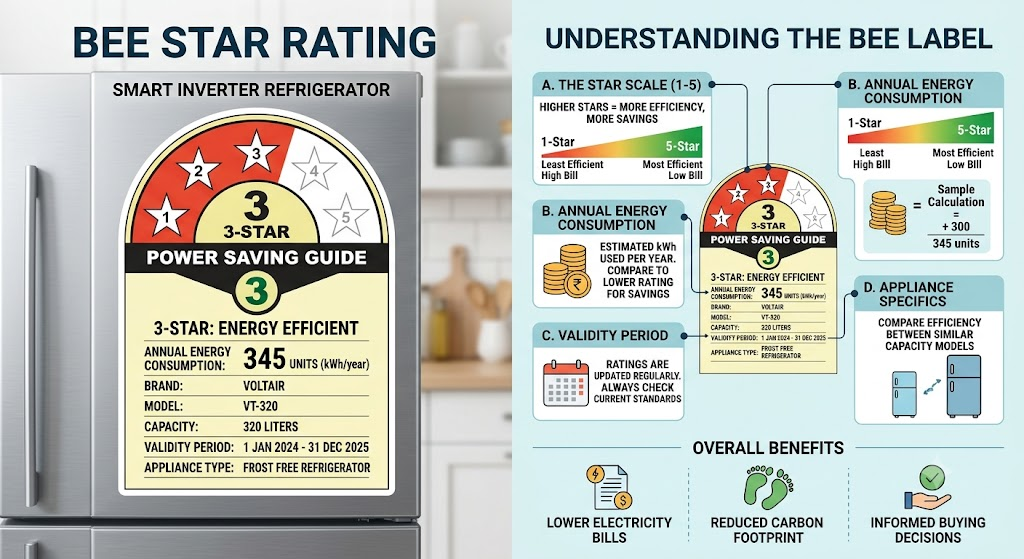
The Bureau of Energy Efficiency (BEE) assigns star ratings based on energy efficiency. Higher stars mean lower electricity consumption.
| Star Rating | Energy Efficiency |
|---|---|
| 2 Star | Basic |
| 3 Star | Good |
| 4 Star | Better |
| 5 Star | Best |
Inverter vs Non-Inverter Refrigerator Electricity Consumption
| Feature | Inverter Refrigerator | Non-Inverter Refrigerator |
|---|---|---|
| Compressor Speed | Variable | Fixed |
| Electricity Usage | Lower | Higher |
| Noise | Less | More |
| Cooling | Stable | Fluctuates |
| Electricity Savings | Up to 50% | Standard |
Refrigerator Power Consumption by Popular Brands
The exact electricity consumption depends on the specific model rather than the brand. However, most premium brands now offer energy-efficient inverter refrigerators.
Some of the best refrigerator brands in India include:
- LG
- Samsung
- Whirlpool
- Haier
- Godrej
- Panasonic
- Bosch
Always compare:
- Annual energy consumption
- BEE Star Rating
- Compressor warranty
- Storage capacity
instead of choosing only by price.
Factors That Affect Refrigerator Electricity Consumption
1. Refrigerator Size
Larger refrigerators need more energy because they cool more space.
2. Ambient Temperature
Indian summers can exceed 40°C. When the surrounding temperature rises, the compressor works longer to maintain cooling.
3. Frequency of Door Opening
Every time you open the refrigerator, warm air enters. The compressor must work harder to cool the cabinet again.
4. Food Temperature
Putting hot food directly inside increases compressor workload. Always allow food to cool first.
5. Refrigerator Location
Avoid placing the refrigerator:
- Near ovens
- Beside gas stoves
- Under direct sunlight
Proper ventilation improves efficiency.
6. Door Seal Condition
Damaged rubber gaskets allow cold air to escape continuously. Replacing worn-out seals can improve efficiency.
7. Refrigerator Age
Older refrigerators often consume much more electricity than new inverter models. Replacing a 12–15-year-old refrigerator can significantly reduce electricity bills.
Refrigerator Electricity Consumption in Summer vs Winter
Many people notice their electricity bill increases during summer. This happens because:
- Higher room temperatures make the compressor run longer.
- Doors are opened more frequently for cold water and beverages.
- Warm food is stored more often.
In winter, the compressor runs less frequently, reducing electricity consumption.
Common Mistakes That Increase Refrigerator Electricity Bills
Avoid these mistakes:
- Keeping the refrigerator next to a gas stove
- Storing hot food immediately
- Overloading shelves
- Leaving the door open for too long
- Ignoring dirty condenser coils
- Never defrosting manual refrigerators
- Using damaged door gaskets
- Setting the temperature colder than necessary
Small habits can increase annual electricity usage by 10–20%.
Tips to Reduce Refrigerator Electricity Consumption
Follow these simple tips:
- Buy a 5 Star inverter refrigerator.
- Keep the temperature between 3°C and 5°C.
- Set freezer temperature around –18°C.
- Allow hot food to cool before storing.
- Keep enough space behind the refrigerator.
- Clean condenser coils every six months.
- Replace damaged door seals.
- Defrost manually when ice builds up.
- Avoid opening the door unnecessarily.
- Choose the right refrigerator size for your family.
These habits can noticeably reduce your electricity bill.
Should You Upgrade an Old Refrigerator?
If your refrigerator is more than 10–12 years old, upgrading to a modern inverter model often makes financial sense.
Benefits include:
- Lower electricity bills
- Better cooling
- Less noise
- Faster temperature recovery
- Longer compressor life
- Better food preservation
Although the purchase price is higher, lower operating costs usually offset the investment over time.
FAQs
Q. How many units of electricity does a refrigerator consume per day?
Most refrigerators consume 0.3 to 1.5 units per day, depending on capacity and efficiency.
Q. Does an inverter refrigerator really save electricity?
Yes. Inverter refrigerators can reduce electricity consumption by 20–50% compared to older conventional models.
Q. Which refrigerator consumes the least electricity?
A 5 Star inverter single-door refrigerator usually has the lowest electricity consumption.
Q. Is a 5 Star refrigerator worth buying?
Yes. Although it costs more initially, lower electricity bills make it a better long-term investment.
Q. How can I check my refrigerator’s electricity consumption?
Look at the BEE Energy Label or the product specifications. It shows the annual electricity consumption in kWh.
Q. Does keeping the refrigerator full save electricity?
A moderately filled refrigerator maintains temperature better, but overloading reduces airflow and can increase power consumption.
Conclusion
Refrigerator electricity consumption depends on several factors, including capacity, compressor technology, star rating, climate, and daily usage. Modern inverter refrigerators are much more efficient than older models and can significantly reduce electricity bills over time.
When buying a refrigerator, don’t compare only the purchase price. Check the annual electricity consumption, BEE Star Rating, warranty, and features. Choosing an energy-efficient model from the best refrigerator brands in India can save thousands of rupees in electricity costs over the life of the appliance.
With proper maintenance and smart usage habits, your refrigerator can deliver excellent cooling while keeping your monthly electricity bill under control.
Recommended Reading:
- The Ultimate Refrigerator Buying Guide: What You Need to Know Before You Buy
- 10 Best Double Door Refrigerator in India 2026
- 10 Best Refrigerator Brands in India 2026
- 10 Best Refrigerator Under 20000 in India 2026
Sourabh researches and writes about home appliances, kitchen appliances, and common appliance problems to help readers make informed buying decisions. He covers mixer grinders, refrigerators, air conditioners, washing machines, and appliance troubleshooting.
At ReviewSpot, Sourabh compares manufacturer specifications, product features, warranty information, pricing, and customer feedback to turn technical appliance information into practical buying advice. His goal is to help readers understand their options, avoid costly mistakes, and choose products that fit their needs and budget.
ReviewSpot distinguishes manufacturer information, customer feedback, and editorial analysis, and does not describe products as hands-on tested unless they have actually been tested.