
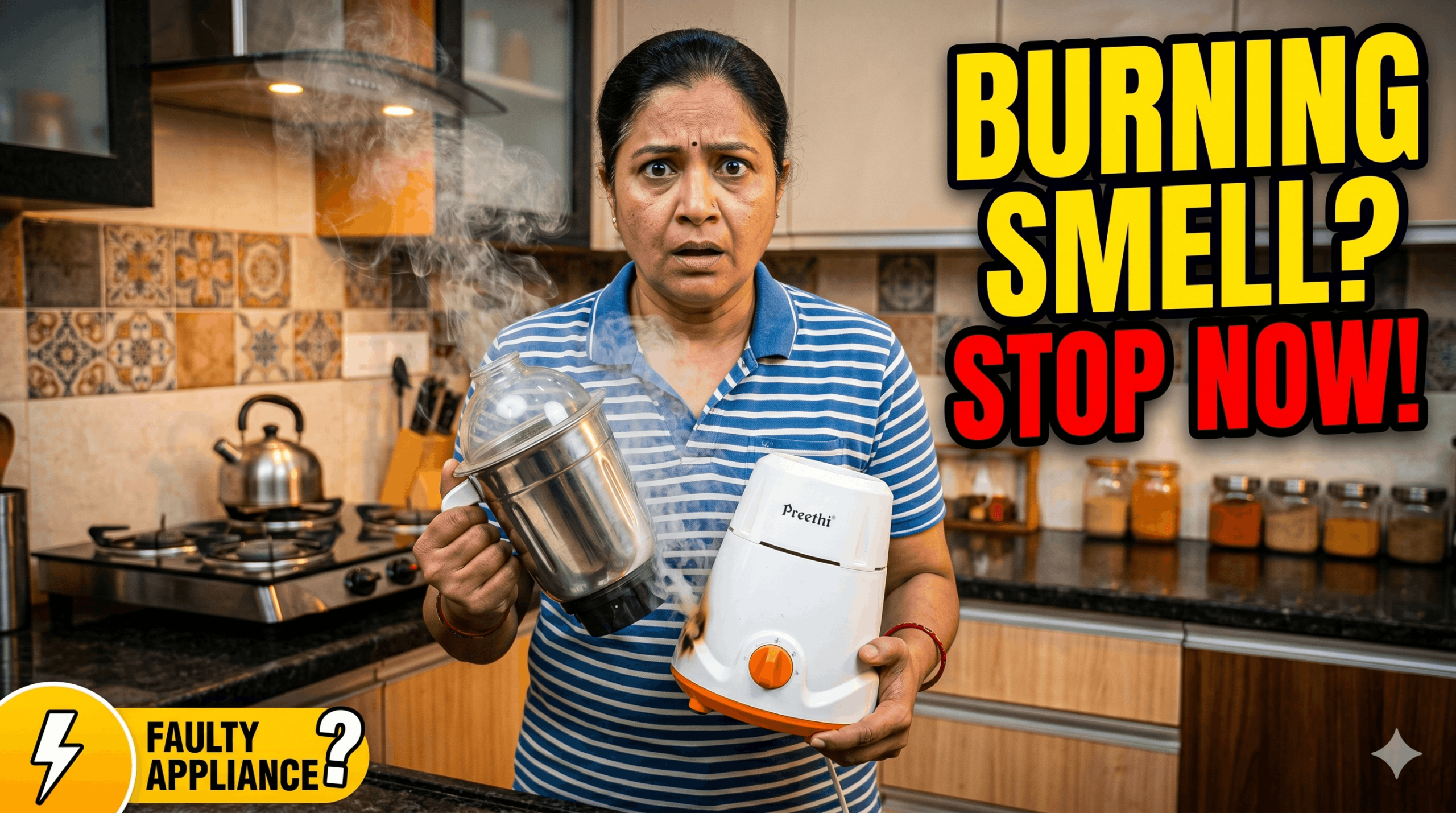
Why Mixer Grinder Smells Like Burning After Few Minutes: Real Causes, Quick Fixes & When to Replace It

You’re grinding coconut chutney or making dosa batter, and then bam. That sharp, acrid burning smell hits you. Your mixer grinder has been running for barely a few minutes, and now the whole kitchen reeks like something inside is slowly dying.
Sound familiar?
Almost every Indian household has faced this at some point. And the first reaction is always the same: panic, confusion, and the eternal question “Is my mixer grinder about to catch fire, or is this normal?”Why Mixer Grinder Smells Like Burning After Few Minutes?
The honest answer? It depends. And that’s exactly what this guide is going to help you figure out — no fluff, no scary technical language. Just real answers based on real kitchen situations.
Read: 10 Affordable Mixer Grinders Under 2000 in India
What That Burning Smell Actually Means
Before we jump into solutions, you need to understand what is burning, because that changes everything.
Your mixer grinder has a universal motor inside a small but powerful electric motor that spins the blade at anywhere from 14,000 to 22,000 RPM. Inside that motor, copper wire windings are coated with varnish insulation. When the motor overheats for any reason that varnish starts to burn. That’s the smell you’re detecting.
Other times, it could be:
- The carbon brushes wearing down and sparking against the commutator
- Rubber gaskets or seals overheating near the blade assembly
- Plastic housing getting too hot from a poorly ventilated motor
- New motor varnish burning off on the very first few uses (completely normal)
Knowing the source helps you decide whether to panic or simply take a break.
The Top 7 Reasons Why Your Mixer Grinder Smells Like Burning After Few Minutes
1. You’re Overloading the Jar

This is the number one reason, bar none. Indian cooking is ruthless on mixer grinders. We fill jars to the brim with soaked dal, fibrous coconut, or thick batter and expect the machine to power through it in one shot.
When the jar is overloaded, the motor has to work much harder to spin the blades against that resistance. It draws more current, generates more heat, and before you know it — the smell arrives.
The fix: Never fill more than 2/3 of the jar’s capacity. Grind in batches, especially for wet grinding. It takes a few more minutes but saves your motor.
2. Running It Continuously Without Breaks
Mixer grinders are sprinters, not marathon runners. Most manufacturers recommend a maximum continuous run of 30 to 60 seconds before a 1–2 minute break. Very few people follow this.
When you run the mixer non-stop for 3–5 minutes straight, heat builds up inside the motor chamber. There’s no cooling happening just heat accumulating. The winding insulation starts to protest, and you get that burning smell.
This is one of the most common reasons why mixer grinder smells like burning after few minutes of use, yet it’s also the most easily preventable.
The fix: Use pulse mode. Run for 30 seconds, let it rest for a minute, then run again. Your motor will thank you with years of extra life.
3. Dull or Worn-Out Blades
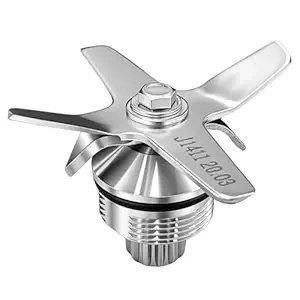
Here’s something most people don’t think about blades wear out. After 2–3 years of regular use, the blade edges become blunt. Blunt blades can’t cut through ingredients efficiently, so instead of slicing through dal or coconut cleanly, they push and drag through it.
This massively increases the load on the motor. The motor has to work twice as hard to spin blunt blades through the same ingredients. More load = more heat = burning smell.
The fix: Check your blades once a year. If the grinding performance has dropped or the mixer is taking longer than usual, get the blades replaced. It’s usually inexpensive and extends the life of the entire machine.
4. Voltage Fluctuations in Your Area
This one’s sneaky because it happens silently, and most people never connect it to the burning smell.
In many parts of India particularly older apartments, rural areas, and semi-urban localities — voltage frequently dips below the ideal 220–240V. When voltage drops, the motor has to draw more current to maintain speed. More current = more heat = burning insulation smell.
Conversely, sudden voltage spikes can stress the motor windings and damage the insulation directly.
The fix: If you live in an area with unstable power supply, invest in a voltage stabilizer for your kitchen appliances. It’s a small investment that can double the life of your mixer grinder and protect against fire risk.
5. Carbon Brush Wear
Every universal motor has carbon brushes small blocks of carbon that maintain electrical contact with the spinning commutator inside the motor. Over time, these brushes wear down naturally. As they wear thin, they start to spark more, generate heat, and produce a burning or ozone-like smell.
This is a very common cause of burning smell in mixer grinders that have been used for 3+ years. The good news: carbon brushes are cheap and replaceable.
The fix: If your mixer is a few years old and starts smelling burnt without any obvious overloading, take it to a service center and ask them to check the carbon brushes. A full set typically costs ₹50–150 and takes 15 minutes to replace.
6. It’s Brand New (And That’s Actually Fine)
If your mixer grinder is brand new and smells like burning in the first 2–3 uses, don’t panic. Motor windings are coated with varnish during manufacturing. When the motor runs for the first time, that varnish heats up and some of it burns off. This is completely normal.
You’ll typically notice this smell in the first 2–3 uses only. After that, it should disappear entirely.
When it’s NOT fine: If the smell continues after 5–6 uses, gets stronger over time, or appears with even light grinding tasks, that’s a signal something is wrong.
7. The Motor Itself Is Failing
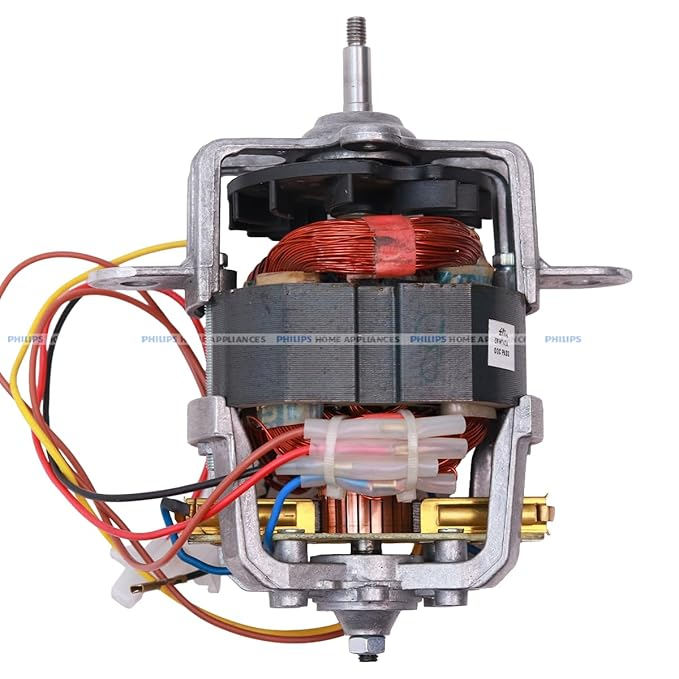
Sometimes the burning smell is the final symptom of a motor that’s been pushed too hard, too often. Repeated overheating eventually breaks down the insulation on the copper windings permanently. Once this happens, the motor may:
- Continue to work but smell bad every single time
- Start tripping the circuit breaker
- Stop working entirely
This is the point where repair vs. replacement becomes the key question (we’ll get to that shortly).
The Indian Kitchen Reality: Why This Happens More Here Than Anywhere Else
Let’s be honest — mixer grinders are tested and designed in lab conditions. They get neat, pre-measured quantities of ingredients, steady voltage, and precise rest intervals.
Indian kitchens operate in a completely different universe.
We grind tough turmeric, fibrous coconut, thick urad dal batter, and whole spices that would terrify a European chef. We often run the mixer for 5–10 minutes straight because batter doesn’t grind itself. Many homes have voltage instability. And most kitchens don’t have ventilation around the mixer, meaning heat has nowhere to escape.
All of this stacks up. The result? A mixer grinder that smells like burning after few minutes is almost a rite of passage in Indian households.
But understanding the causes means you can avoid the worst outcomes — and choose the right mixer grinder to begin with.
When Is It Dangerous? (And When Should You Stop Using It Immediately)
Not all burning smells are equal. Here’s how to read the situation:
It’s probably okay (temporary):
- Brand new mixer, first 2–3 uses
- Slight smell after a particularly heavy grinding session that disappears after cooling
- Smell goes away completely after a rest period
Stop immediately and investigate:
- Smell is strong, acrid, and chemical
- You see smoke or sparks from the motor housing
- The smell appears even with light grinding tasks
- Mixer trips your MCB (circuit breaker) repeatedly
- Smell gets stronger over time, not weaker
If you see smoke or sparks: unplug immediately. Do not use until inspected by a technician. This is not being overly cautious — it’s a genuine electrical fire risk.
Repair or Replace?
| Situation | What to Do |
|---|---|
| Mixer is less than 1 year old | Claim warranty immediately |
| Smell only after overloading | Change usage habits, no repair needed |
| Blades dull, 2–3 years old | Replace blades only (~₹200–400) |
| Carbon brushes worn, 3+ years | Service centre repair (~₹200–500) |
| Motor windings damaged | Repair if mixer costs ₹3,000+, else replace |
| Repeated burning smell despite repair | Replace the unit |
| Mixer more than 6–7 years old | Replace — cost of repair rarely makes sense |
5 Mixer Grinders That Handle Indian Kitchen Conditions Best
Now that you know what causes the burning smell, let’s look at which mixer grinders are actually built to handle the stress of Indian cooking so you can make a smarter purchase decision.
- Preethi Zodiac MG 218 – Check Price at Amazon
- Philips HL7756 – Check Price at Amazon
- Bosch TrueMixx Pro – Check Price at Amazon
- Bajaj Rex 500W – Check Price at Amazon
- Sujata Dynamix – Check Price at Amazon
How to Prevent the Burning Smell: 8 Practical Habits
- Never fill jars more than 2/3 capacity — give ingredients room to move
- Use the pulse mode rather than running continuously
- Rest the mixer for 1–2 minutes after every 30–60 second run
- Add water to wet grinding — it reduces friction dramatically
- Get blades sharpened or replaced every 2 years
- Use a voltage stabilizer if you have power fluctuation issues
- Keep the air vents on the motor body unblocked — never place the mixer against a wall
- Let the mixer cool completely before storing — never put it in a cabinet right after use
New Mixer Grinder Burning Smell: Is It Normal?
Yes, for the first 2–3 uses, a new mixer grinder producing a mild burning smell is completely expected. This is the motor varnish curing under heat for the first time.
Run the mixer empty or with a light load for 30 seconds during the first couple of uses. The smell should fade after 3–5 sessions.
If the smell from your new mixer is strong, chemical, or persists beyond 5 uses contact the manufacturer for a replacement under warranty. Don’t try to fix a defective new appliance yourself.
FAQs: Why Mixer Grinder Smells Like Burning After Few Minutes
❓ FAQ 1: Is it normal for a new mixer grinder to smell like burning?
Yes — but only for the first 2 to 3 uses.
When a mixer grinder is brand new, the motor windings are coated with a protective varnish. The very first time the motor heats up, that varnish burns off slightly — and that’s the “burning” smell you’re getting. Think of it like breaking in a new car engine.
This smell should completely disappear after 3–5 short uses.
When it’s NOT normal:
- The smell is very strong or chemical right from the first use
- It doesn’t go away after 5–6 sessions
- The smell comes with smoke or sparks
- The mixer stops suddenly during use
If any of the above happen with a new mixer, stop using it and claim your warranty immediately.
❓ FAQ 2: Why does my mixer grinder smell like burning after just a few minutes of use?
The most common reason is motor overheating — and it usually comes from one (or more) of these:
- Overloading the jar — too much ingredient for the motor to handle
- Running it continuously without giving it rest breaks (30–60 seconds on, then rest)
- Dull or worn blades that force the motor to work harder
- Voltage fluctuations in your home — low voltage makes the motor draw extra current and heat up faster
- Worn carbon brushes inside the motor — common in mixers 3+ years old
- Blocked air vents on the motor body — heat has nowhere to escape
In Indian kitchens especially, thick batters and dry masalas push motors to their limit much faster than normal usage conditions.
❓ FAQ 3: Can I continue using my mixer grinder if it smells like burning?
It depends on what type of smell it is and what’s happening.
✅ You can continue (with caution) if:
- It’s a brand new mixer and the smell is mild
- The smell appears only after heavy grinding and disappears after cooling
- There’s no smoke, sparks, or tripping of the circuit breaker
🚫 Stop immediately and unplug if:
- You see smoke coming from the motor
- The smell is strong, sharp, and chemical (not just “warm”)
- The mixer shuts off on its own repeatedly
- There’s a burning smell even when the jar is empty or lightly loaded
- You smell burning rubber or burning plastic strongly
Continuing to use a mixer with motor damage risk is a genuine fire hazard — especially in older homes with weak wiring.
❓ FAQ 4: How do I fix the burning smell in my mixer grinder?
Here’s a step-by-step approach:
- Switch off and unplug immediately — don’t just turn the speed to 0
- Let it cool for at least 30 minutes — don’t rush back to it
- Reduce the quantity in the jar — go to half capacity and try again
- Add water to wet grinding tasks — it reduces friction dramatically
- Switch to pulse mode instead of running continuously
- Check if blades are dull — get them sharpened or replaced if needed
- Ensure air vents are not blocked — never push the mixer against a wall
- Use a voltage stabilizer if your area has power fluctuations
If the smell comes back even after doing all of the above, take it to a service centre. Ask them to check the carbon brushes and motor windings.
❓ FAQ 5: What causes a burning smell from a mixer grinder motor?
The motor smell comes from heat damaging the insulation on the copper wire windings inside the motor. Here’s a simple breakdown:
| Cause | What’s Actually Burning |
|---|---|
| Overloading | Copper winding varnish/insulation |
| Long continuous run | Same — heat accumulation |
| Carbon brush wear | Brush material + sparking at the commutator |
| Voltage spike | Motor insulation stress damage |
| New mixer | Fresh varnish curing (normal) |
| Rubber gasket overheating | Rubber seal near the blade assembly |
| Plastic housing issue | ABS plastic near a hot motor |
Different smells can point to different causes — a rubber smell usually means gaskets, while a sharp electrical/chemical smell points to motor winding damage.
❓ FAQ 6: Why does my mixer grinder smell like burning plastic?
Burning plastic smell specifically (not just a “hot motor” smell) usually means either:
- The ABS plastic motor housing is getting too hot — often caused by blocked ventilation or running the mixer in an enclosed space
- A plastic component near the motor is melting — this can happen when the motor runs extremely hot due to overloading over a long period
- Wiring insulation is burning — this is the more serious scenario and means a potential electrical fault
If the burning plastic smell is strong and doesn’t go away after rest, stop using the mixer and get it professionally inspected. Melting plastic near electrical components is a fire risk.
❓ FAQ 7: Why does my mixer grinder smell like burning rubber?
Burning rubber smell almost always points to one of two things:
- The rubber gasket (seal) at the base of the jar blade assembly is overheating — this is the most common cause. Over time, gaskets harden and create more friction, generating heat.
- The rubber feet (anti-skid pads) at the bottom of the mixer are touching a hot surface — less likely but possible in enclosed spaces.
The gasket fix is simple and cheap — replacement gaskets for most Indian mixer brands cost ₹30–80 and can be changed at home. Just unscrew the blade assembly and swap the old rubber seal for a new one.
❓ FAQ 8: Is a burning smell from a mixer grinder dangerous?
It can be, yes — but it isn’t always. Here’s the honest breakdown:
Low risk situations:
- New mixer, first few uses (normal varnish cure)
- Mild smell after one very heavy grinding session that cools and doesn’t return
Moderate risk — needs attention:
- Smell appears regularly during normal use
- Mixer is running hotter than usual to the touch on the motor body
- Grinding performance has dropped noticeably
High risk — stop using immediately:
- Smoke visible from motor vents
- Circuit breaker trips repeatedly during use
- Strong chemical or burning plastic smell
- Mixer stops mid-use from overheating and smell persists after cooling
In older homes with aluminium wiring or overloaded circuits, a failing mixer motor is a genuine fire hazard. Don’t ignore repeated warning signs.
❓ FAQ 9: How long should I run my mixer grinder without stopping?
Most mixer grinders are designed for 30 to 60 seconds of continuous operation, followed by a 1 to 2 minute rest period.
This is the guideline most manufacturers include in their manuals — but almost nobody reads it, and very few people follow it.
For heavy Indian grinding tasks like dosa batter or thick dal:
- Run for 30–45 seconds
- Rest for 1–2 minutes
- Repeat until done
If your recipe needs 5 minutes of grinding total, spread it across 6–8 short sessions with breaks. It feels slower but it’s dramatically better for your motor’s lifespan.
The Sujata Dynamix is one of the few exceptions — it’s designed for up to 45 minutes of continuous operation, which is why it’s popular in small food businesses.
❓ FAQ 10: Can voltage fluctuation cause a mixer grinder to smell like burning?
Yes — and this is one of the most underdiagnosed causes in Indian homes.
When supply voltage drops below 200V (common in rural areas, older apartments, during peak hours):
- The motor draws more current to maintain speed
- More current = more heat = burning insulation smell
- Over time, this repeated stress damages motor windings permanently
When voltage spikes suddenly:
- The insulation inside the motor can get stressed and crack
- This creates hot spots that smell burnt
The fix: A voltage stabilizer rated for kitchen appliances (1 kVA is sufficient for most mixer grinders) costs ₹800–1,500 and can double the life of your motor. Brands like V-Guard, Microtek, and Servokon are widely available across India.
❓ FAQ 11: Should I repair or replace my mixer grinder if it smells like burning?
Use this quick guide:
| Situation | What to Do |
|---|---|
| Under warranty and new | Claim warranty — don’t try to fix it |
| Under 2 years old, minor smell | Check usage habits first — probably no repair needed |
| 2–4 years old, carbon brush issue | Repair (₹150–500 at service centre) |
| 2–4 years old, blade/gasket issue | Repair (₹100–400) |
| Motor windings damaged | Repair only if mixer cost ₹4,000+ and is under 4 years old |
| Over 5 years old, repeated burning smell | Replace — repair cost rarely makes financial sense |
| Repair quote above 40% of new price | Replace |
A good rule of thumb: if a repairman tells you the motor needs rewinding, get a second opinion. In many cases, a rewound motor costs almost as much as a basic new mixer — and the new mixer comes with a warranty.
❓ FAQ 12: Which mixer grinder is least likely to have a burning smell problem?
Mixer grinders with these features are most resistant to overheating and burning smell issues:
- Higher wattage motors (750W–1000W) — less strain on the motor for everyday tasks
- Built-in overload protection — automatically cuts power before damage occurs
- Copper-wound motors — better heat tolerance than aluminium-wound motors
- Good ventilation design — allows heat to escape during operation
- Thermal fuse protection — acts as a safety backup
Top picks for Indian kitchens:
- Preethi Zodiac MG 218 — overload indicator, 5-year motor warranty
- Sujata Dynamix — built for heavy continuous use
- Bosch TrueMixx Pro — high-torque motor with good thermal management
- Philips HL7756 — advanced ventilation + Magic Seal lubrication system
If you frequently grind heavy ingredients or run long grinding sessions, don’t compromise on wattage. A 750W mixer used for 1000W tasks will always smell like burning sooner or later.
Conclusion
The fact that your mixer grinder smells like burning after few minutes is almost always telling you something specific — overload, worn brushes, dull blades, or voltage issues. It’s rarely a mystery once you know what to look for.
The good news is that most causes are preventable with a few simple habit changes, and even if damage has already occurred, the fix is usually inexpensive. The expensive mistake is ignoring the smell until the motor fails completely.
Related Posts:
- Top 10 Small Mixer Grinders for Travelling
- 6 Must-Have Best Mixer Grinders for South Indian Cooking
- 5 Best Preethi Mixer Grinder 750 watts price list and Review
- 10 Affordable Mixer Grinders Under 2000 in India
- Top 10 Mixer Grinder for Idli Dosa Batter in 2026
Sourabh researches and writes about home appliances, kitchen appliances, and common appliance problems to help readers make informed buying decisions. He covers mixer grinders, refrigerators, air conditioners, washing machines, and appliance troubleshooting.
At ReviewSpot, Sourabh compares manufacturer specifications, product features, warranty information, pricing, and customer feedback to turn technical appliance information into practical buying advice. His goal is to help readers understand their options, avoid costly mistakes, and choose products that fit their needs and budget.
ReviewSpot distinguishes manufacturer information, customer feedback, and editorial analysis, and does not describe products as hands-on tested unless they have actually been tested.