
12 Mixer Grinder Problems and Solutions: Common Issues & Easy Fixes (2026 Guide)

A mixer grinder is one of the most frequently used kitchen appliances in Indian homes. From making chutneys and masalas to grinding dosa batter and preparing smoothies, it saves both time and effort. But like any electrical appliance, a mixer grinder can develop problems after regular use. Sometimes it may stop working suddenly, make unusual noises, produce a burning smell, or leak from the jar.
The good news is that many common mixer grinder problems can be fixed at home without calling a technician. This guide explains the most common mixer grinder problems, their causes, and practical solutions in easy English.
Whether your Mixer Grinder not working, producing a burning smell, or stopping during use, you’ll find step-by-step troubleshooting tips to identify the problem and fix it safely.
Mixer Grinder Problems and Solutions
If your Mixer Grinder not working, first unplug it and check the power supply. Then inspect the overload protector, jar locking mechanism, blades, coupler, and motor. A burning smell usually means motor overload or overheating.
For quick troubleshooting:
- Check the power socket and plug.
- Let the motor cool for 20–30 minutes if it has overheated.
- Reset the overload protector if your mixer has one.
- Avoid overloading the jar.
- Replace worn blades, couplers, or rubber seals.
- Never continue using a mixer grinder that produces sparks or smoke.
Mixer Grinder Problems
- Initial Burning Smell During First Use
- Burning Smell During Grinding
- Motor Trips or Sudden Operational Stop
- Jar Leakage from the Bottom Coupler
- Mixer Grinder Blade Not Rotating or Stuck
- Motor Running but Blade Not Spinning
- Dull Blades: Grinding Time Is Longer
- Blade Wobbling or Excess Vibration
- Rusting Blades and Stuck Bearings
- Extreme Noise and Vibration (Base Sliding)
- Lids Flying Off During Operation
- Sparks or Electricity Trips
Mixer Grinder Problems and Solutions
| Problem | Possible Cause | Solution |
|---|---|---|
| Initial burning smell during first use | Motor varnish heating | Normal for first few uses |
| Burning smell while grinding | Overloading or overheating | Reduce load and allow cooling |
| Motor stops suddenly | Overload protector activated | Cool the motor and reset |
| Jar leakage | Damaged gasket or oil seal | Replace gasket or seal |
| Blade not rotating | Food blockage or stuck bearing | Clean or replace bearing |
| Motor running but blade not spinning | Worn coupler | Replace coupler |
| Rough grinding | Dull blades | Replace blade assembly |
| Blade wobbling | Bent blade or worn bearing | Replace damaged parts |
| Loud vibration | Loose parts or worn bearings | Tighten or replace components |
| Lid coming off | Overfilled jar | Reduce quantity and secure lid |
| Sparks | Electrical fault | Stop use and seek repair |
| Electricity trips | Short circuit | Professional inspection |
12 Mixer Grinder Problems and Solutions
1. Initial Burning Smell During First Use
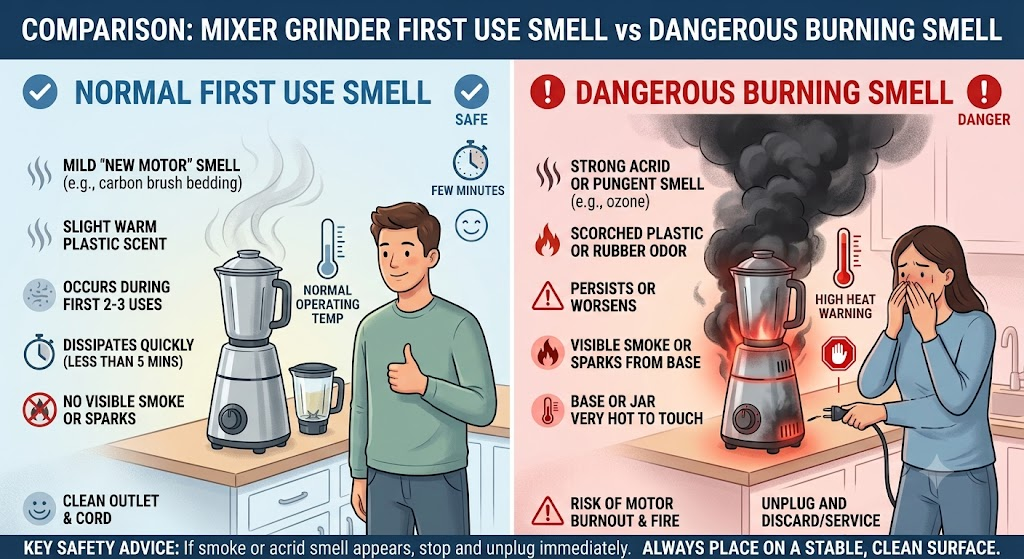
One of the most common concerns among new users is a slight burning smell when they use their mixer grinder for the first time. Fortunately, this is usually normal.
Why Does It Happen?
During manufacturing, the motor windings are coated with insulating varnish. When the motor runs for the first few times, this protective coating heats up and produces a mild burning smell. Many leading brands mention this in their user manuals.
How to Identify a Normal Burning Smell
The smell is usually harmless if:
- The mixer is brand new.
- There is no smoke.
- The smell disappears after two or three uses.
- The motor runs smoothly.
- There are no sparks.
How to Fix It
You usually don’t need any repair. Follow these steps:
- Run the mixer empty for 30–60 seconds.
- Allow it to cool.
- Use it for light grinding during the first few days.
- Avoid running continuously for more than 2–3 minutes.
After a few uses, the smell should disappear completely.
When Should You Worry?
Stop using the appliance immediately if you notice:
- Thick smoke
- Melting plastic smell
- Burning wires
- Visible sparks
- Motor becoming extremely hot
These signs indicate a genuine electrical fault rather than a normal first-use smell. Seeing sparks inside the motor? Read our guide on mixer grinder sparking inside to know when it’s normal and when it needs repair.
Expert Tip
Don’t panic if your new mixer grinder smells slightly burnt during the first use. It is generally part of the motor’s initial heating process.
2. Burning Smell During Grinding
Unlike the first-use smell, a burning smell that develops after months of use should never be ignored. It often indicates that the motor is working harder than it should.
Common Causes
1. Overloaded Jar

Many users fill the jar to the top. This makes the motor struggle.
2. Grinding Very Hard Ingredients
Examples include:
- Turmeric sticks
- Dry coconut
- Whole spices in large quantities
- Ice cubes
- Frozen foods
Grinding them continuously overheats the motor.
3. Continuous Operation
Running the mixer continuously for 10–15 minutes is one of the biggest reasons for overheating. Most household mixer grinders are designed for short operating cycles.
4. Poor Ventilation
Dust can block the cooling vents. Without proper airflow, the motor heats quickly.
5. Worn Bearings
Old bearings create friction, increasing motor temperature.
6. Low Voltage
Low voltage is common in some Indian areas during summer. The motor draws higher current, causing overheating.
How to Fix It
- Reduce the Load: Instead of filling one full jar grind in two or three batches and add some water if suitable.
- Give Cooling Breaks: Run the mixer for 2–3 minutes and rest for 2 minutes then repeat if needed.
- Clean Air Vents: To clean use soft brush, dry cloth or vacuum cleaner. Never pour water into the motor base.
- Inspect the Bearings: If the mixer makes both noise and burning smell, bearings may require replacement.
- Check Power Supply: Use a stable electrical connection. Avoid loose extension boards.
Prevention Tips
- Never overload the jar.
- Follow the manufacturer’s maximum capacity.
- Avoid continuous grinding for long periods.
- Clean ventilation slots every month.
If your appliance produces a burning smell while running, don’t ignore itread our detailed guide on mixer grinder burning smell to identify the cause and fix it before serious motor damage occurs.
Expert Tip
If your Mixer Grinder not working after producing a burning smell, don’t restart it immediately. Let it cool completely and inspect it before using again.
3. Motor Trips or Sudden Operational Stop
Has your mixer grinder suddenly stopped while making chutney or grinding spices? Don’t assume the motor has failed.
Most modern mixer grinders include an overload protection system that automatically shuts off the motor to prevent damage.
Why Does the Motor Trip?
The overload protector disconnects power when the motor temperature becomes too high. This prevents expensive motor damage.
Common Causes
- Overloaded Grinding: Too much food inside the jar.
- Thick Batter: Heavy batter increases motor load.
- Long Continuous Usage: Running without breaks overheats the winding.
- Jammed Blade: Hard ingredients may block blade movement.
- Low Voltage: Motor draws extra current.
- Poor Air Circulation: Dust-filled vents reduce cooling.
Signs That the Overload Protector Has Activated
- Mixer stops suddenly.
- No burning smell.
- No smoke.
- Power supply is normal.
- Motor restarts after cooling.
How to Fix It
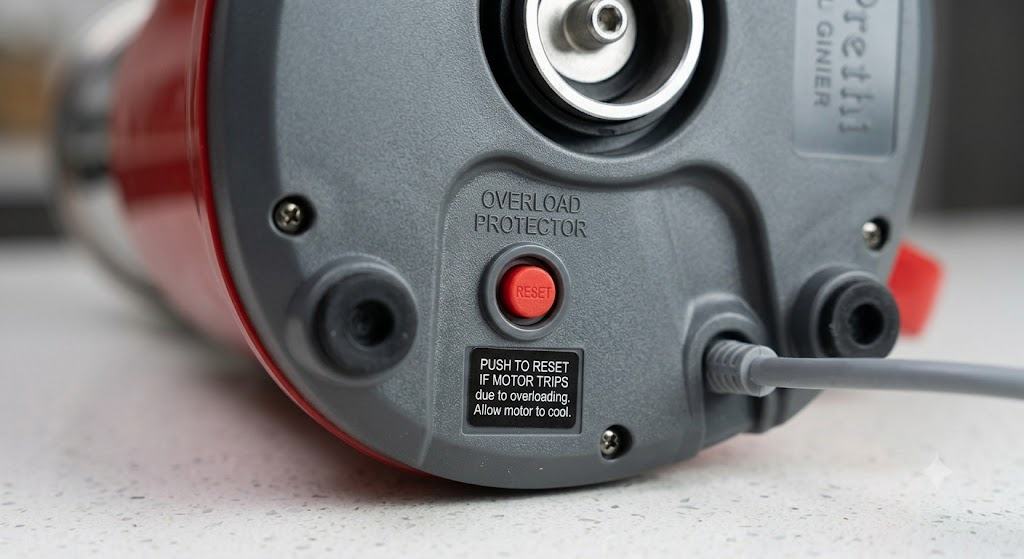
Step 1: Turn OFF the mixer. Unplug it.
Step 2: Wait for 20–30 minutes. Allow complete cooling.
Step 3: Press the Reset Button.Many mixer grinders have a red overload reset button located underneath the motor base. Press it gently.
Step 4: Reduce the Load: Empty some ingredients. Restart.
Step 5: Check Blade Movement. Rotate the blade manually (after unplugging). If it’s difficult to move, clean the jar thoroughly.
When Reset Doesn’t Work
If the mixer still refuses to start:
- Check the power cord.
- Inspect the plug.
- Test another socket.
- Check the jar locking.
- Contact an authorised service centre.
Prevention
- Avoid grinding large batches.
- Let the motor rest every few minutes.
- Keep cooling vents clean.
- Use the correct speed setting.
- Never ignore repeated tripping.
Expert Tip
Frequent overload trips are usually a warning sign. Repeatedly resetting the overload protector without fixing the root cause can shorten motor life.
4. Jar Leakage from the Bottom Coupler
Finding water or batter leaking from the bottom of the mixer jar is a common problem, especially in older mixer grinders. If ignored, the liquid can enter the motor base and damage the appliance permanently.
If your Mixer Grinder not working after a leakage, stop using it immediately until you identify the cause.
Common Causes
1. Worn-Out Rubber Gasket
The rubber gasket (seal) between the blade assembly and the jar prevents liquids from leaking. Over time, it can become hard, cracked, or loose.
2. Loose Blade Assembly
Frequent use may loosen the blade assembly, allowing liquid to seep through.
3. Damaged Oil Seal
The oil seal below the blade wears out after years of grinding, especially if you regularly prepare wet batters.
4. Cracked Jar Base
A small crack near the bottom of the jar may not be visible but can still cause leakage.
5. Incorrect Assembly After Cleaning
Sometimes the gasket is not placed properly after washing the jar.
Signs of Bottom Coupler Leakage
- Water dripping from the bottom of the jar
- Batter collecting around the coupler
- Wet motor base
- Rust around the blade shaft
- Difficulty rotating the blade
How to Fix the Problem
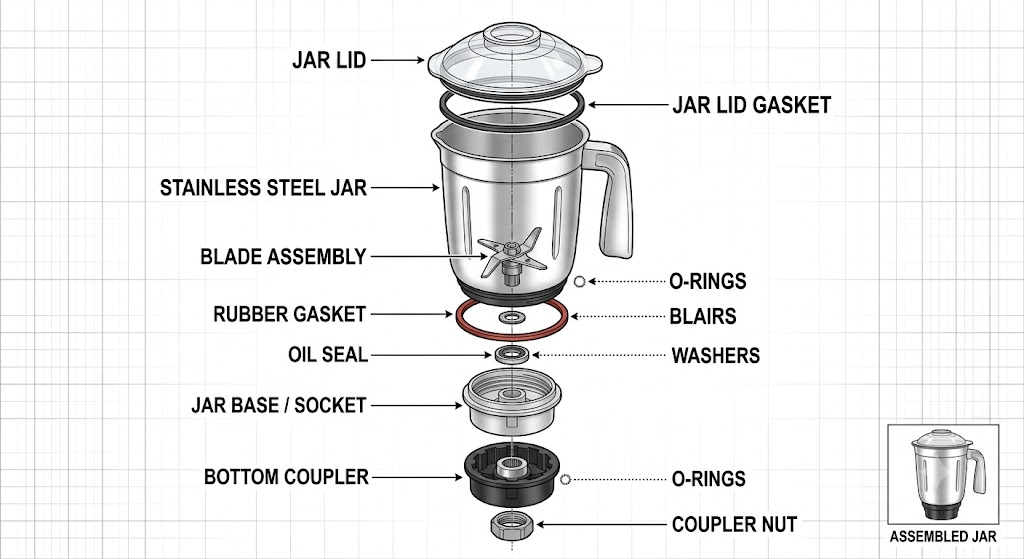
Check the Rubber Gasket
Remove the blade assembly and inspect the gasket. Replace it if it is:
- Cracked
- Flattened
- Torn
- Loose
Fortunately, replacement gaskets are inexpensive and widely available.
Tighten the Blade Assembly
Use the supplied jar wrench (if provided) to tighten the blade carefully.Do not overtighten, as this may damage the threads.
Replace the Oil Seal
If leakage continues even after replacing the gasket, the oil seal may need replacement. This repair is inexpensive and can usually be done by an authorised service centre.
Replace a Cracked Jar
Never use adhesive or glue to repair a cracked jar. Replace the entire jar instead.
Prevention Tips
- Wash the jar gently.
- Avoid dropping it.
- Replace worn gaskets every few years.
- Do not leave acidic foods inside the jar overnight.
Expert Tip
Many users blame the motor when their Mixer Grinder not working, but the actual issue is water entering the motor through a leaking jar.
5. Mixer Grinder Blade Not Rotating or Stuck (Jar Bottom Leaking)
Sometimes the motor runs, but the blade refuses to rotate. In other cases, the blade feels completely stuck even before switching on the appliance. This is usually a jar-related issue rather than a motor failure.
Common Causes
Food Jammed Under the Blade
Sticky ingredients such as:
- Coconut
- Peanut butter
- Thick chutney
- Jaggery
can harden around the blade shaft.
Rust Formation
If the jar remains wet for a long time, rust can develop around the bearing.
Worn Bearing
The bearing helps the blade rotate smoothly. A damaged bearing creates friction.
Water Entering the Bearing
Continuous leakage eventually damages the bearing.
Foreign Object
Sometimes small stones in spices or seeds become trapped beneath the blade.
How to Check
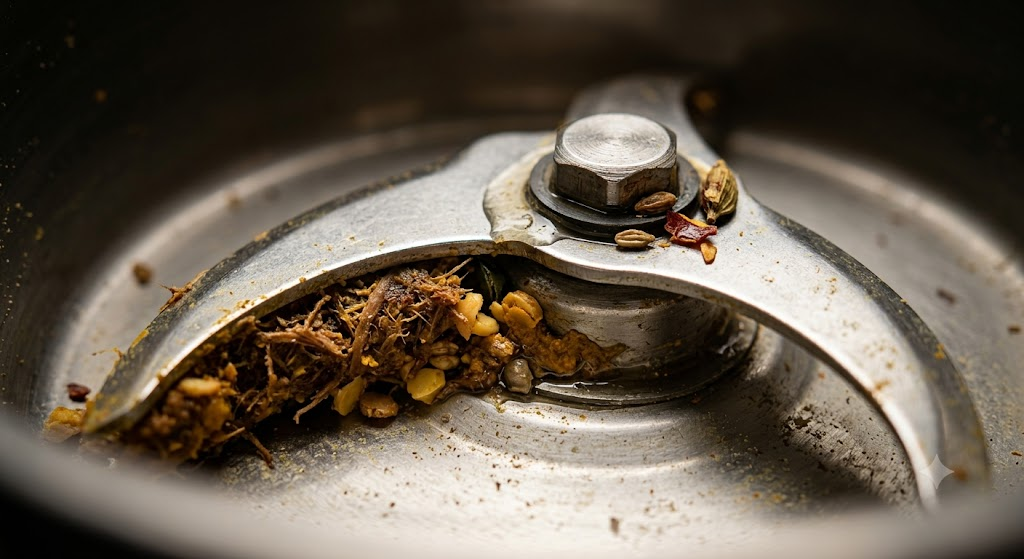
After unplugging the mixer:
- Rotate the blade manually.
- It should move freely.
- If it feels tight or completely stuck, inspection is required.
How to Fix It
Soak the Jar
Fill it with warm water and mild dishwashing liquid. Leave it for 20–30 minutes. This softens hardened food.
Clean the Blade Shaft
Use:
- Soft brush
- Toothbrush
- Wooden toothpick
Avoid metal tools that may damage the seal.
Lubricate the Bearing
If recommended by the manufacturer, apply a food-grade lubricant. Do not use ordinary machine oil.
Replace the Bearing
If the blade still doesn’t rotate smoothly, replace the bearing.
Prevention Tips
- Wash jars immediately after use.
- Never store food inside the jar overnight.
- Dry the jar completely before storage.
Worn or damaged blades are a common reason for poor performance. Learn how to identify and fix common mixer grinder blade problems.
Expert Tip
A stuck blade puts excessive pressure on the motor, causing overheating and overload trips.
6. Motor Running but Blade Not Spinning
One of the most confusing problems is when you hear the motor running normally, but nothing inside the jar moves. Fortunately, this problem is often easy to fix.
Why Does It Happen?
The motor transfers power to the blade using a small plastic or nylon coupler. When the coupler wears out, the motor continues running, but the blade no longer receives power.
Common Causes
Broken Motor Coupler
The teeth become rounded after years of use.
Damaged Jar Coupler
The coupler attached to the jar may also wear out.
Loose Blade Assembly
The blade may rotate freely without engaging properly.
Excessive Overloading
Grinding hard ingredients repeatedly can strip the coupler teeth.
How to Check
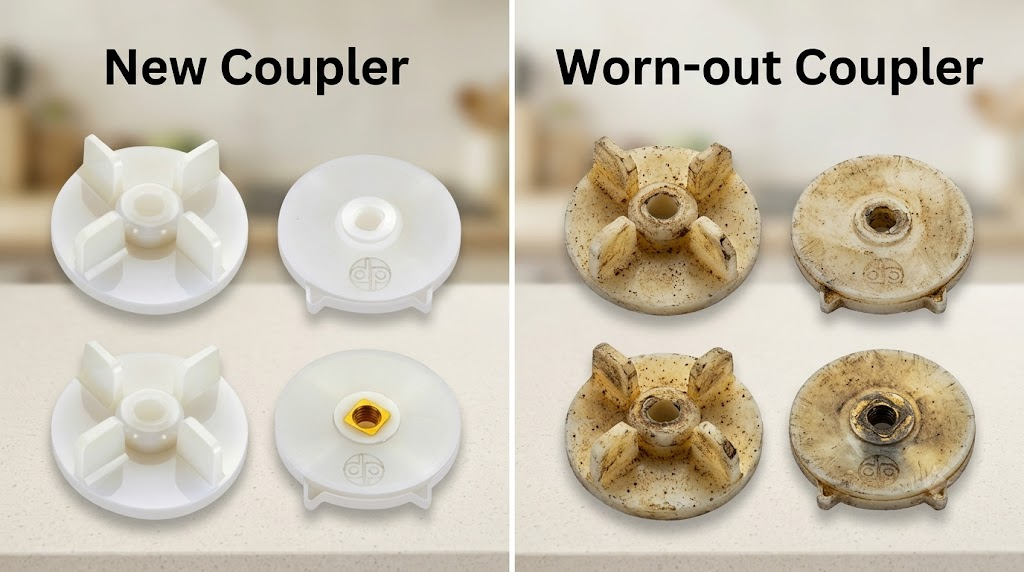
Look at the coupler on top of the motor. Check for:
- Broken teeth
- Cracks
- Rounded edges
- Excessive wear
Also inspect the coupler beneath the jar.
How to Fix It
Replace the Motor Coupler
Most couplers cost very little and are easily available. Many users can replace them at home using simple tools.
Replace the Jar Coupler
If the jar coupler is worn, replacing only the motor coupler won’t solve the problem.
Avoid Overloading
Fill only up to the recommended level.
Prevention
- Don’t grind stones or very hard objects.
- Avoid overfilling jars.
- Replace worn couplers early.
Expert Tip
If the motor sounds perfectly normal but the blade remains still, check the coupler before assuming the motor has failed.
7. Dull Blades: Grinding Time Is Longer

Have you noticed that your chutney isn’t smooth anymore? Or dosa batter feels grainy even after several minutes?
The blades may have become dull.
Why Do Blades Become Dull?
Every grinding cycle slowly wears away the cutting edge. Grinding hard ingredients accelerates the process.
Common Signs
- Grinding takes longer.
- Batter remains coarse.
- Spices are unevenly ground.
- Chutney is not smooth.
- Motor works harder than before.
Causes
- Natural wear
- Frequent dry grinding
- Grinding hard spices
- Ice crushing
- Poor-quality blades
How to Fix It
Replace the Blade
This is the best long-term solution.
Sharpen the Blade
Professional sharpening is possible for some stainless steel blades. However, repeated sharpening reduces blade life.
Avoid Grinding Extremely Hard Materials
For example:
- Stones in spices
- Frozen food
- Thick turmeric sticks
Prevention Tips
- Use the correct jar for each task.
- Replace blades every few years if used regularly.
- Clean blades carefully after every use.
Expert Tip
Sharp blades reduce grinding time, lower electricity consumption, and place less stress on the motor.
8. Blade Wobbling or Excess Vibration
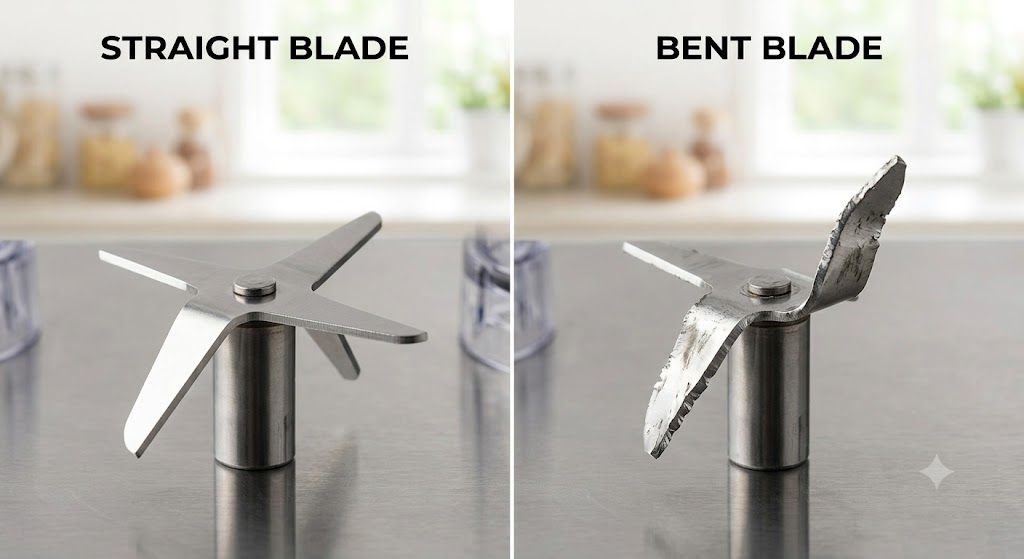
If the blade appears unstable or shakes while rotating, don’t ignore it. A wobbling blade affects grinding quality and can damage the jar.
Common Causes
Loose Blade Nut
The blade assembly becomes loose after repeated use.
Bent Blade
Accidental impact may bend the blade.
Worn Bearing
Loose bearings allow excessive movement.
Damaged Shaft
The blade shaft may become uneven after years of use.
Warning Signs
- Uneven grinding
- Loud rattling
- Vibrating jar
- Blade touching the jar
- Excessive shaking
How to Fix It
- Tighten the Blade Assembly: Inspect all fasteners. Tighten carefully.
- Replace Bent Blade: Never attempt to straighten a bent blade. Replace it.
- Replace Worn Bearing: A worn bearing should be replaced promptly.
Prevention
- Don’t drop the jar.
- Avoid grinding oversized ingredients.
- Inspect blades regularly.
Expert Tip
A wobbling blade creates additional stress on both the bearing and motor, reducing the overall lifespan of the mixer grinder.
9. Rusting Blades and Stuck Bearings
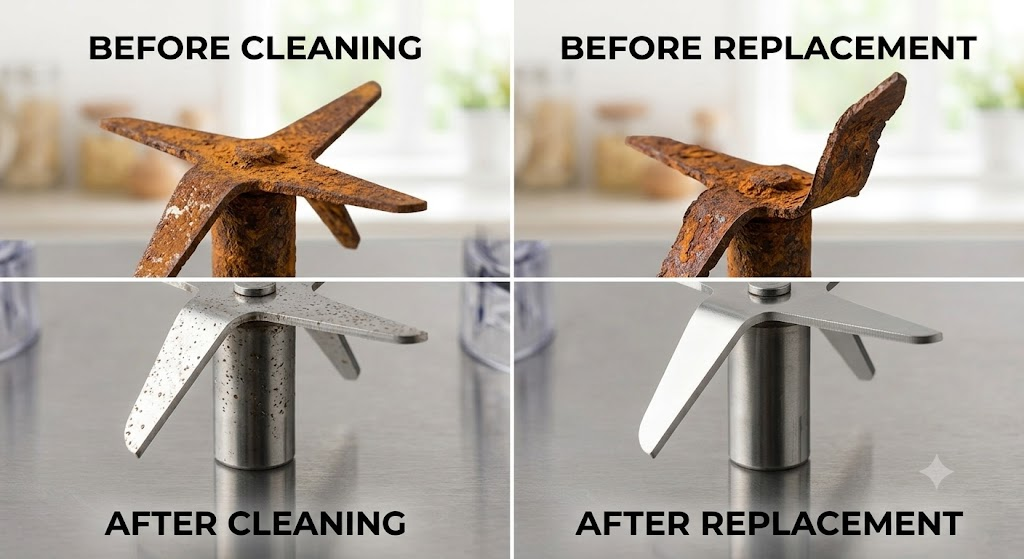
Although most mixer grinder blades are made of stainless steel, they can still develop surface rust if not maintained properly. Bearings are even more vulnerable because they contain moving metal parts.
Why Does Rust Form?
Moisture
Leaving the jar wet after washing.
Salt and Acidic Foods
Grinding tamarind, tomatoes or lemon regularly without cleaning.
Long Storage
Keeping the appliance unused for months.
Poor Drying
Storing the jar without drying it completely.
Signs of Rust
- Brown spots on the blade
- Blade feels rough
- Grinding becomes difficult
- Metallic smell
- Blade movement becomes stiff
How to Fix It
Clean Minor Rust
For light surface rust:
- Make a paste of baking soda and water.
- Apply it to the affected area.
- Gently scrub with a soft sponge.
- Rinse thoroughly and dry immediately.
Avoid using steel wool, as it can scratch stainless steel surfaces.
Remove Stuck Bearings
If the bearing is stuck due to rust, it usually needs replacement rather than repair.
Replace Rusted Blades
If rust has spread extensively or the blade has become pitted, replace the blade assembly. This is safer and ensures better grinding performance.
Prevention Tips
- Dry jars immediately after washing.
- Store jars without the lids tightly closed so moisture can escape.
- Grind a small amount of cooking oil occasionally if recommended by the manufacturer to help protect moving parts.
- Inspect blades regularly for early signs of corrosion.
Expert Tip
Rust not only affects grinding performance but can also contaminate food. If you notice deep rust or damaged blades, replacement is a better option than continued use. Choose food-grade SS 304 blades; hand dry jars immediately after washing instead of air-drying.
To troubleshoot your appliance more effectively, familiarize yourself with the different mixer grinder parts and understand how each component works.
10. Extreme Noise and Vibration (Base Sliding)
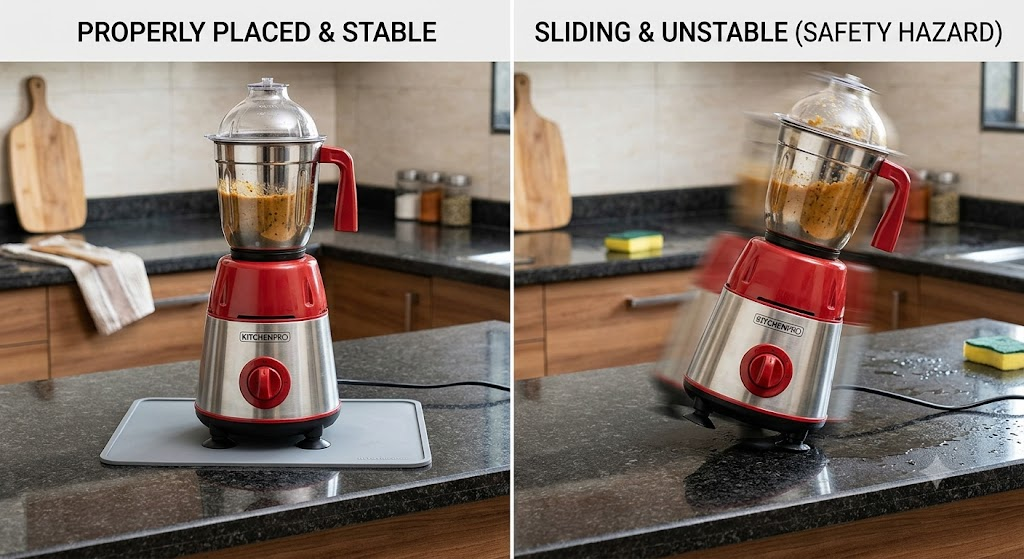
A mixer grinder naturally produces some noise, especially while grinding hard ingredients. However, if it starts making unusually loud sounds or the base moves across the kitchen counter, something is wrong.
Ignoring excessive vibration can damage the motor, bearings, coupler, and even crack the jar over time.
Common Causes
Worn-Out Motor Bearings
Motor bearings help the shaft rotate smoothly. As they wear out, friction increases, resulting in loud grinding noises.
Uneven Surface
Placing the mixer grinder on an uneven or slippery countertop can cause the appliance to vibrate excessively.
Damaged Rubber Feet
Most mixer grinders have anti-slip rubber feet. If these become worn or detached, the appliance may slide during operation.
Bent Blade
A bent blade creates an imbalance while rotating at high speed.
Overloaded Jar
Filling the jar beyond its recommended capacity increases vibration and puts extra stress on the motor.
Loose Internal Components
Loose screws, motor mounts, or jar assemblies can also create rattling sounds.
How to Fix the Problem
- Place the mixer grinder on a flat, stable surface.
- Tighten any loose screws if accessible.
- Replace damaged rubber feet.
- Reduce the quantity of ingredients.
- Replace bent blades.
- Get worn bearings replaced by an authorised service centre.
Prevention Tips
- Always use the correct jar size.
- Avoid overloading.
- Check the rubber feet every few months.
- Do not continue using the appliance if vibration suddenly increases.
If excessive noise is your biggest concern, check out our guide to the best silent mixer grinder for quieter operation without compromising performance.
Expert Tip
If your mixer grinder suddenly becomes much louder than usual, don’t ignore it. Early bearing replacement is much cheaper than replacing the entire motor.
11. Lids Flying Off During Operation
Nothing is more frustrating than opening your kitchen to find chutney or batter splashed everywhere because the lid came off while grinding. Besides creating a mess, it can also be dangerous.
Common Causes
Overfilled Jar
The most common reason. Food expands while grinding and pushes the lid upward.
Hot ingredients
Pressure build-up from grinding hot ingredients, or lack of integrated lid clamps.
Worn Rubber Lid Seal
A damaged seal prevents the lid from fitting tightly.
Incorrect Lid Placement
The lid may appear closed but isn’t fully locked.
High-Speed Start
Starting at the highest speed immediately creates pressure inside the jar.
Steam Pressure
Grinding hot ingredients generates steam that increases internal pressure.
How to Fix the Problem
- Fill the jar only up to the recommended level.
- Check the rubber seal regularly.
- Always press the lid firmly before switching on.
- Begin grinding at a lower speed.
- Allow hot ingredients to cool before grinding.
Prevention Tips
- Never exceed the maximum fill line.
- Hold the lid gently while grinding large batches.
- Replace damaged lids immediately.
Expert Tip
Many people blame poor lid quality, but overfilling is responsible for most lid accidents. Never grind boiling or hot ingredients; let food cool to room temp; choose jars with locking clips.
12. Sparks or Electricity Trips
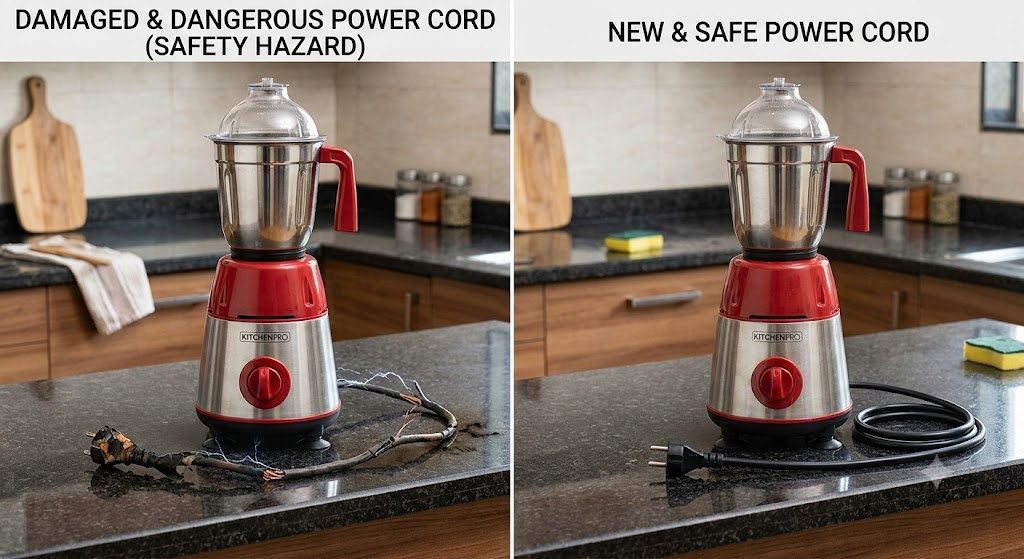
If your mixer grinder produces sparks, emits smoke, or trips your home’s circuit breaker, stop using it immediately. Unlike many other mixer grinder problems, electrical faults should never be ignored.
Common Causes
Worn Carbon Brushes
Carbon brushes gradually wear down with use.
Loose Internal Wiring
Vibration over many years can loosen electrical connections.
Water Entering the Motor
Leaking jars often allow water to reach electrical components.
Damaged Power Cord
Cuts or exposed wires can create short circuits.
Faulty Switch
Old switches sometimes spark internally.
Motor Winding Failure
A damaged motor winding may cause repeated electrical trips.
Warning Signs
- Visible sparks
- Burning wire smell
- Repeated MCB trips
- Smoke
- Electric shock while touching the appliance
- Flickering kitchen lights
How to Fix the Problem
Step 1: Switch off the appliance immediately.
Step 2: Unplug it from the power socket.
Step 3: Do not attempt to continue using it.
Step 4: Inspect the power cord for visible damage.
Step 5: Contact an authorised service centre.
Electrical repairs should only be carried out by trained technicians.
Prevention Tips
- Never immerse the motor base in water.
- Replace damaged cords immediately.
- Keep the appliance dry.
- Inspect leakage problems early.
Expert Tip
If your Mixer Grinder not working after a power trip, never bypass the safety system or continue switching it on repeatedly.
Preventive Maintenance Checklist
Most mixer grinder problems can be avoided through simple maintenance. Follow this checklist to increase the lifespan of your appliance.
After Every Use
- Wash jars immediately.
- Dry all parts completely.
- Wipe the motor base with a dry cloth.
- Clean food residue around the blade.
Every Month
- Inspect the coupler.
- Check the rubber gasket.
- Clean motor ventilation openings.
- Tighten loose screws.
Every Six Months
- Inspect blades for dullness.
- Check for unusual vibration.
- Examine the power cord.
- Check jar locking mechanism.
Every Year
- Replace damaged seals.
- Replace worn couplers.
- Service heavily used mixer grinders.
Follow these essential mixer grinder safety tips to reduce electrical hazards and extend motor life.
Signs Your Mixer Grinder Needs Professional Repair
Although many issues can be fixed at home, stop using the appliance and contact an authorised service centre if you notice:
- Thick smoke from the motor
- Repeated electrical trips
- Sparks from the motor housing
- Burning wire smell
- Loud grinding noise from inside the motor
- Water entering the motor base
- Overload protector trips even with an empty jar
Ignoring these warning signs can lead to permanent motor damage or electrical hazards.
Maintenance Tips to Prevent Mixer Grinder Problems
Regular maintenance can prevent most issues before they become expensive repairs.
Follow these simple habits:
- Clean the jars immediately after every use.
- Dry all parts completely before storing.
- Never overload the jars.
- Use the correct jar for wet and dry grinding.
- Allow the motor to cool between long grinding sessions.
- Check the coupler, gasket and blades every few months.
- Keep the motor base clean and dry.
- Avoid immersing the motor unit in water.
- Store the mixer grinder in a dry, dust-free place.
- Replace worn parts such as gaskets, couplers and blades before they cause bigger problems.
These simple practices can significantly extend the life of your mixer
Common Mixer Grinder Problems at a Glance
| Problem | Possible Cause | Can You Fix It at Home? |
|---|---|---|
| Initial burning smell during first use | Protective coating on motor winding | Yes |
| Burning smell during grinding | Overloaded motor or continuous operation | Yes |
| Motor trips suddenly | Overheating or overload protector activated | Yes |
| Jar leaking | Damaged gasket or bottom seal | Yes |
| Blade not rotating | Food jammed or worn coupler | Usually |
| Motor running but blade not spinning | Broken coupler | Yes |
| Excessive vibration | Uneven surface or damaged blade | Yes |
| Loud noise | Loose parts or worn bearings | Sometimes |
| Sparks | Carbon brushes or wiring issue | No |
| Electricity trips | Short circuit or motor fault | No |
When Should You Repair or Replace Your Mixer Grinder?
Many users wonder whether it’s worth repairing an old mixer grinder. Here’s a simple guide.
Repair It If
- Only the gasket is damaged.
- The coupler is worn.
- The blades need replacement.
- The overload protector has tripped.
- Bearings need replacement.
- The switch is faulty.
These repairs are generally affordable.
Replace It If
- Motor winding has failed.
- Multiple parts require replacement.
- Spare parts are unavailable.
- The appliance is more than 8–10 years old and frequently breaks down.
- Repair cost exceeds 50% of the price of a new mixer grinder.
Comparison Table: DIY Fix vs Technician Needed
| Problem | Symptoms | Possible Cause | DIY Fix | Technician Needed? |
|---|---|---|---|---|
| Initial burning smell during first use | Mild smell for first few uses | Motor varnish heating | ✅ Yes | ❌ No |
| Burning smell during grinding | Hot motor, burning odour | Overloading or overheating | ✅ Yes | If it continues |
| Motor trips suddenly | Stops while grinding | Overload protector activated | ✅ Yes | If frequent |
| Jar leakage | Water leaking below jar | Damaged gasket or oil seal | ✅ Yes | If oil seal replacement is needed |
| Blade not rotating | Blade jammed | Food blockage or rust | ✅ Yes | If bearing is damaged |
| Motor running but blade not spinning | Motor sounds normal | Worn motor or jar coupler | ✅ Yes | Rarely |
| Dull blades | Rough grinding | Worn blades | ✅ Replace blades | ❌ No |
| Blade wobbling | Excessive shaking | Bent blade or loose assembly | ✅ Tighten/Replace | If shaft is damaged |
| Excessive vibration | Base moving | Worn bearings or uneven surface | ✅ Basic checks | Bearings replacement |
| Lids flying off | Food spilling | Overfilled jar | ✅ Yes | ❌ No |
| Rusted blades | Brown spots | Moisture and poor maintenance | ✅ Clean/Replace | Usually not |
| Sparks from motor | Visible sparks | Carbon brush or wiring fault | ❌ No | ✅ Immediately |
| Electricity trips | MCB trips | Short circuit | ❌ No | ✅ Immediately |
| Electric shock | Tingling while touching | Earthing or wiring issue | ❌ No | ✅ Immediately |
| Mixer Grinder not working completely | No response | Power, switch, motor or wiring | Basic checks | If unresolved |
Common Mistakes That Damage a Mixer Grinder
Avoid these habits to prevent your Mixer Grinder not working unexpectedly.
- Running the mixer continuously for 10–15 minutes.
- Filling the jar to the top.
- Grinding stones accidentally mixed with spices.
- Washing the motor base with water.
- Ignoring unusual sounds.
- Continuing to use a leaking jar.
- Storing jars while still wet.
- Using damaged power cords.
- Grinding very hot food immediately after cooking.
FAQs: Mixer Grinder Problems and Solutions
Q. Why is my Mixer Grinder not working suddenly?
The most common reasons include an overloaded motor, a tripped overload protector, power supply issues, worn couplers, or electrical faults. Start by checking the power source, allowing the motor to cool, and pressing the reset button if available.
Q. Is a burning smell normal in a new mixer grinder?
Yes. A mild burning smell during the first few uses is generally caused by the protective varnish on the motor windings. It should disappear after a few uses. However, smoke or a strong burning wire smell is not normal.
Q. Why is my mixer grinder making loud noise?
Loud noise may be caused by worn bearings, a bent blade, loose internal parts, or an overloaded jar. Regular inspection and timely replacement of worn components can solve the problem.
Q. Why is the motor running but the blade not rotating?
This usually indicates a worn or broken motor coupler or jar coupler. Replacing the damaged coupler typically restores normal operation.
Q. Why is water leaking from the bottom of the jar?
A damaged rubber gasket, worn oil seal, loose blade assembly, or cracked jar base are the most common reasons.
Q. Can I sharpen mixer grinder blades?
Some stainless steel blades can be professionally sharpened. However, replacing the blade assembly is usually a better and safer long-term solution.
Q. Why does my mixer grinder trip the electricity?
Repeated electrical trips may indicate a short circuit, damaged wiring, faulty motor winding, or water entering the motor. Stop using the appliance immediately and contact an authorised service centre.
Q. How long should I run a mixer grinder continuously?
Most household mixer grinders should not run continuously for more than 2–3 minutes. Allow short cooling breaks between grinding cycles, especially while preparing heavy batters.
Conclusion
A mixer grinder is built to handle everyday kitchen tasks, but like any appliance, it needs proper care to perform well. Whether you’re dealing with an initial burning smell during first use, a motor that suddenly stops, jar leakage, dull blades, excessive vibration, or a Mixer Grinder not working, identifying the root cause early can prevent costly repairs.
Simple habits such as avoiding overloading, cleaning the jars immediately after use, replacing worn gaskets and couplers, and giving the motor enough cooling time can significantly extend the life of your mixer grinder. While many minor problems can be fixed at home, never ignore electrical issues like sparks, smoke, or repeated power trips. These require immediate professional attention to ensure your safety.
By following the troubleshooting steps and maintenance tips shared in this guide, you can keep your mixer grinder running efficiently for years and enjoy smooth, hassle-free grinding every day.
Related Posts:
- Mixer Grinder Lifespan in India
- Mixer Grinder Gasket Replacement: How to Fix Leaks and Replace a Worn-Out Gasket
- Mixer Grinder Coupler Guide
- Why Mixer Grinder Not Grinding Properly? 12 Easy Fixes That Actually Work
Sourabh researches and writes about home appliances, kitchen gadgets, and common appliance problems to help readers make smarter buying decisions. He specializes in mixer grinders, refrigerators, air conditioners, washing machines, and appliance troubleshooting guides.
At ReviewSpot, Sourabh focuses on creating easy-to-understand content that simplifies technical appliance issues into practical solutions. His goal is to help users save time, avoid costly mistakes, and choose the right appliances with confidence.