

How to Remove Odors from Fridge: Easy and Effective Ways to Keep Your Refrigerator Fresh

Have you ever opened your refrigerator to grab a bottle of water and been greeted by a strange smell instead? You’re not alone. A bad smell inside the fridge is one of the most common kitchen problems in Indian homes. Whether it’s spoiled leftovers, forgotten vegetables, fish, onions, milk spills, or power cuts, unpleasant odors can quickly spread throughout your refrigerator and even affect the taste of fresh food.
Read: 10 Best Refrigerator Under 20000 in India 2026
The good news is that getting rid of these smells isn’t difficult. With the right cleaning method and a few simple household ingredients, you can make your fridge smell fresh again. In this guide, you’ll learn how to remove odors from fridge step by step.
If you’re planning to buy a new refrigerator after fixing odor issues, read our Refrigerator Buying Guide to choose the right model for your home.
How to Remove Odors from Fridge
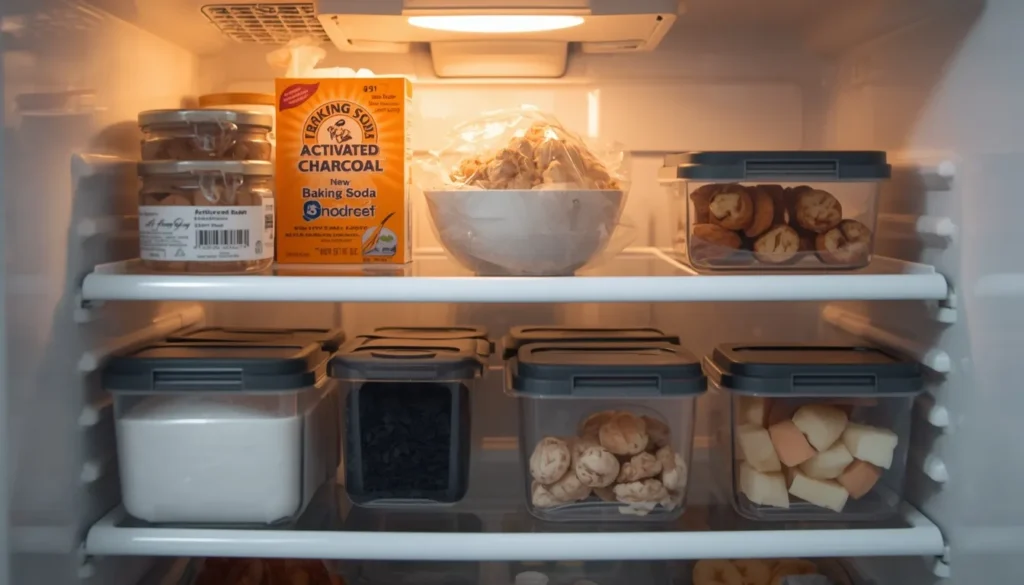
If you want to know how to remove odors from fridge, follow these simple steps:
- Empty the refrigerator completely.
- Throw away expired or spoiled food.
- Switch off the fridge and remove shelves and drawers.
- Wash removable parts with warm water and mild dish soap.
- Clean the interior using a solution of warm water and baking soda.
- Dry every surface completely before putting everything back.
- Place an odor absorber such as baking soda, activated charcoal, or coffee grounds inside the fridge.
- Store food in airtight containers to prevent future smells.
- Clean your refrigerator every 2–4 weeks for long-lasting freshness.
Why Does Your Fridge Smell Bad?
Your refrigerator is designed to keep food fresh, but it cannot stop odors from spreading. Even at low temperatures, bacteria and mould continue to grow slowly, especially when food is forgotten or spills are left uncleaned.
Here are the most common reasons behind unpleasant refrigerator smells.
1. Spoiled Food
Old vegetables, rotten fruits, expired dairy products, leftover curry, seafood, and meat are the biggest reasons for bad odors.
Even a single forgotten lemon or tomato hidden behind other food items can produce a strong smell after a few days.
2. Food Spills
Milk, dal, curry, pickle oil, fruit juice, or sauces that drip onto shelves create sticky spots where bacteria grow.
These spills often remain hidden underneath vegetable trays or behind bottles.
3. Strong-Smelling Foods
Some foods naturally release strong aromas. Examples include:
- Fish
- Garlic
- Onion
- Paneer stored uncovered
- Cheese
- Pickles
- Fermented foods
- Leftover biryani
Without airtight containers, these smells spread quickly throughout the refrigerator.
Wondering whether your refrigerator technology affects cooling performance? Learn what an inverter refrigerator is and how it maintains consistent cooling.
4. Power Cuts
Power outages are common in many parts of India.
If electricity remains off for several hours, refrigerated food begins to spoil, causing unpleasant odors that may continue even after power returns.
5. Dirty Drain Hole
Most refrigerators have a small drainage hole that removes excess water. Food particles can block this drain, leading to bacterial growth and unpleasant smells.
6. Forgotten Food
Many people store leftovers with good intentions but forget them completely. Weeks later, the container becomes the source of a terrible smell.
Is a Smelly Fridge Dangerous?
A bad smell isn’t always harmful, but it often indicates that bacteria, mould, or spoiled food are present. Ignoring refrigerator odors can lead to:
- Food contamination
- Faster spoilage
- Unpleasant taste transfer
- Growth of harmful bacteria
- Poor hygiene
That’s why it’s important to remove both the smell and its source.
Things You’ll Need Before Cleaning
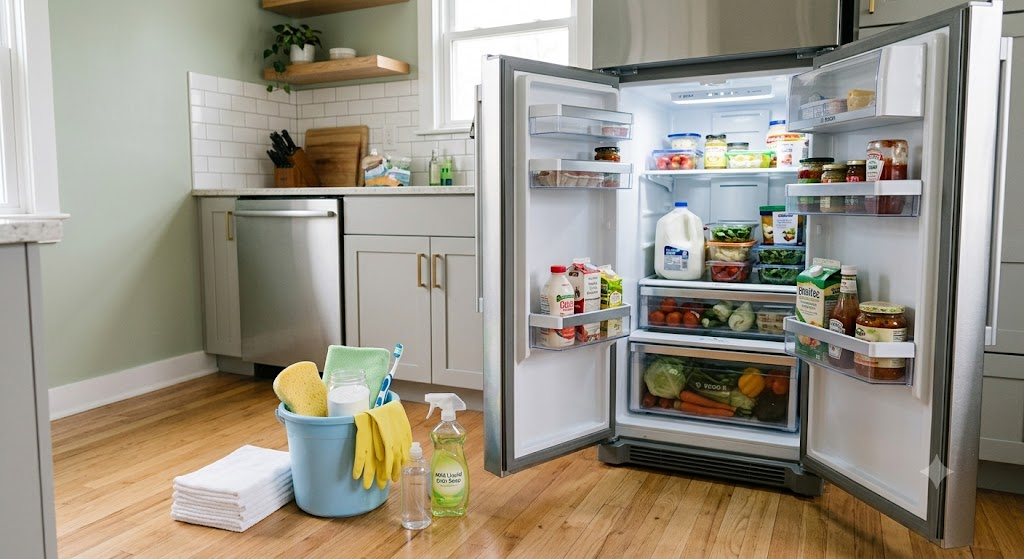
Gather these items before you start.
- Warm water
- Baking soda
- Mild liquid dish soap
- Soft sponge
- Microfiber cloth
- Old toothbrush
- Small bucket
- Dry towel
- Gloves (optional)
Avoid using harsh chemicals such as bleach or strong acids inside the refrigerator unless specifically recommended by the manufacturer.
Step-by-Step Guide: How to Remove Odors from Fridge
This method works for almost every refrigerator, whether it is a single-door, double-door, side-by-side, or French-door model.
Step 1: Empty the Refrigerator
Remove everything. Don’t forget:
- Vegetable basket
- Door shelves
- Ice trays
- Water bottles
- Condiments
- Hidden leftovers
Place perishable food in an insulated cooler if cleaning takes longer than 30 minutes.
Step 2: Throw Away Spoiled Food
Carefully inspect every item. Discard anything that is:
- Expired
- Rotten
- Leaking
- Mouldy
- Giving off a foul smell
Many people clean the refrigerator but forget the actual source of the odor. Without removing spoiled food, the smell quickly returns.
Step 3: Switch Off the Refrigerator
Turn off the power. Leave the refrigerator door open while cleaning. This helps fresh air circulate and removes trapped odors.
Step 4: Remove Shelves and Drawers
Take out:
- Glass shelves
- Vegetable trays
- Door bins
- Egg holders
Wash them separately. Never wash cold glass shelves immediately with hot water. Allow them to reach room temperature first to prevent cracking.
Step 5: Prepare a Baking Soda Cleaning Solution
Mix 2 tablespoons baking soda and 1 litre warm water Baking soda is one of the safest and most effective natural cleaners. It removes odors without leaving behind strong fragrances.
Step 6: Clean Every Surface
Use a soft sponge to wipe:
- Walls
- Ceiling
- Floor
- Door seals
- Shelf supports
- Corners
Pay extra attention to sticky stains and dried spills. An old toothbrush works well for cleaning rubber door gaskets and tight corners.
Step 7: Clean the Drain Hole
Many refrigerator owners overlook this step. Locate the drainage hole at the back of the fridge. Use Warm water, Cotton swab and soft brush for removing food particles from the drain prevents future odors.
Step 8: Dry Everything Completely
Use a clean microfiber cloth. Moisture encourages mould growth, so every shelf and surface should be completely dry before reassembling the refrigerator.
Step 9: Return Food Carefully
Before placing food back:
- Wipe bottles clean.
- Use airtight containers.
- Label leftovers with the date.
- Separate raw and cooked food.
- Store fish and meat securely.
A little organisation goes a long way in preventing future smells.
Best Natural Ways to Remove Odors from Fridge
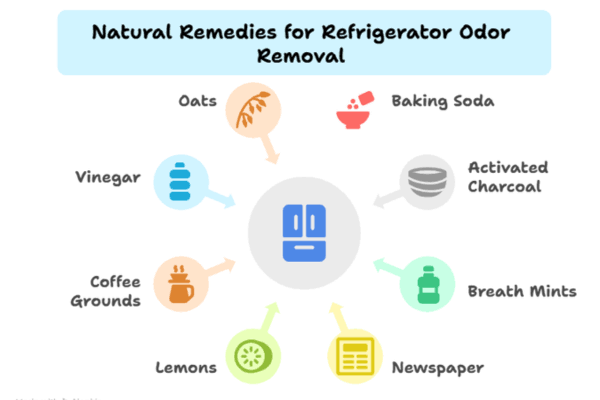
If the smell remains after cleaning, natural odor absorbers can help.
1. Baking Soda
Baking soda absorbs acidic and alkaline odor molecules.
How to use:
- Fill a small bowl with baking soda.
- Place it on the middle shelf.
- Replace every 30 days.
This is one of the easiest and most affordable ways to remove fridge odors.
2. Activated Charcoal
Activated charcoal absorbs odors better than baking soda and lasts longer. Simply place a small pouch inside the refrigerator. It works especially well after storing seafood or meat.
3. Coffee Grounds
Used coffee grounds can reduce mild odors. Dry the grounds before placing them in a small bowl inside the refrigerator. They leave behind a light coffee aroma.
4. Lemon
Cut a lemon into halves and place it inside for a fresh citrus smell. However, lemon mainly masks odors and works best after deep cleaning.
5. Vanilla Cotton Ball
Add a few drops of vanilla extract to a cotton ball. Place it inside the refrigerator for a pleasant fragrance.
Remember, vanilla improves smell but does not remove bacteria.
Common Mistakes People Make
Many people unknowingly make these mistakes while trying to remove fridge odors.
1. Only Using Air Fresheners
Air fresheners hide smells but don’t remove bacteria or spoiled food. Always eliminate the source first.
2. Ignoring Expiry Dates
Old sauces, chutneys, pickles, and dairy products often remain in refrigerators for months. Check expiry dates regularly.
3. Overloading the Refrigerator
A packed refrigerator blocks airflow. Poor air circulation allows odors to stay trapped.
4. Leaving Food Uncovered
Always use airtight containers. Covering food keeps moisture and smells under control.
5. Forgetting the Door Gasket
The rubber seal around the refrigerator door traps moisture and food particles. Clean it regularly using warm soapy water.
Does Baking Soda Really Remove Fridge Odors?
Yes.
Baking soda doesn’t simply cover bad smellsit helps neutralise odor-causing compounds. That’s why it has remained one of the most trusted home remedies for decades. It is inexpensive, food-safe, and widely available in India.
However, baking soda is not a magic solution. If the odor is coming from spoiled food, mould, or a dirty drain hole, you must clean the refrigerator thoroughly first. Baking soda works best as a preventive odor absorber after cleaning.
How to Remove Stubborn Odors from Fridge
Sometimes, even after a thorough cleaning, an unpleasant smell lingers. This usually happens when odor-causing molecules have been absorbed into plastic shelves, rubber door seals, or insulation inside the refrigerator.
Here’s how to remove stubborn odors from your fridge.
1. After Storing Fish or Seafood
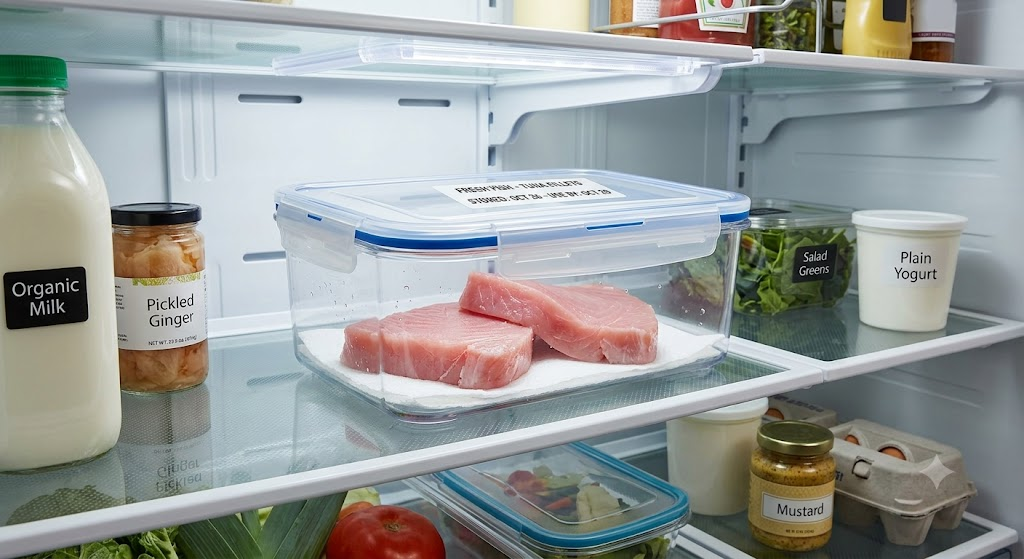
Fish is one of the strongest odor-causing foods. Try this method:
- Remove all food.
- Wash the fridge with a baking soda solution.
- Wipe it again using a mixture of equal parts white vinegar and water.
- Leave the refrigerator door open for 30–60 minutes.
- Place a bowl of activated charcoal inside overnight.
Avoid storing raw fish uncovered. Always use leak-proof containers.
2. After a Power Cut
Long power failures are common during heavy rains or summer storms in many parts of India. If food has spoiled during the outage:
- Throw away all spoiled food immediately.
- Wash every removable shelf.
- Clean the interior with baking soda solution.
- Dry the refrigerator completely.
- Keep the doors open for a few hours before restarting.
If the smell remains for several days, replace the baking soda or charcoal and repeat the cleaning process.
3. After Milk or Curry Spills
Milk, dal, sambhar, curry, and gravy can seep into hidden corners.
Check:
- Vegetable drawer runners
- Door shelves
- Drain hole
- Shelf supports
- Bottom tray
Cleaning only the visible area often leaves behind the source of the smell.
4. After Storing Onion or Garlic
Onions and garlic release strong sulphur compounds that spread easily. Store them in sealed containers instead of loose plastic bags. A bowl of baking soda usually removes the remaining odor within a day or two.
Natural Remedies: What Works and What Doesn’t
Many home remedies are shared online, but not all of them work equally well.
| Method | Works? | Notes |
|---|---|---|
| Baking soda | ✅ Excellent | Neutralises odors effectively. |
| Activated charcoal | ✅ Excellent | Best for strong and lingering smells. |
| White vinegar | ✅ Very Good | Helps clean surfaces and reduce odor. |
| Coffee grounds | ✅ Good | Absorbs mild odors and leaves a pleasant aroma. |
| Lemon | ✅ Fair | Freshens the fridge but doesn’t eliminate bacteria. |
| Newspaper | ⚠ Limited | Can absorb some moisture but isn’t very effective. |
| Vanilla extract | ⚠ Limited | Masks smells instead of removing them. |
| Air fresheners | ❌ Not Recommended | Only cover up odors temporarily. |
How to Prevent Fridge Odors
Learning how to remove odors from fridge is useful, but preventing bad smells is even better.
Follow these simple habits.
1. Store Food in Airtight Containers
Open bowls and uncovered leftovers spread odors quickly. Glass or BPA-free plastic containers with tight-fitting lids are the best choice.
2. Label Leftovers
Write the date before refrigerating cooked food. As a general rule:
- Eat leftovers within 2–3 days.
- Discard them if they develop an unusual smell or appearance.
3. Clean Spills Immediately
A few drops of milk or curry may seem harmless, but they become difficult to remove once they dry. Wipe spills as soon as they happen.
4. Check the Fridge Weekly
Spend five minutes every weekend checking:
- Expired sauces
- Old vegetables
- Rotten fruits
- Forgotten leftovers
This simple habit prevents most refrigerator odors.
5. Don’t Overfill the Refrigerator
Cold air needs space to circulate. An overloaded refrigerator cools less efficiently and traps odors.
6. Replace the Odor Absorber Monthly
Whether you use baking soda or activated charcoal, replace it every 30 days for the best results.
Refrigerator Cleaning Schedule
A regular cleaning routine keeps your refrigerator fresh throughout the year.
Every Day
- Wipe visible spills.
- Close food containers properly.
Every Week
- Remove expired food.
- Check fruits and vegetables.
- Wipe sticky shelves.
Every Month
- Deep clean the interior.
- Wash shelves and drawers.
- Replace baking soda or charcoal.
Every Six Months
- Clean the drain hole.
- Vacuum the condenser coils (if accessible and recommended by the manufacturer).
- Inspect the rubber door gasket for dirt or mould.
Indian Kitchen Tips to Reduce Fridge Smells
Indian kitchens often store foods with strong aromas, making odor control more challenging. Here are some practical tips:
- Cool hot curries before refrigerating to reduce moisture.
- Store pickles in tightly sealed glass jars.
- Wrap paneer securely to prevent it from drying out and absorbing other smells.
- Keep green chillies, coriander, and mint in breathable containers to reduce spoilage.
- Freeze seafood if you won’t cook it within a day.
- Don’t leave cut onions or garlic uncovered.
These small changes can make a big difference.
When a Bad Smell Could Mean a Bigger Problem
If you’ve cleaned your refrigerator thoroughly and the smell still doesn’t go away, the issue may not be food. Possible causes include:
- A blocked or dirty drain pan
- Mould behind interior panels
- A faulty door seal causing moisture buildup
- Refrigerant or electrical issues (rare but serious)
If you notice a chemical smell, burning odor, or overheating, unplug the refrigerator and contact the manufacturer’s service centre. Do not continue using it until it has been inspected.
FAQs
Q. How long does it take to remove fridge odors?
Mild odors usually disappear within a few hours after cleaning. Strong smells from spoiled food or seafood may take 24–48 hours with baking soda or activated charcoal.
Q. Can I use vinegar instead of baking soda?
Yes. White vinegar is an excellent cleaning agent and helps reduce odors. However, baking soda generally absorbs lingering smells more effectively, so many people use both—vinegar for cleaning and baking soda for ongoing odor control.
Q. Is baking soda safe inside the refrigerator?
Yes. Baking soda is food-safe and commonly used to absorb refrigerator odors. Replace it every month for the best results.
Q. Why does my fridge still smell after cleaning?
The odor source may still be present. Check hidden areas such as the drain hole, drain pan, door gasket, vegetable drawer, and containers with old food.
Q. Should I switch off the refrigerator while cleaning?
Yes. Switching off the appliance makes cleaning easier and safer. It also allows fresh air to circulate and helps remove trapped odors.
Q. Can bad fridge odors affect food?
Yes. Strong odors can transfer to uncovered foods such as milk, butter, paneer, cakes, and fruits. Store food in airtight containers to avoid flavor transfer.
Final Thoughts
A fresh-smelling refrigerator isn’t just pleasant—it also helps keep your food safe and your kitchen hygienic. The most effective way to remove bad smells is to identify and eliminate the source, clean the refrigerator thoroughly, and use a proven odor absorber such as baking soda or activated charcoal.
If you make it a habit to check for expired food, clean spills quickly, and deep-clean your refrigerator once a month, you’ll rarely have to deal with unpleasant odors again. A little routine maintenance saves time, reduces food waste, and keeps your refrigerator performing at its best.
Recommended Reading:
Suggested Images
- Hero image of a clean refrigerator with fresh vegetables and fruits.
- Step-by-step refrigerator cleaning process.
- Cleaning supplies including baking soda, vinegar, microfiber cloth, and sponge.
- Close-up of cleaning the rubber door gasket.
- Activated charcoal, baking soda, coffee grounds, and lemon comparison.
- Proper use of airtight food storage containers.
- Refrigerator organization with labeled leftovers.
- Infographic showing the monthly refrigerator cleaning checklist.
Recommended Reading:
- Best Refrigerator Size for Family of 4
- Inverter vs Non Inverter Refrigerator
- 10 Best 5 Star Refrigerator in India
- 10 Best Refrigerator Brands in India 2026
Sourabh researches and writes about home appliances, kitchen appliances, and common appliance problems to help readers make informed buying decisions. He covers mixer grinders, refrigerators, air conditioners, washing machines, and appliance troubleshooting.
At ReviewSpot, Sourabh compares manufacturer specifications, product features, warranty information, pricing, and customer feedback to turn technical appliance information into practical buying advice. His goal is to help readers understand their options, avoid costly mistakes, and choose products that fit their needs and budget.
ReviewSpot distinguishes manufacturer information, customer feedback, and editorial analysis, and does not describe products as hands-on tested unless they have actually been tested.