
Why Is My Mixer Grinder Vibrating Too Much? (11 Causes + Easy Fixes)

Your mixer grinder starts shaking like it’s preparing for takeoff. The kitchen counter vibrates, the jars rattle loudly, and suddenly your peaceful morning chutney session feels like a mini earthquake.
Sound familiar?
A mixer grinder vibrating too much is a common problem in many Indian homes. Sometimes the vibration is harmless. Other times, it can signal worn parts, motor trouble, loose blades, or improper usage.
Read: Best Mixer Grinder Buying Guide 2026 – Wattage, Problems & Comparisons
The good news is that many vibration issues are easy to identify and fix.
Quick Answer: A mixer grinder vibrating too much is usually caused by a loose or improperly fitted jar, worn rubber feet, an uneven kitchen surface, overloaded jar, damaged blades, or a bent motor shaft. In some cases, worn-out internal bearings or loose housing screws are the culprit. Identifying which one applies to your machine takes only a few minutes.
Is Mixer Grinder Vibrating Normal?
Yes, a little vibration is completely normal. Mixer grinders use high speed motors that rotate blades very fast. Some vibration naturally happens during grinding, especially dry grinding, masala grinding, tough ingredients or high speed operation.
What is NOT normal:
- The machine moving or sliding across the counter
- Loud rattling or clanking sounds
- Vibration so strong that the jar lid pops off
- The machine feeling like it will tip over
- Vibration that gets worse as grinding continues
- A burning smell along with vibration
If any of the above describes your situation, keep reading. Something is wrong and needs to be addressed.
Main Causes of Mixer Grinder Vibrating Too Much
Let us go through every possible reason, from the simple ones to the more serious ones, so you can diagnose your machine properly.
1. Uneven Kitchen Counter Surface
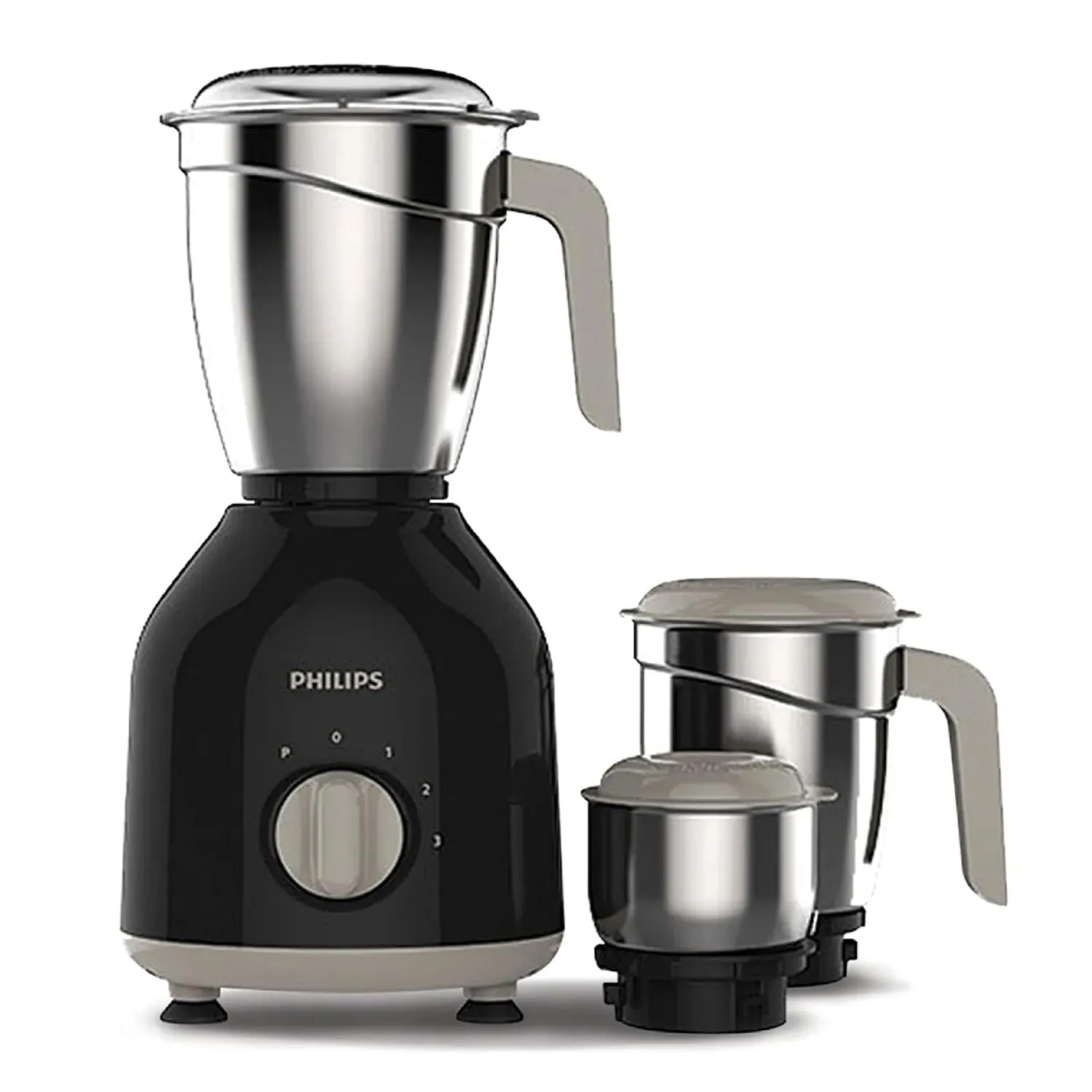
This is the most overlooked cause. If your kitchen counter or slab is even slightly uneven, the machine will rock on it, amplifying every vibration from the motor.
How to check: Place your hand flat on the surface. Is it perfectly level? Try placing the mixer on a different spot on the counter and see if the vibration reduces.
How to Fix: Move the machine to a flat, hard surface. Avoid placing it on a rubber mat that is bunched up, on a wooden table with a wobble, or near the edge of the counter.
2. Loose Jar or Improperly Fitted Jar
This is the number one cause of sudden, intense mixer grinder vibration. If the jar is not locked properly onto the base, it will shake violently the moment you switch it on.
How to check: Switch off and unplug the machine. Try to wiggle the jar. If it moves even slightly, it was not fitted correctly.
How to Fix: Remove the jar completely and reattach it. You should feel and hear a firm click when it locks into place. Always twist the jar until it seats properly on the coupling.
3. Damaged or Bent Blades
Blades that are bent, chipped, or unevenly worn will create an imbalance inside the jar. Since they spin at very high speeds, even a small bend can cause noticeable mixer grinder shaking.
How to check: After removing the jar and washing it, look closely at each blade. Are all blades at the same angle? Is any blade bent downward or upward compared to the others? Does one blade look thinner or shorter?
How to Fix: If even one blade is damaged, the entire blade assembly should be replaced. Mixing with a damaged blade also gives uneven grinding results, so it is worth fixing regardless of the vibration.
4. Bent Motor Shaft
The motor shaft is the metal rod that connects the motor to the blade assembly. If this shaft gets bent even slightly, the whole rotation becomes uneven, causing strong vibration.
Signs of a bent shaft:
- Vibration is consistent and rhythmic, like a pulse
- The vibration started after the mixer was dropped or fell
- You can see or feel wobbling in the coupler (the small rubber/plastic part on top of the motor)
How to Fix: A bent shaft usually requires professional repair or motor replacement. This is not a DIY fix, but it helps to identify it early before it causes further damage.
5. Worn or Damaged Coupler
The coupler is the small star-shaped or D-shaped rubber or plastic piece sitting on top of the motor body. It connects the jar’s blade spindle to the motor. When this wears out or breaks, the connection becomes loose and causes aggressive vibration and noise.
How to check: Look at the coupler on the motor body. Is it cracked? Is one of the rubber arms missing or broken? Does it look deformed?
How to Fix: Couplers are very cheap (usually Rs. 20 to Rs. 80) and easy to replace at home. Just pull the old one off and push the new one on. Make sure you buy the right size for your brand.
6. Worn-Out Bearings
Inside the jar assembly, there are bearings that allow the blade spindle to rotate smoothly. Over time, these bearings wear out, causing a grinding or rattling noise along with increased vibration.
Signs of worn bearings:
- A rough, grinding sound when you rotate the blade assembly by hand
- Vibration that has gradually gotten worse over months
- The blade spindle feels loose or has side-to-side play
How to Fix: Bearing replacement is a moderately simple repair but requires some disassembly. A service technician can do it for around Rs. 100 to Rs. 300. Long-term vibration from worn bearings can damage the motor itself, so do not delay this repair.
7. Overloading the Jar
Every mixer grinder jar has a maximum capacity. Filling the jar beyond that capacity forces the motor to work harder, creates uneven ingredient distribution, and causes the jar to vibrate as the heavy load spins unevenly.
Common mistakes:
- Grinding large amounts of coconut at once
- Adding too much water, making the contents slosh
- Dry grinding more dal or chilli than the jar can handle
How to Fix: Grind in smaller batches. As a general rule, do not fill any jar more than two-thirds full. For dry grinding, keep it at half capacity.
8. Uneven Distribution of Ingredients
Even if you are not overloading the jar, how you load the ingredients matters. If all the solid pieces are on one side, the rotating mass becomes unbalanced, just like an unbalanced washing machine drum.
How to Fix: Before grinding, try to distribute ingredients evenly. For larger chunks, cut them into roughly similar sizes. When dry grinding, do not just dump everything in one side.
9. Damaged Rubber Feet
Mixer grinders have small rubber feet at the bottom. These feet absorb vibration and prevent the machine from sliding. When they wear out, harden, or fall off, there is nothing to dampen the motor’s natural vibration.
How to check: Flip the machine upside down (after unplugging). Are all four rubber feet present? Are they soft and grippy, or hard and smooth? Are any missing?
How to Fix: Replacement rubber feet are available at hardware stores or online for under Rs. 50. This is one of the simplest and most effective fixes for mixer grinder moving while running on the kitchen counter.
10. Loose Screws or Housing
Over time, the screws holding the body panels of the mixer together can loosen due to constant vibration. When the body itself is loose, it amplifies every vibration and creates rattling sounds.
How to check: With the machine off and unplugged, gently press on different sides of the body. Does anything flex or feel loose? Try gently tightening any visible screws with a screwdriver.
How to Fix: Tighten all visible external screws. If you are comfortable opening the machine, check internal screws as well. Use the correct screwdriver size to avoid stripping the screw heads.
11. Internal Motor Problems
If none of the above fixes work, the motor itself may be the problem. A motor with worn windings, a damaged rotor, or an off-balance armature will cause persistent vibration that no external fix can resolve.
Signs of a motor problem:
- Vibration occurs even with an empty jar
- Machine runs slower than usual
- Burning smell along with vibration
- Motor gets unusually hot within a few minutes of use
This requires a qualified technician.
Specific Vibration Situations:
- Mixer Grinder Making Noise and Vibrating at High Speed Only
- Vibration with a Burning Smell
- Mixer Grinder Shaking During Dry Grinding
- Mixer Grinder Moving on Kitchen Slab
How to Identify Dangerous Vibration
Not all vibration is equal. Here is how to tell when the vibration is a safety concern:
| Situation | Severity | Action |
|---|---|---|
| Light hum, machine stays in place | Normal | No action needed |
| Occasional mild shaking | Minor | Check jar fit and feet |
| Machine moves on counter | Moderate | Check feet, surface, load |
| Rattling sound with vibration | Moderate | Check screws, coupler, blades |
| Strong shaking even when empty | Serious | Check bearings, shaft |
| Burning smell with vibration | Critical | Stop immediately, get service |
| Sparks with vibration | Emergency | Stop, unplug, do not use |
Step-by-Step Troubleshooting Guide
Follow these steps in order. Start simple before assuming the worst.
- Check the surface. Move the machine to a different spot on a flat, hard counter.
- Check the rubber feet. Flip the machine and inspect all four feet.
- Check the jar fit. Remove and reattach the jar firmly until it clicks.
- Check the coupler. Inspect for cracks, missing arms, or deformation.
- Inspect the blades. Look for bends, chips, or uneven wear.
- Check for overloading. Reduce the quantity in the jar to two-thirds capacity.
- Try a different jar. If you have another jar, switch to it and see if vibration continues.
- Check external screws. Tighten any loose screws on the body.
- Run the machine empty. If it vibrates with no jar, the motor or shaft is the problem.
- Call a technician if none of the above resolves the issue.
Tips to Reduce Mixer Grinder Vibration
- Always place the mixer on a flat, clean, dry surface
- Never run the machine continuously for more than 2 to 3 minutes at a stretch. Give it a 1 to 2 minute rest between runs
- Fill jars only up to two-thirds capacity
- Add a small amount of water when grinding dry-ish ingredients to help ingredients flow evenly
- Clean blade assemblies after every use so food residue does not harden and create imbalance
- Inspect rubber feet every 6 months
- Replace the coupler once every 1 to 2 years as part of regular maintenance
- Use the correct jar for each task (wet jar for chutneys, dry jar for spices, and maidah jar for smaller quantities)
How Long-Term Vibration Damages Your Mixer Grinder
This part most guides skip, but it is important. Persistent vibration does not just annoy you. It causes real damage over time:
- Loosens all internal screws and connections gradually, making the problem worse
- Wears out motor bearings faster, reducing motor life by 30 to 50%
- Stresses the motor shaft, making it more prone to bending
- Cracks the jar or body from repeated mechanical shock
- Weakens the coupler faster than normal use
Fixing a vibration problem early extends the life of your machine by years.
Repair vs. Replacement Guide
| Condition | Estimated Repair Cost | Recommendation |
|---|---|---|
| Worn rubber feet | Rs. 30 to Rs. 80 | Repair |
| Coupler replacement | Rs. 50 to Rs. 150 | Repair |
| Blade assembly replacement | Rs. 200 to Rs. 600 | Repair |
| Bearing replacement | Rs. 200 to Rs. 400 | Repair |
| Bent motor shaft | Rs. 500 to Rs. 1,200 | Repair if machine is under 3 years old |
| Motor replacement | Rs. 1,000 to Rs. 2,500 | Evaluate based on machine age and original cost |
| Old machine (5+ years) with motor fault | High repair cost | Consider replacement |
FAQs:
Q: Is it normal for a new mixer grinder to vibrate?
A light vibration is normal for a new machine. If the vibration is strong or the machine moves across the counter when new, the jar may not be seated properly, or the machine may have been manufactured with a slight defect. Contact the brand’s customer care.
Q: Why does my mixer grinder vibrate more during dry grinding?
Dry ingredients are heavier and create more resistance. The motor works harder, and the ingredients do not move as smoothly inside the jar, creating uneven loading. Keep the jar half full for dry grinding and use short pulse bursts.
Q: My mixer grinder started vibrating after I replaced the blades. Why?
If the blade assembly was not fitted correctly after replacement, or if the wrong blade size was used, it can throw the rotation off balance. Check that the blade is properly tightened and that you used the correct replacement part for your jar model.
Q: Can vibration damage my kitchen counter?
Strong, prolonged vibration can cause micro-scratches on stone or tile counters over time. It can also cause the mixer to slide and hit other objects. Using a rubber mat under the machine (in good condition) helps protect the surface.
Q: How do I know if my mixer grinder motor is failing?
Signs include: vibration even with an empty jar, slower grinding speed than before, motor body getting very hot within 1 to 2 minutes, burning smell, or unusual buzzing sounds from the base. Get it checked by a technician promptly.
Q: Why does my mixer grinder vibrate only at speed 3?
High-speed vibration usually points to a worn coupler, a slightly bent shaft, or worn bearings. These faults are subtle at low speeds but amplified at maximum RPM. Start by replacing the coupler, since it is the cheapest and easiest fix.
Q: Can I use an anti-vibration mat under the mixer?
Yes, a good quality anti-vibration mat or thick rubber mat can reduce vibration transfer to the counter. However, it will not fix the root cause of the vibration. It is best used alongside actual repairs, not as a substitute for them.
Final Verdict
A mixer grinder vibrating too much is often caused by simple issues like uneven surfaces, overloaded jars, loose couplers, damaged blades, or worn rubber feet. In many cases, you can fix the problem at home without expensive repairs.
However, severe shaking, burning smell, overheating, or metallic noise should never be ignored.
Regular cleaning, proper usage, and early maintenance can keep your mixer grinder running smoothly for years.
And remember, if your mixer grinder starts dancing across the kitchen counter like it’s auditioning for a reality show, it’s probably asking for attention before something bigger fails.
Related Posts:
- What to do when Mixer Grinder Stopped Working Suddenly
- Unlocking the Benefits and Drawbacks of Mixer Grinders
- Mixer Grinder Sparking Inside?
- 6 Best Homemade cleaner for mixer grinder
- Mixer Grinder Jar Leaking From Bottom
Sourabh researches and writes about home appliances, kitchen appliances, and common appliance problems to help readers make informed buying decisions. He covers mixer grinders, refrigerators, air conditioners, washing machines, and appliance troubleshooting.
At ReviewSpot, Sourabh compares manufacturer specifications, product features, warranty information, pricing, and customer feedback to turn technical appliance information into practical buying advice. His goal is to help readers understand their options, avoid costly mistakes, and choose products that fit their needs and budget.
ReviewSpot distinguishes manufacturer information, customer feedback, and editorial analysis, and does not describe products as hands-on tested unless they have actually been tested.