
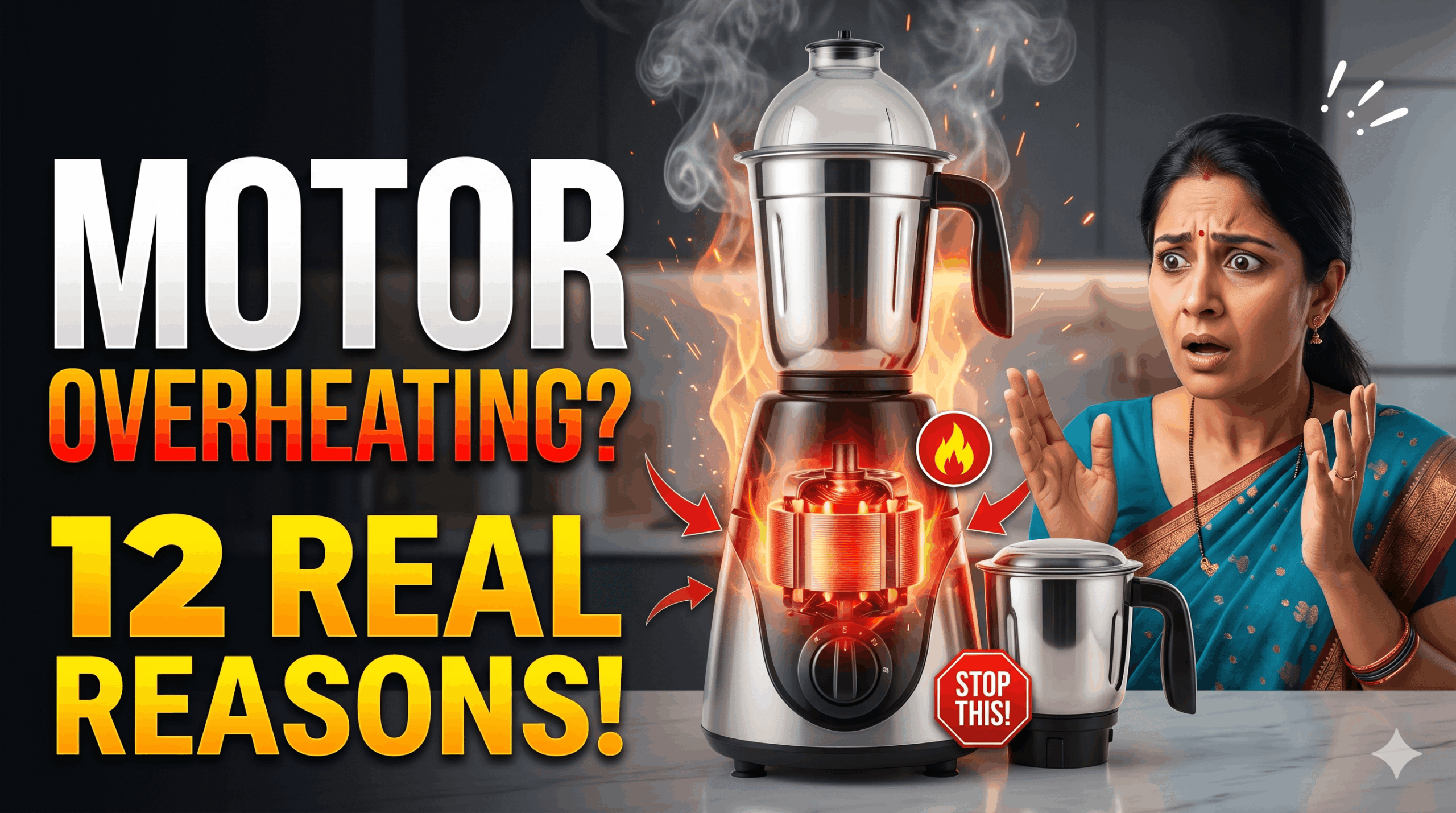
12 Real Reasons Your Mixer Grinder Motor Overheating: And How to Stop It

You’re halfway through grinding your morning chutney and the mixer stops. The base is hot enough to make you pull your hand back. A faint burnt smell hangs in the air. Sound familiar?
A mixer grinder is one of the hardest-working appliances in an Indian kitchen. From grinding masalas to making chutneys and dosa batter, it handles a lot every single day. But when the machine becomes too hot or suddenly stops working, most people panic and wonder if the motor is damaged.
If you’re facing the Mixer grinder motor overheating problem, don’t worry in many cases, the issue is fixable without replacing the appliance.
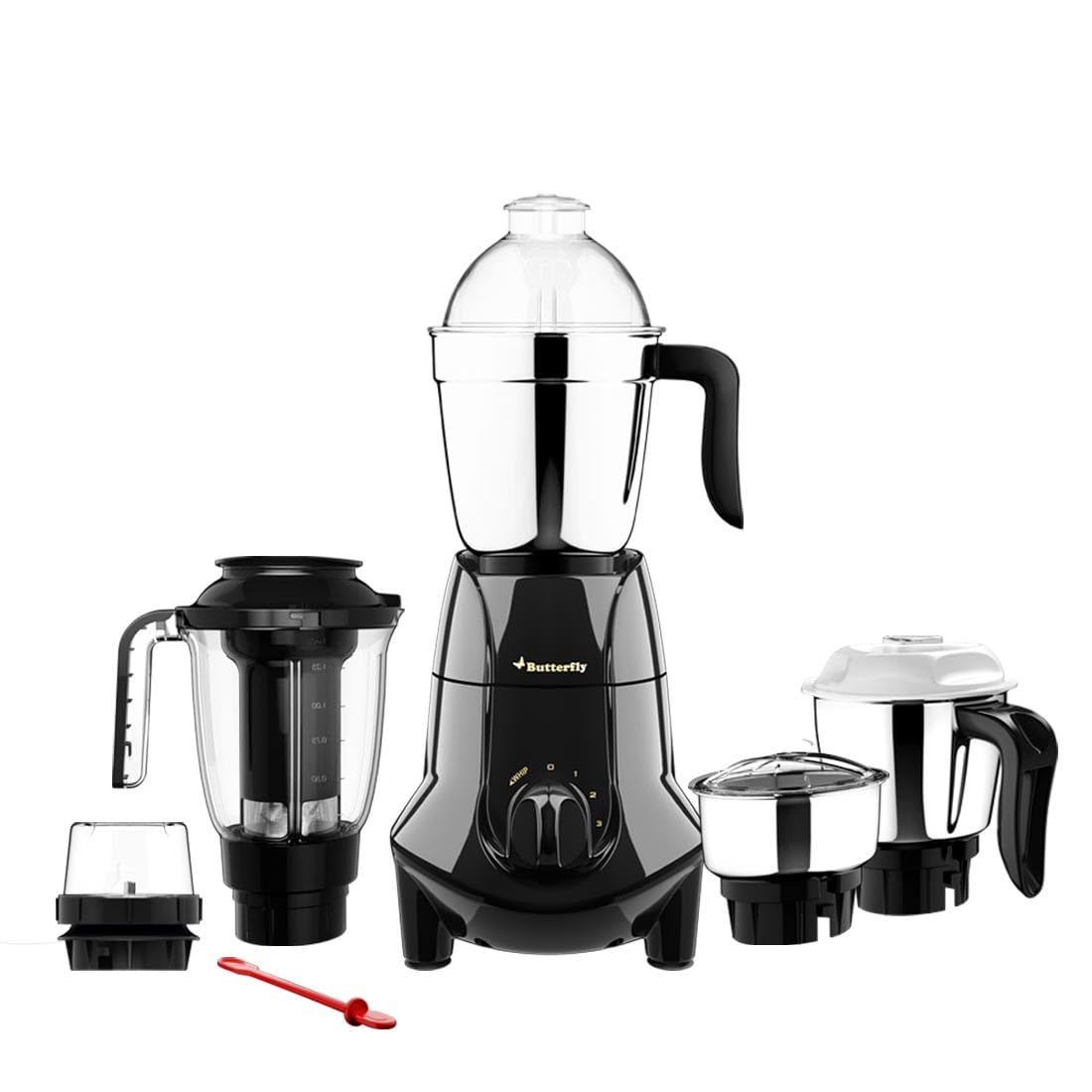
Mixer grinder motor overheating happens most commonly due to:
- Running the motor continuously for too long without breaks
- Overloading the jar beyond its capacity
- Grinding hard or dry ingredients without adding water
- Blocked or covered ventilation slots at the base
- Dull or worn-out blades creating excess friction
- Voltage fluctuations or a faulty power supply
- A dirty or clogged motor due to lack of cleaning
- Using the wrong jar size for the task
In most cases, allowing the mixer grinder to cool down for 20–30 minutes and using it properly solves the issue. However, repeated overheating can permanently damage the motor if ignored.
Read: 10 Best Mixer Grinders Under 2000 In India 2026
What’s Actually Happening Inside When the Motor Overheats
A mixer grinder runs on a motor that converts electricity into spinning power and as a side effect, it also produces heat. Under normal use, this heat stays at a safe level because the ventilation slots at the base keep pulling in fresh air and pushing the hot air out.
The problem starts when you push the motor too hard. More load means more current, and more current means a lot more heat it builds up faster than you’d expect. That’s why most mixers have a thermal cutout switch inside, which automatically shuts the machine off when things get too hot. It’s a safety feature, not a fault. But if your mixer keeps shutting off repeatedly, it’s telling you something is wrong and that’s exactly what we’ll fix.
12 Reasons why Mixer Grinder Motor Overheating Happens
Think of the motor like the engine of a bike. If you keep accelerating without breaks, it gets hot. The same thing happens inside a mixer grinder.
1. Running the Mixer Grinder Continuously
Many people run the mixer grinder continuously for thick batter, masala grinding, peanut butter, coconut paste, or dry spices. Mixer grinders even expensive ones are designed for intermittent use, not continuous operation. The motor needs cooling time between runs.
What to do:
- Use the mixer grinder in short cycles and 1–2 minutes rest.
- For heavy grinding like wet masala or rice batter, use 2–3 minute intervals with a 1–2 minute rest
- Never run the motor beyond 3–4 minutes continuously.
2. Overloading the Jar
Every mixer grinder jar has a maximum capacity marked on the body and it exists for a reason. Stuffing too many ingredients into the jar puts heavy pressure on the motor for example Too much soaked dal, Excess dry spices, Hard turmeric, Large ice cubes.
How to Fix It:
- Fill only 70–80% of the jar
- Add water when needed
- Grind in small batches
Read: 10 Very Small Mixer Grinders That Fit Any Kitchen
3. Dull or Damaged Blades
Sharp blades cut through ingredients cleanly and quickly. Dull blades drag and push through the same ingredients, requiring much more force and therefore much more motor effort to achieve the same result. Blades lose their edge gradually over 1–2 years of regular use.
Signs of Dull Blades:
- Uneven grinding
- Longer grinding time
- Strange noise
- Ingredients remain chunky
What to do:
- Have blades sharpened by a local appliance repair shop every for heavy users
- Inspect blades for visible chips, bends, or dullness every 6 months
- Replace blade assemblies when sharpening is no longer effective
- Avoid grinding hard non-food items, ice, or very coarse salt
4. Thick Ingredients Increase Motor Stress
Some foods naturally create more load such as Thick dosa batter, Peanut butter, Frozen ingredients, Coconut paste, Dry chutney.
What to do:
- Add small amounts of water whenever possible. A smoother grinding process reduces motor stress significantly.
5. Blocked Ventilation Slots
Look at the bottom or sides of your mixer grinder’s base. You’ll see a series of slots or vents. Most people never clean the bottom air vents of their mixer grinder. Dust and grease block airflow, trapping heat inside.
What to do:
- Always place your mixer grinder on a flat, hard surface.
- Never place it on a soft surface like a folded cloth or rubber mat
- Clean the ventilation slots every 2–3 weeks
- After cleaning the exterior, check the vents specifically food dust tends.
6. Low Voltage, Voltage Fluctuations and Electrical Issues
This one’s particularly relevant in many Indian cities and towns where power supply can be unstable. When voltage drops below the required level, the motor draws higher current to maintain its speed and more current means more heat.
What to do:
- Use direct wall socket connection’
- Use a voltage stabilizer if you live in an area with frequent voltage fluctuations
- Avoid using the mixer during known peak load hours if your area has significant voltage drops
7. Faulty Motor Winding
If your mixer grinder overheats within minutes, smells like burning plastic, or trips repeatedly, the motor winding may be damaged. This usually happens after or electrical surges, years of usage, or repeated overheating,
What to do:
- Winding repair may require professional servicing.
8. A Dirty Motor
Over months and years of use, fine particles of food especially turmeric, oil mist, and spice dust . This fine debris accumulates on the motor windings and acts as insulation, preventing heat from escaping. The result is that the motor runs hotter even under normal loads, eventually making mixer grinder motor overheat.
What to do:
- Every 6 months, take the base unit to a service centre for a motor cleaning
- After grinding anything with strong pigments like turmeric or oil-heavy spices, wipe down immediately.
- Keep your kitchen generally dust-free
9. Using the Wrong Jar for the Task
Most mixer grinders come with three jars: a large liquidizing jar, a medium all-purpose jar, and a small chutney/spice jar whereas some mixer grinders have 5 jars. Each is designed with a specific for specific tasks.
Which jar to use when:
| Task | Recommended Jar |
|---|---|
| Smoothies, lassi, juice | Large liquidizing jar |
| Wet masala (medium quantity) | Medium jar |
| Chutneys, small batches | Small chutney jar |
| Dry spice powders (small) | Small chutney jar |
| Rice/dal batter (large batch) | Large jar (max ⅔ full) |
| Nut butters | Medium jar with frequent breaks |
10. Worn-Out Bearings
When bearings wear out friction increases, rotation becomes difficult, and heat rises rapidly. Usually you can see Grinding noise, Vibration, Reduced speed and Metal scraping sound.
What to do:
- Require professional servicing replace bearings.
11. Carbon Brush Wear
Many mixer grinders use carbon brushes inside the motor. Over time they wear down When this happens sparking may occur, motor efficiency drops, overheating increases.
Signs includes Intermittent running, Weak power, Sparks or Burning smell. Carbon brushes are relatively inexpensive to replace.
12. Using Wrong Speed Settings
Many people use maximum speed for everything, that’s unnecessary. For softer ingredients use low or medium speed. High speed continuously creates unnecessary heat.
What to Do When Your Mixer Grinder Has Already Overheated
Step 1: Switch it off and unplug it immediately.
Step 2: Wait properly.
Step 3: Check for obvious causes.
Step 4: Restart at a lower load.
Step 5: If it keeps happening despite doing everything right get it checked.
How Motor Wattage Affects Overheating
The wattage rating of a mixer grinder directly relates to how easily it can handle tough grinding tasks without overheating.
| Wattage | Best For | Overheating Risk |
|---|---|---|
| 300–500W | Light tasks: juices, chutneys | High if used for heavy grinding |
| 500–750W | Daily Indian cooking | Moderate with correct use |
| 750W–1000W | Heavy use, wet grinding, large families | Low if used correctly |
| 1000W+ | Commercial-light or large families | Very low under normal use |
How to Prevent Mixer Grinder Motor Overheating
- Use Pulse Mode
- Avoid Very Long Grinding Sessions
- Clean the Appliance Regularly
- Use Proper Jar Size
- Don’t Grind Extremely Hard Ingredients Frequently
- Check Blade Rotation
- Use Good Quality Mixer Grinders
- Use Good Quality Mixer Grinders
How Different Ingredients Affect Motor Load
| Ingredient Type | Motor Stress Level |
|---|---|
| Chutney | Low |
| Tomato puree | Low |
| Dry spices | Medium |
| Coconut paste | High |
| Thick batter | High |
| Peanut butter | Very High |
| Ice cubes | Very High |
Common Myths About Mixer Grinder Overheating
There are few myths people think about Mixer Grinder overheating but those are false:
- Myth 1: “Hot Body Means Motor Is Finished”
- Myth 2: “More Wattage Means No Heating”
- Myth 3: “Continuous Running Gives Better Grinding”
When Should You Call a Technician?
Contact professional service if:
- burning smell persists,
- smoke appears,
- motor doesn’t restart,
- loud humming continues,
- sparks are visible,
- grinding becomes extremely weak.
Signs Your Mixer Grinder Needs Replacement
Sometimes repair is not worth it. Consider replacement if:
- motor burns repeatedly,
- repair cost is very high,
- excessive vibration continues,
- spare parts unavailable,
- appliance is very old.
FAQs: Mixer Grinder Motor Overheating
Q: Is it normal for my mixer grinder to feel warm?
Yes mild warmth is completely normal. The motor generates heat as it works, and the base will feel warm to the touch after a few minutes of use. The problem is when the base becomes too hot to hold your hand against, or when you smell something burning.
Q: My mixer stops automatically while grinding. Is it broken?
Not necessarily. This is the thermal cutout doing its job. Switch it off, unplug it, let it cool for 15–20 minutes, and it should restart. If this happens every time you use it, that’s the real problem to address not the stopping itself.
Q: Can I use my mixer grinder to grind ice?
This is a common question, and the answer is: it depends on the model. Many manufacturers explicitly advise against ice grinding because the sudden impact load spikes the current draw and stresses the motor. Unless your model specifically says it’s designed for ice, avoid it.
Q: How long should a mixer grinder motor last?
With proper care and maintenance, a good quality mixer grinder should last 7–10 years. Poor maintenance or constant overheating can cut that to 3–4 years.
Q: Does the speed setting affect overheating?
Yes. Higher speed settings draw more current, which generates more heat. For tough grinding tasks, it’s often better to start at a lower speed to begin breaking down the ingredients, then increase speed rather than running at maximum speed from the start.
Q: My mixer smells like something is burning. What should I do?
Stop using it immediately. Unplug it. A burning smell particularly an acrid, electrical smell usually means the motor winding is overheating to a dangerous level. It can also mean a brush is arcing badly. Do not use the machine again until a technician has inspected it.
Final Thoughts
The Mixer grinder motor overheating problem is usually caused by overload, continuous operation, poor maintenance, or airflow blockage.
In many cases, simple habits like shorter grinding cycles, cleaning vents, and avoiding overfilling can prevent major motor damage.
A little cooling time today can save you from expensive repairs tomorrow.
Related Posts:
- Top 10 Mixer Grinder for Idli Dosa Batter in 2026
- 10 Classic Indian Chutney Recipe You Can Make in Your Mixer Grinder
- 8 Different Types of Mixer Grinders for Indian Kitchens
- 10 Best Mixer Grinder for Smoothies
Sourabh researches and writes about home appliances, kitchen appliances, and common appliance problems to help readers make informed buying decisions. He covers mixer grinders, refrigerators, air conditioners, washing machines, and appliance troubleshooting.
At ReviewSpot, Sourabh compares manufacturer specifications, product features, warranty information, pricing, and customer feedback to turn technical appliance information into practical buying advice. His goal is to help readers understand their options, avoid costly mistakes, and choose products that fit their needs and budget.
ReviewSpot distinguishes manufacturer information, customer feedback, and editorial analysis, and does not describe products as hands-on tested unless they have actually been tested.