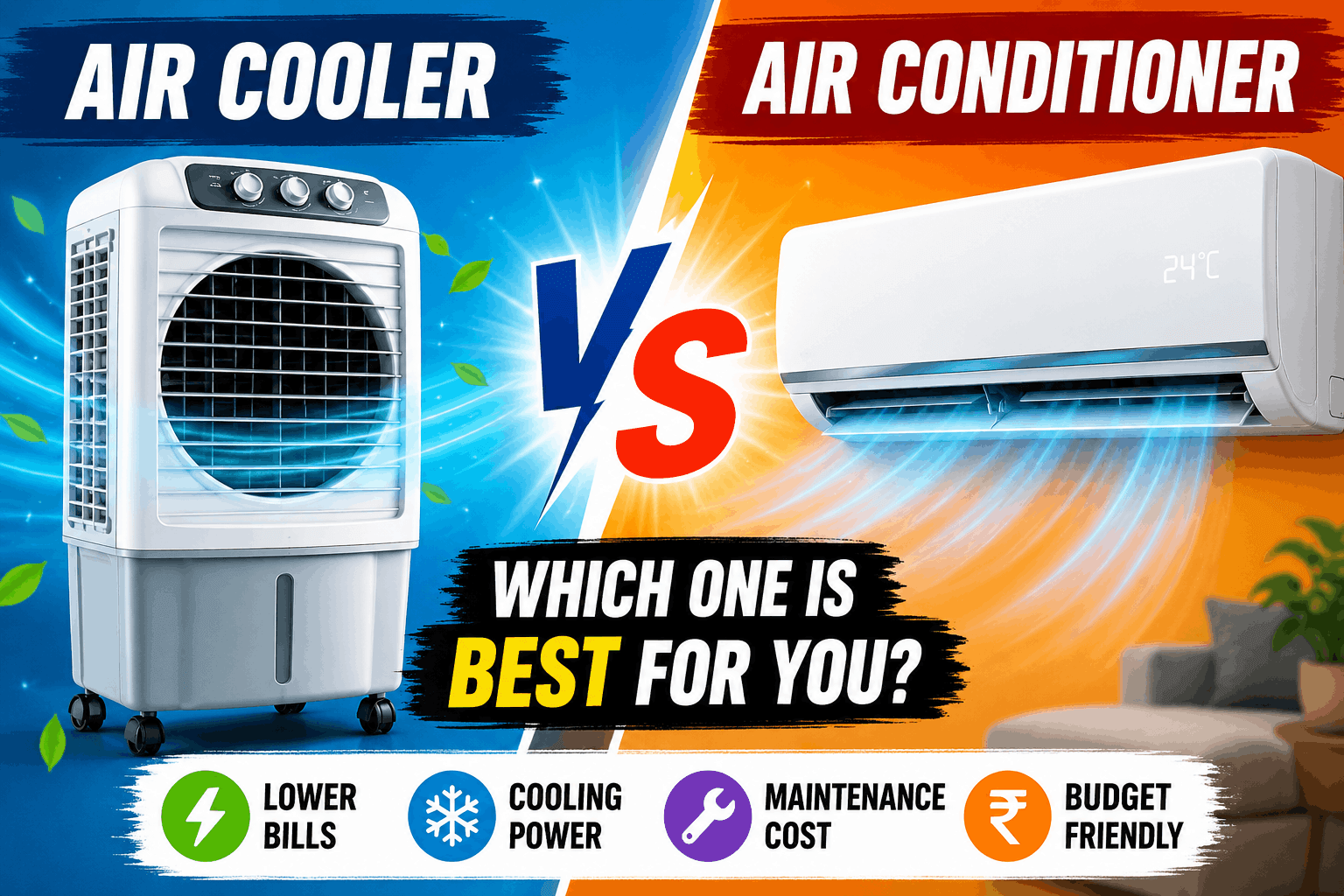
Air Cooler vs Air Conditioner: Which One Is Better for Your Home in 2026?

Summer in India keeps getting hotter every year. When the temperature touches 40°C to 45°C, most people ask the same question: Should I buy an air cooler or an air conditioner?
At first, both may look similar because both help you stay cool. But in reality, they work very differently. One is budget-friendly and eco-friendly, while the other gives powerful cooling even in extreme heat.
If you’re confused between an air cooler and an AC, don’t worry. This detailed guide will help you understand everything in simple English from cooling performance and electricity bills to maintenance, room size, humidity, health effects, and long-term value.
Quick Answer: Air Cooler vs Air Conditioner
| Choose an Air Cooler If… | Choose an Air Conditioner If… |
|---|---|
| You want a low-cost cooling option | You want fast and powerful cooling |
| You live in a dry and hot area | You live in a humid city |
| You want lower electricity bills | You want better comfort during extreme summer |
| You need portable cooling | You need precise temperature control |
| You prefer fresh air circulation | You can afford higher electricity and maintenance costs |
In simple words: Air coolers are economical and natural, while air conditioners are powerful and premium.
What Is an Air Cooler?
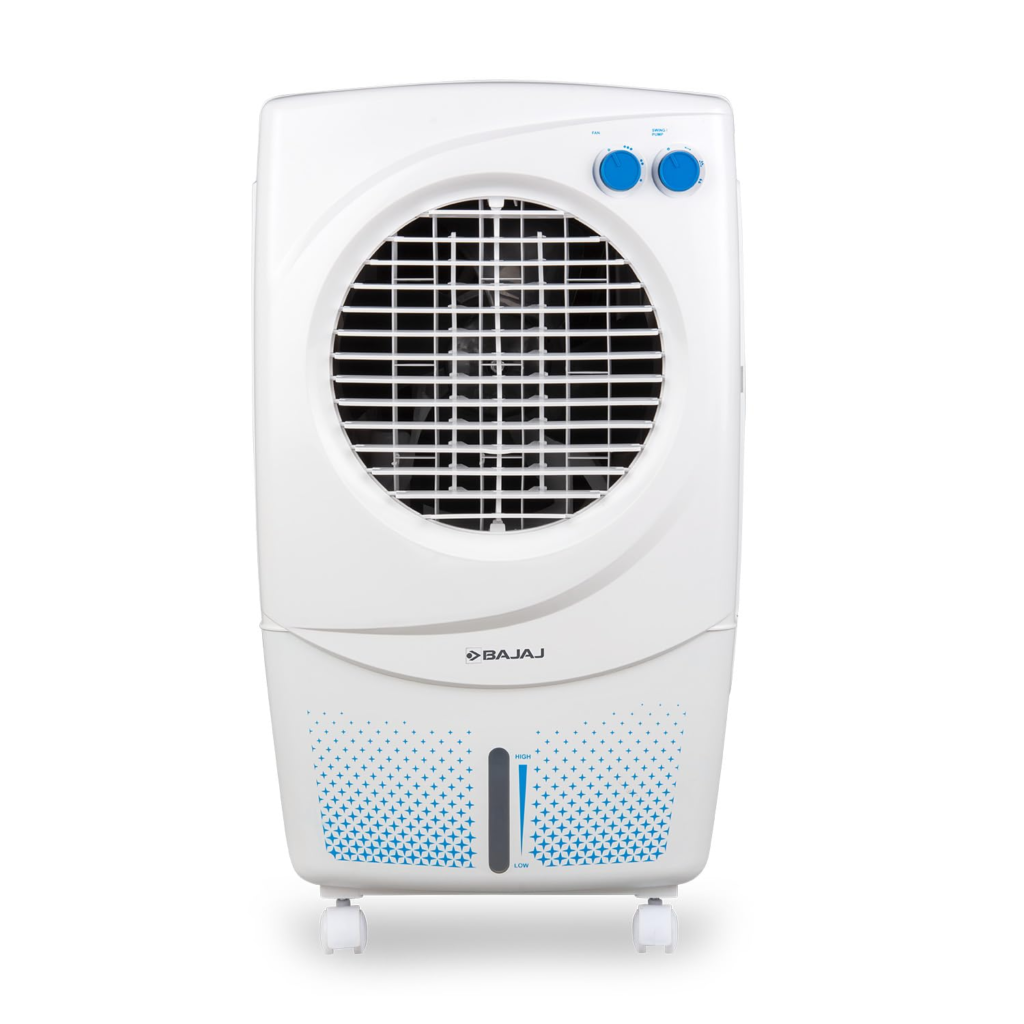
An air cooler is a cooling appliance that uses water evaporation to cool the air.
It pulls hot air from outside, passes it through wet cooling pads, and releases cooler air into the room.
It does not use gas compressors like an AC, which is why it consumes much less electricity.
What Is an Air Conditioner?
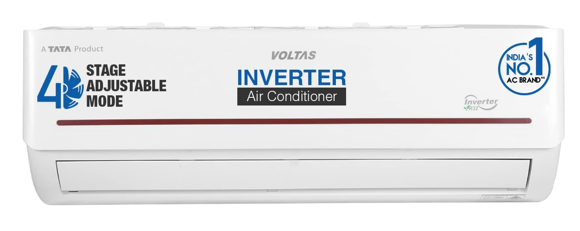
An air conditioner (AC) removes heat and humidity from indoor air using refrigerant gas and a compressor system. Unlike coolers, ACs do not depend on water evaporation.
They cool the room by controlling Temperature, Humidity and Air circulation.
That’s why ACs provide stronger and more consistent cooling.
Air Cooler vs Air Conditioner: Major Differences
Here’s a simple comparison table.
| Feature | Air Cooler | Air Conditioner |
|---|---|---|
| Cooling Method | Water evaporation | Refrigerant cooling |
| Electricity Consumption | Low | High |
| Initial Cost | Affordable | Expensive |
| Cooling Performance | Moderate | Powerful |
| Works Best In | Dry climate | All climates |
| Humidity Control | Increases humidity | Removes humidity |
| Installation | Easy | Professional installation needed |
| Portability | Portable | Mostly fixed |
| Maintenance Cost | Low | Higher |
| Eco-Friendly | More eco-friendly | Less eco-friendly |
| Air Quality | Fresh air circulation | Closed room cooling |
Air Cooler vs Air Conditioner: The Full Comparison
Let’s go feature by feature the stuff that actually matters when you’re standing in a store trying to decide.
1. Cooling Performance
An air conditioner wins hands down on raw cooling power. It can bring a room from 40°C to 18°C if you want. It doesn’t care whether it’s dry or humid outside. It just cools.
An air cooler depends heavily on humidity. In dry weather (relative humidity below 40–50%), an air cooler can drop temperature by 10–15°C and feel genuinely comfortable. But in humid conditions Mumbai in July, for example it basically blows warm, moist air at you and makes things worse.
Winner: Air conditioner (for all-weather reliability) Air cooler wins in: dry, arid climates
2. Electricity Consumption and Running Cost
This is where coolers become heroes.
| Appliance | Power Consumption | Cost per Hour (₹5/unit) |
|---|---|---|
| Air cooler (personal) | 100–200 watts | ₹0.50–₹1 |
| Air cooler (desert) | 150–350 watts | ₹0.75–₹1.75 |
| Window AC (1 ton) | 900–1200 watts | ₹4.50–₹6 |
| Split AC (1 ton, 5-star) | 700–900 watts | ₹3.50–₹4.50 |
| Split AC (1.5 ton, 3-star) | 1300–1700 watts | ₹6.50–₹8.50 |
Note: Running an air cooler for 8 hours costs roughly ₹8–14. Running a 1.5-ton split AC for the same time costs ₹52–68. If you use it every day for 5 months (May–September), that’s a difference of ₹6,000–₹15,000 per year just in electricity.
Winner: Air cooler
3. Purchase Price
| Appliance | Price Range (India, 2024–25) |
|---|---|
| Personal air cooler | ₹3,000–₹8,000 |
| Desert air cooler | ₹5,000–₹15,000 |
| Tower air cooler | ₹7,000–₹18,000 |
| Window AC (1 ton) | ₹25,000–₹35,000 |
| Split AC (1 ton, 5-star) | ₹32,000–₹50,000 |
| Split AC (1.5 ton) | ₹38,000–₹65,000 |
Air coolers are 5–10x cheaper upfront. Plus, ACs need professional installation (another ₹1,500–₹3,000) and copper piping, which adds to the cost.
Winner: Air cooler
4. Installation and Portability
Air coolers need zero installation. Fill it with water, plug it in, and you’re done. You can move it from your bedroom to your living room to your office in minutes.
Air conditioners, on the other hand, need a technician, wall mounting, refrigerant charging, and often drilling into walls. Once installed, they stay put.
Winner: Air cooler (for flexibility)
5. Maintenance
Air coolers:
- Refill the water tank daily or every two days
- Clean the cooling pads every 2–3 weeks (they accumulate mineral deposits)
- Oil the motor annually
- Store properly in the off-season
Air conditioners:
- Annual servicing by a technician (₹500–₹1,500)
- Filter cleaning every 2–4 weeks
- Refrigerant top-up every few years (₹2,000–₹5,000)
- Outdoor unit cleaning
Coolers are easier to maintain yourself. AC maintenance usually needs professional help.
Winner: Air cooler
6. Health and Air Quality
Air coolers bring in fresh outside air so the air in your room is constantly being refreshed. They also add moisture to dry air, which can be helpful for people with dry skin, sore throats, or respiratory issues in arid climates.
Air conditioners recirculate the room’s air (unless you enable “fresh air mode”). They dehumidify the air, which can dry out your throat and skin over time. On the flip side, modern ACs come with HEPA filters, anti-bacterial coatings, and PM2.5 filters that can trap dust, pollen, and allergens which is a genuine benefit for people with asthma or allergies.
7. Environmental Impact
Air Coolers Are More Environment Friendly because:
- Lower electricity usage
- No harmful refrigerant gas
- Smaller carbon footprint
ACs Consume More Energy because:
- Use compressors
- Use refrigerant gases
- Increase electricity demand
That’s why ACs have a larger environmental impact. Running an air cooler instead of an AC for one season can save 300–600 kg of CO₂ emissions.
Winner: Air cooler
8. Noise Levels
Some desert coolers can become noisy because of fan motor, blower and water pump.
Modern inverter ACs are usually quieter. Especially split ACs. If you want peaceful sleep, ACs often feel more comfortable.
This varies by model, but generally:
- Personal air coolers: 40–55 decibels (quiet)
- Desert coolers: 50–65 decibels (somewhat noisy)
- Window AC: 50–65 decibels indoors
- Split AC: 25–45 decibels indoors (very quiet)
Modern split ACs are whisper-quiet indoors. If you’re a light sleeper or work from home, a quality split AC will be quieter than a desert cooler.
Winner: Split AC (for indoor quietness)
9. Performance in Extreme Heat (40°C+)
When outside temperatures cross 45°C which is now common in parts of Rajasthan, UP, and Delhi. An air cooler cools by about 10–15°C relative to ambient. So at 45°C, the best you’re getting is 30–35°C indoors. That’s not always comfortable.
An AC, on the other hand, can push room temperature to whatever you set 22°C, 18°C, whatever you like regardless of what’s the outside temperature.
In extreme heat conditions (45°C+): AC wins clearly
The Humidity Factor
Air coolers works on evaporative cooling, only cools effectively when the air can absorb more water vapor. When the relative humidity is high (60%+), the air simply can’t absorb more moisture, and the cooling effect drops dramatically.
Here’s a rough guide:
| Relative Humidity | Air Cooler Effectiveness |
|---|---|
| Below 30% | Excellent — very noticeable cooling |
| 30–50% | Good — comfortable in most cases |
| 50–60% | Moderate — some relief |
| Above 60% | Poor — can feel stuffy or clammy |
| Above 80% | Avoid — makes you feel worse |
Cities where air coolers work well: Delhi, Jaipur, Ahmedabad, Lucknow, Nagpur, Indore, Bhopal
Cities where air coolers are often inadequate: Mumbai, Chennai, Kolkata, Kochi, Goa, Bhubaneswar
If you’re in coastal India or the northeast, please just use an AC.
Air Cooler vs Air Conditioner for Sleep
Cooler air feels more natural because coolers circulate fresh outdoor air. However noise may disturb light sleepers and coolers may become humid at night.
ACs provide stable temperature, quieter operation and better sleep comfort especially during heatwaves.
Room Size: What Works Where?
| Room Size | Recommended Appliance | Notes |
|---|---|---|
| Under 150 sq ft | Personal air cooler or 0.75-ton AC | Cooler is cost-effective here |
| 150–250 sq ft | Desert/tower cooler or 1-ton AC | Depends on climate |
| 250–400 sq ft | 1.5-ton AC or large desert cooler | AC preferred for reliability |
| Above 400 sq ft | 2-ton AC or multiple coolers | Coolers can work in open spaces |
Note: Air coolers work better in larger, ventilated rooms than in tiny sealed ones. An AC is the opposite it’s most efficient in a sealed, insulated space.
Cost of Using Air Cooler vs Air Conditioner for 5 Year Calculation
Let’s calculate how much we spend over 5 years on cooling.
Air cooler (₹10,000 purchase):
- Purchase: ₹10,000
- Annual electricity (6h/day × 150 days × 250W × ₹5): ~₹3,375/year
- Annual maintenance: ~₹500/year
- 5-year total: ~₹10,000 + ₹19,375 = ₹29,375
Split AC, 1.5 ton, 5-star (₹45,000 purchase):
- Purchase: ₹45,000
- Installation: ₹2,500
- Annual electricity (6h/day × 150 days × 1,100W × ₹5): ~₹14,850/year
- Annual servicing: ~₹1,000/year
- 5-year total: ~₹47,500 + ₹79,250 = ₹1,26,750
Over 5 years, an AC costs roughly 4 times more than a cooler. That’s a significant higher as compare to air cooler.
Which One Should You Buy?
Who Should Buy an Air Cooler?
You can buy air cooler if:
- You live in a dry region (most of north and central India)
- You’re renting and don’t want to invest in permanent fixtures
- You’re on a tight budget or want to save on electricity
- You’re eco-conscious
- You have a well-ventilated room
- You need something portable moving between rooms or floors
- You have kids who’ll inevitably break something
Who Should Buy an Air Conditioner?
You can buy AC if:
- You live in a humid coastal city (Mumbai, Chennai, Kolkata)
- You suffer from allergies or asthma and want filtered air
- You have a sealed, insulated room (like many modern apartments)
- You need to sleep in complete comfort regardless of outside conditions
- You work from home and need consistent comfort throughout the day
- Temperature extremes are common where you live (45°C+ summers)
- You have the budget for upfront investment and higher bills
- Babies sleep comfortably
- Elderly people stay cool during heatwaves
Which One Lasts Longer?
- Air Cooler Lifespan is usually 5–8 years depending on maintenance.
- Air Conditioner Lifespan is usually 10–15 years with proper servicing.
ACs often last longer but also cost much more.
Smart Buying Tips Most People Don’t Tell You
For air coolers:
- Look for honeycomb pads over wood wool they’re more efficient and last longer
- Get a model with a large water tank (40–60L for desert coolers) if you don’t want to refill daily
- Check if the model has an auto-refill inlet useful if you can run a pipe from a tap
- Inverter-based coolers are now available they’re quieter and more energy efficient
- Keep the room’s windows slightly open for best performance
For air conditioners:
- A 5-star BEE rating will save you significantly over 5 years don’t skip it to save ₹5,000 upfront
- Inverter technology is worth the premium non-inverter ACs cost a lot more to run
- Don’t oversize your AC a 2-ton AC in a 150 sq ft room wastes electricity
- Check if the model has a “dry mode” useful during humid weather when you want dehumidification without heavy cooling
- Annual AMC (Annual Maintenance Contract) with your brand is often worth it
Air Cooler vs Air Conditioner: Pros and Cons
Air Cooler Pros and Cons
| Air Cooler Pros | Air Cooler Cons |
|---|---|
| Low electricity bill | Less effective in humidity |
| Affordable price | Needs regular water filling |
| Eco-friendly | Can become noisy |
| Portable | Cooling is less powerful |
| Fresh airflow | Requires regular cleaning and maintenance |
Air Conditioner Pros and Cons
| Air Conditioner Pros | Air Conditioner Cons |
|---|---|
| Fast cooling | Expensive |
| Excellent comfort | High electricity bills |
| Works in humid weather | Professional installation required |
| Better sleep environment | Higher maintenance cost |
| Precise temperature control | Less eco-friendly compared to coolers |
Final Verdict
The air cooler vs air conditioner decision isn’t about which is better it’s about which is better for you.
If you’re in Delhi, Jaipur, Ahmedabad, or anywhere in the dry city buy a good air cooler. It’ll handle most of your summer, cost a fraction of an AC, and do it without making your electricity meter spin like a top.
If you’re in Mumbai, Chennai, Kolkata, or anywhere humid city buy an AC. The relatively modest efficiency of a cooler in humid conditions won’t give you the comfort you’re paying for.
And honestly? Many Indian families own both. A cooler for the dry months, and an AC for when the humidity spikes or the heat becomes extreme. That’s not a bad strategy at all you get the best of both worlds.
Whatever you choose, now you know why you’re choosing it.
FAQs:
Can I use an air cooler and AC together? Yes, some people run a cooler to pre-cool the air and reduce the load on the AC. In dry climates, this can improve efficiency slightly. In humid climates, don’t bother.
Does an air cooler increase room humidity? Yes, it does add moisture to the air. This is great in dry climates (your skin and throat will thank you) but problematic in already-humid conditions.
Which is better for sleeping — air cooler or AC? Split ACs are quieter and more consistent, making them better for sleep. Coolers (especially desert types) can be noisy. That said, many people sleep perfectly fine with a personal/tower cooler in a dry climate.
Is an inverter AC worth it over a non-inverter? Yes, almost always. An inverter AC can be 30–40% more energy efficient over a season. It costs more upfront but pays back within 2–3 years in savings.
Do air coolers work well in semi-humid conditions (50–60% humidity)? They provide some relief but aren’t as effective. If your city regularly crosses 60% humidity in summer, you’ll likely be disappointed.
What’s the ideal temperature setting for AC to save electricity? The Bureau of Energy Efficiency (BEE) in India recommends 24°C as the default setting. Every degree below 24°C increases power consumption by about 6%.
Which is better: air cooler or air conditioner?
It depends on your needs. An air cooler is better for low electricity bills and dry climates, while an air conditioner is better for powerful cooling and humid weather.
Does an air cooler consume less electricity than an AC?
Yes, air coolers consume much less electricity compared to air conditioners. A cooler may use only 80W–250W, while an AC can consume 1200W–2000W or more.
Is an air cooler good for humid weather?
No, air coolers are less effective in humid weather because they work using water evaporation. In humid cities, ACs perform much better.
Which is cheaper to run: air cooler or air conditioner?
Air coolers are much cheaper to run because they use less electricity and have lower maintenance costs.
Can an air cooler cool a room like an AC?
No, an air cooler cannot provide the same level of cooling as an air conditioner. ACs offer faster and more consistent cooling.
Is an air cooler healthier than an AC?
Air coolers provide fresh airflow and maintain humidity, which some people find more comfortable. However, they need regular cleaning to prevent mold and bacteria buildup.
Which is best for small rooms: cooler or AC?
For budget-friendly cooling, a personal cooler works well in small rooms. For maximum comfort and faster cooling, a small inverter AC is better.
Does an AC increase electricity bills a lot?
Yes, air conditioners can significantly increase electricity bills, especially during summer if used for long hours daily.
Which is more eco-friendly: air cooler or air conditioner?
Air coolers are generally more eco-friendly because they consume less electricity and do not use refrigerant gases.
Can we use an air cooler in a closed room?
No, air coolers work best in ventilated rooms because they need fresh airflow for effective cooling.
Which lasts longer: air cooler or air conditioner?
Air conditioners usually last longer than air coolers if maintained properly. An AC can last 10–15 years, while coolers generally last 5–8 years.
Is inverter AC better than an air cooler?
An inverter AC provides better cooling, energy efficiency, and comfort compared to an air cooler, but it is more expensive to buy and operate.
Which is best during extreme summer heat?
Air conditioners are better during extreme heatwaves because they provide powerful cooling even when temperatures exceed 45°C.
Are air coolers portable?
Yes, most air coolers are portable and easy to move from one room to another.
Do air conditioners remove humidity?
Yes, air conditioners remove excess humidity from the air, making rooms feel cooler and more comfortable in humid weather.
Related Post:
- 10 Best Air Conditioner For Apartment in India 2026
- [9 Reasons] Why is my air conditioner leaking water inside the house?
- A Comprehensive Exploration of the Best Air Conditioner Compressor
- How to Choose the Right Air Cooler Based on Room Size
Sourabh researches and writes about home appliances, kitchen appliances, and common appliance problems to help readers make informed buying decisions. He covers mixer grinders, refrigerators, air conditioners, washing machines, and appliance troubleshooting.
At ReviewSpot, Sourabh compares manufacturer specifications, product features, warranty information, pricing, and customer feedback to turn technical appliance information into practical buying advice. His goal is to help readers understand their options, avoid costly mistakes, and choose products that fit their needs and budget.
ReviewSpot distinguishes manufacturer information, customer feedback, and editorial analysis, and does not describe products as hands-on tested unless they have actually been tested.