

Who Invented the Air Conditioner? The Full Story Nobody Tells You

Right now, as you read this in a comfortably cool room, you’re experiencing the result of one young engineer’s solution to a very unglamorous problem: wrinkled paper.
Yes the invention that reshaped modern civilization, changed where humans choose to live, revolutionized industries from chocolate-making to hospital surgery, and made summer in places like Phoenix, Dubai, and Delhi survivable… started because magazine pages were getting soggy in a Brooklyn print shop.
This is the story of who invented the air conditioner, who came before him, who named the thing, and why the world in 2025 literally could not function without it.
Who Invented the Air Conditioner?
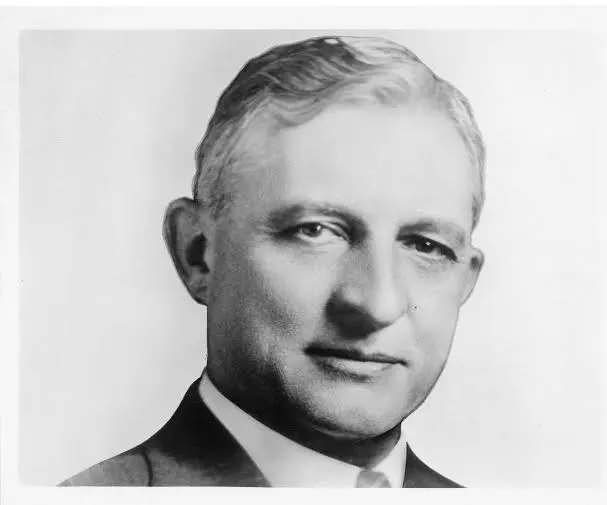
Willis Haviland Carrier invented the first modern air conditioner on July 17, 1902. A 25-year-old engineer working for the Buffalo Forge Company in New York, Carrier designed a system that could simultaneously control both the temperature and humidity of air — something no one had achieved before. He’s widely called the “Father of Modern Air Conditioning.”
But the full story of who invented the air conditioner is longer, stranger, and far more interesting than that one-sentence answer.
A Quick Timeline: Who Invented the Air Conditioner
| Year | Person | What They Did |
|---|---|---|
| 1820 | Michael Faraday | Discovered that evaporating ammonia chills air the foundation of refrigerant cooling |
| 1842–1851 | Dr. John Gorrie | Built a compressor-based ice machine; first to patent mechanical refrigeration in the US |
| 1851 | James Harrison | Developed ether vapor-compression refrigeration in Australia |
| 1902 | Willis Carrier | Invented the first modern air conditioning system in Brooklyn, NY |
| 1906 | Stuart W. Cramer | Coined the term “air conditioning” in a patent application |
| 1906 | Willis Carrier | Received the first patent for an air conditioning apparatus (US Patent 808,897) |
| 1911 | Willis Carrier | Published Rational Psychrometric Formulae — the scientific foundation of HVAC engineering |
| 1915 | Carrier + 6 engineers | Founded Carrier Engineering Corporation |
| 1922 | Carrier Corporation | Installed first proper theater AC and debuted the centrifugal chiller |
| 1929 | Frigidaire | Introduced first small home room cooler |
| 1950 | Carrier dies | By now AC was in hospitals, offices, theaters, and spreading to homes |
| 1953 | Industry-wide | Over 1 million window AC units sold in a single year in the US |
Before Willis Carrier: The People Who Tried First
The desire to cool indoor spaces is ancient. Romans circulated aqueduct water through the walls of Emperor Nero’s house. Egyptian servants fanned jars of water to let evaporation cool the air. Persian architects built “wind catchers” tall towers that caught breeze and funneled it underground, where it cooled down before entering living spaces.
These were all clever ideas. But none of them were air conditioning in the modern sense, because none of them could control humidity or work independently of natural conditions.
The real forerunners of the air conditioner came in the 19th century.
Michael Faraday’s Accidental Discovery (1820)
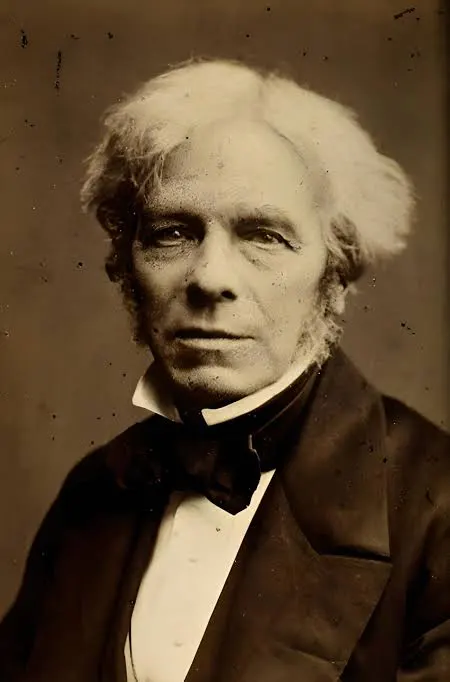
British scientist Michael Faraday the same man who laid the foundations of electromagnetism made an interesting observation in 1820: when you compress ammonia gas into a liquid and then let it evaporate, the surrounding air gets noticeably cold. This was the fundamental principle of refrigerant-based cooling, and it would take another 80 years for someone to build a practical system around it.
Dr. John Gorrie and the “Evils of High Temperatures” (1842–1851)
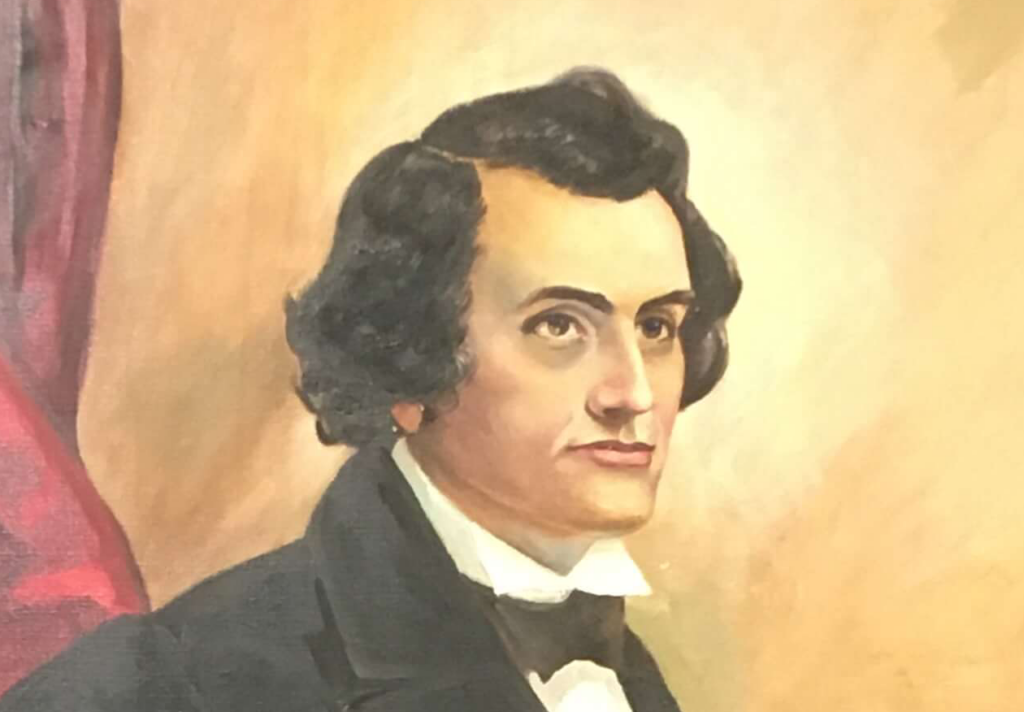
Here’s a character history doesn’t talk about enough.
Dr. John Gorrie was a physician in Apalachicola, Florida a small, swampy town that in the 1840s was regularly devastated by yellow fever and malaria. Gorrie believed (correctly, as it turned out) that heat and humidity made these diseases worse and recovery harder. His solution? Cool his patients down.
The only problem: ice. He needed ice to cool the hospital rooms, and the nearest reliable supply was frozen lakes in the northern United States, shipped down by boat. It was expensive, slow, and unreliable.
So Gorrie did what frustrated doctors throughout history have done he built something himself.
He designed a machine that used a compressor (powered by horse, water, wind, or steam) to compress and then rapidly expand air, which caused the temperature to plummet and made ice. He first produced mechanical ice in 1844 and received a US patent for his ice-making machine on May 6, 1851.
This was genuinely revolutionary. Gorrie dreamed of a world where his machines would cool entire city buildings. He wrote extensively about it. He called heat one of the “evils of high temperatures” and argued that cooling was a matter of public health, not just comfort.
But the timing was catastrophic. His main financial backer died before the machine could be commercialized. Gorrie was left without funding, the press mocked him (one New York newspaper called him a “crank”), and he died in 1855 poor, drained, and with his invention unseen by the world.
It took another half century for someone to finally make it work.
James Harrison: The Australian Ice Pioneer (1851–1855)
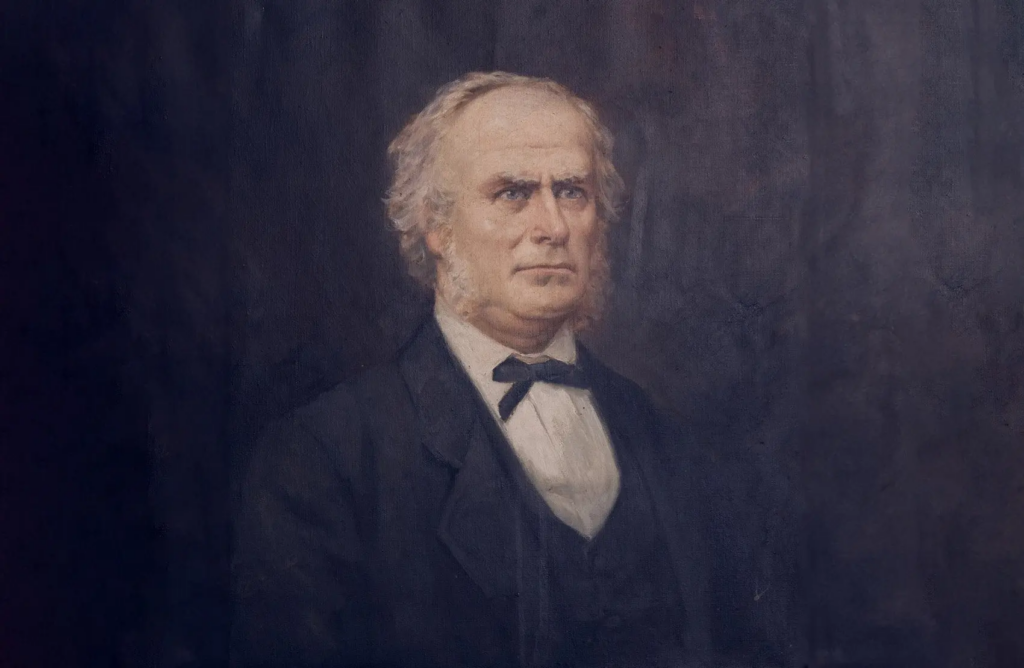
Halfway around the world, an Australian journalist-turned-engineer named James Harrison was working on a similar problem. Harrison was trying to figure out how to keep meat fresh for long-distance shipment from Australia to Britain a critical issue for the colonies.
He developed an ether vapor-compression refrigeration system, which received a patent in 1855 and could produce three tons of ice per day. His system was practical and real, and it powered Australia’s early commercial refrigeration industry.
Harrison’s work wasn’t directed at cooling air for human comfort, but his mechanical refrigeration principles were essential building blocks for what came next.
The Man Who Actually Invented the Air Conditioner: Willis Carrier
A Farm Kid from Angola, New York
Willis Haviland Carrier was born on November 26, 1876, in the small town of Angola, New York — a quiet place outside Buffalo that very few people have heard of unless they grew up there.
His childhood wasn’t easy. His mother, Elizabeth, died when he was just 11 years old. He later recalled that she had taught him to think through problems methodically — by breaking them into smaller parts, like figuring out fractions using apples from their farm. That lesson stuck with him for the rest of his life.
Carrier was a smart kid but not a wealthy one. He earned a scholarship to Cornell University and graduated in 1901 with a degree in mechanical engineering, starting salary at his first job: $10 a week.
His employer was the Buffalo Forge Company, a manufacturer of industrial fans, heaters, and pumps. It wasn’t glamorous work, but it was the right place at exactly the right moment.
The Print Shop Problem That Changed Everything
In the summer of 1902, the Sackett-Wilhelms Lithographing and Publishing Company in Brooklyn, New York had a serious problem.
They printed a popular illustrated magazine called Judge, and the New York summer heat and humidity were wrecking the production line. The paper absorbed moisture from the air, swelling and warping slightly between color passes on the printing press. Since color printing in 1902 required multiple passes through the press — one for each color — even tiny amounts of paper warping caused the colors to misalign. The result: blurry, unusable prints and wasted money.
Sackett-Wilhelms called Buffalo Forge and asked for help. Buffalo Forge sent their newest engineer: 25-year-old Willis Carrier.
The Foggy Train Station Moment
Carrier studied the problem carefully. He experimented for weeks. And then, according to his own account, the key insight came to him not in a lab but on a train platform.
Standing in the fog at a Pittsburgh train station on a November night in 1902, watching mist roll across the platform, Carrier had an epiphany. He could see that the fog had a predictable relationship between air temperature and moisture content — the colder the air, the less moisture it could hold. If he could control that relationship precisely, he could control humidity itself.
“I can do that with coils,” he reportedly said to himself. “I can make fog.”
On July 17, 1902, Willis Carrier’s first air conditioning system started running at the Sackett-Wilhelms plant in Brooklyn. It worked by passing air through coils filled with cold water, cooling the air down and causing excess moisture to condense out — like water droplets forming on a cold glass. The result was air that was both cooler and drier, at a precisely controlled humidity level.
The print shop’s problems vanished. The magazine pages stopped warping. The colors aligned perfectly.
And without realizing it, Carrier had just changed the world.
What Made Carrier’s Invention Different from Everything Before
This is the part most articles skip over, so let’s be clear about it.
Previous cooling attempts including Gorrie’s ice machine could make things cold. What they couldn’t do was control humidity with precision. Air conditioning, as Carrier defined it, is fundamentally about controlling both temperature and the moisture content of the air. That dual control is what made his system categorically new.
In fact, the 1902 installation is considered the birth of air conditioning specifically because it included humidity control not just cooling. Authorities in the field recognized that air conditioning needed to perform four basic functions: cool the air, humidify or dehumidify it, circulate it, and clean it. Carrier’s system did all four.
The Science That Nobody Knew Before Carrier
After 1902, Carrier kept pushing. He wasn’t satisfied with having built a system that worked — he wanted to understand why it worked, mathematically and scientifically.
The Rational Psychrometric Formulae (1911)
In December 1911, Carrier stood before the American Society of Mechanical Engineers and presented a paper that would become one of the most important engineering documents of the 20th century: his “Rational Psychrometric Formulae.”
The paper defined, for the first time in scientific terms, the precise relationships between:
- Relative humidity (how much moisture is in the air relative to what it could hold)
- Absolute humidity (the actual mass of water vapor in a given volume of air)
- Dew-point temperature (the temperature at which moisture starts condensing out of the air)
Before this paper, designing air conditioning systems was largely guesswork. Engineers had rough ideas, rules of thumb, trial-and-error. Carrier’s formulae transformed it into an exact science.
That document, updated and reprinted over the decades, remained the mathematical basis of air conditioning system design for the rest of the 20th century. In other words, every air conditioning engineer in history has worked from the framework Carrier laid out in that one paper.
The Name “Air Conditioning” Didn’t Come from Carrier
Here’s a fascinating footnote that most articles about who invented the air conditioner leave out.
Willis Carrier invented the technology. But he didn’t invent the term “air conditioning.”
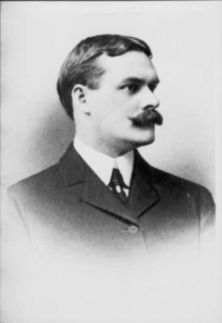
That word came from Stuart W. Cramer, an engineer from Charlotte, North Carolina, who was working on a completely separate problem keeping cotton spinning machinery running smoothly in textile mills.
In 1906, Cramer filed a patent claim that used the phrase “air conditioning” for the first time, describing it as analogous to “water conditioning,” which was a known textile process.
Cramer combined moisture and ventilation to “condition” the air in his factory. He wasn’t building the same thing as Carrier, but he coined the term that Carrier later adopted and incorporated into the name of his company.
So the device was Carrier’s. The name was Cramer’s.
Carrier Engineering Corporation: The Company That Sold Cool Air to the World
The Six-Engineer Gamble (1915)
After a decade at Buffalo Forge, Carrier realized his invention was bigger than any single employer. In 1915, he and six fellow engineers pooled their savings a total of $32,600 and founded the Carrier Engineering Corporation.
Starting a company was a financial risk. The six men had families and mortgages. But they believed air conditioning would become essential to modern industry, and they were right.
The early years were focused almost entirely on industrial clients: printing plants, tobacco factories, pharmaceutical companies, textile mills. Anywhere that heat or humidity affected product quality, Carrier had a sale.
Bringing Cool Air to the Public: The Movie Theater Revolution
The first time ordinary Americans experienced air conditioning was at the movies.
Early 1920s movie theaters had installed primitive cooling systems modified heating systems that pushed cold air through floor vents. The result was comically uneven: people at lower levels wrapped newspapers around their feet from the cold, while people in the upper gallery sweated. It was a mess.
In 1922, Carrier Engineering Corporation installed a proper climate control system in the Metropolitan Theater in Los Angeles, pushing cool air through higher vents for even distribution. The public went wild. Suddenly, “air conditioned” was a selling point theaters advertised it in giant letters on their marquees.
People didn’t just go to see the movie. They went to feel the air.
In May 1922, Carrier unveiled an even bigger breakthrough at the Rivoli Theater in New York: a centrifugal chiller, which had fewer moving parts than existing compressor systems. This made large-scale air conditioning cheaper and more reliable which meant more buildings could afford it.
First Home AC: Charles Gates’ Very Cold, Very Expensive House (1914)
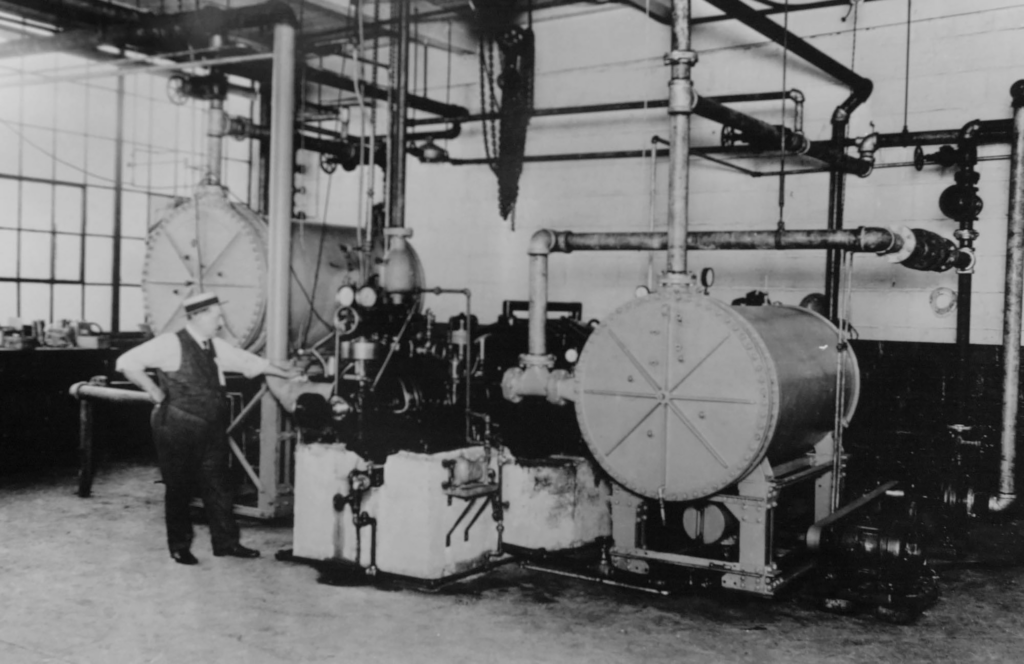
The first private home to get air conditioning was built in Minneapolis in 1914, owned by millionaire Charles Gates. The unit measured roughly 20 feet long, 7 feet tall, and 6 feet wide — essentially the size of a small car. It needed its own room. The cost was somewhere between $10,000 and $50,000 at 1914 prices, which in today’s money translates to roughly $300,000 to $1.5 million.
Suffice to say, home air conditioning was not for everyone.
It took another three decades and a completely redesigned approach for AC to reach ordinary households.
Window Units and the Postwar Boom
The real democratization of air conditioning happened after World War II.
In 1929, Frigidaire had introduced a split-system room cooler that was shaped like a radio cabinet small enough for homes but still heavy and expensive, requiring a separate condensing unit. General Electric’s Frank Faust improved this design in the early 1930s.
But it was the window unit a self-contained box that fit in a window frame and needed no installation beyond lifting into place that brought AC to the masses. By the 1950s, companies were mass-producing window ACs at prices that middle-class families could afford.
In 1953 alone, over one million window AC units were sold in the United States. The American summer was never the same.
What Willis Carrier’s Invention Actually Changed (Beyond Staying Cool)
If you asked most people what the air conditioner changed, they’d say “it made summers comfortable.” That’s true but wildly incomplete.
It Reshaped American Geography
Before air conditioning, the American South and Southwest were genuinely difficult places to live year-round. Cities like Phoenix, Las Vegas, Houston, and Miami were small regional outposts, not the massive metropolitan areas they are today.
Air conditioning made the Sun Belt livable — and then attractive. Millions of Americans migrated southward through the 1950s, 60s, and 70s, chasing the warmth without having to suffer through it. The political consequences were enormous: the Sun Belt’s population growth shifted electoral college maps for generations.
It Made Modern Skyscrapers Possible
Early skyscrapers needed operable windows on every floor to keep occupants comfortable. This limited how deep a building could be (everyone needed to be near a window) and constrained architectural design.
With air conditioning, buildings could be sealed, go much deeper, and take almost any shape. The glass-and-steel curtain-wall skyscraper the defining image of 20th-century cities would be physically uninhabitable without AC.
It Revolutionized Medicine
Hospitals before air conditioning were dangerous places in summer. Surgical mortality rates spiked in hot weather. Bacteria thrived. Patients struggled to recover.
Controlled indoor air — cool, low-humidity, and increasingly filtered — changed hospital hygiene. Today’s operating theaters, pharmaceutical manufacturing facilities, and laboratories all depend on climate control that traces directly to Carrier’s 1902 system.
It Saved the Chocolate Industry
One largely forgotten story: chocolate manufacturers in the early 1900s couldn’t ship their product reliably in summer. Chocolate melted in transit, ruined in warehouses, and couldn’t be produced consistently in hot weather. It was a genuine business crisis.
Carrier’s systems installed in factories including Beech-Nut and Whitman’s Chocolates — solved this problem and allowed year-round, large-scale chocolate production. The candy bar as we know it owes a debt to Willis Carrier.
Willis Carrier: The Man Behind the Machine
Carrier was, by most accounts, a quietly brilliant and deeply humble man. He was more interested in engineering problems than fame, more comfortable with a slide rule than a spotlight.
He married three times his first wife, Edith, died young; his second marriage ended in divorce; his third wife, Jennie, survived him. He was known for his loyalty, his outdoor hobbies, and his ability to remain calm when everyone around him was panicking over a failed system or a client emergency.
In 1998 nearly 50 years after his death Time magazine named Willis Carrier one of the 100 Most Influential People of the 20th Century. He was placed in the same company as Einstein, Churchill, and Gandhi.
He was also inducted posthumously into the National Inventors Hall of Fame.
Carrier died on October 7, 1950, in New York City. He was 73 years old. At the time of his death, his company was already a global enterprise, and the technology he’d invented was reshaping the world’s cities, industries, and daily lives.
He never got rich in the way you might expect for someone who changed the world. But he did get to see his invention go from a Brooklyn print shop curiosity to an essential part of modern civilization. That might be enough.
Frequently Asked Questions
Who invented the air conditioner? Willis Haviland Carrier invented the first modern air conditioner in 1902. He designed a system that controlled both temperature and humidity at a printing plant in Brooklyn, New York.
What did Willis Carrier invent before the air conditioner? Carrier’s air conditioning system was his breakthrough invention, though at Buffalo Forge Company he also worked on heating and drying systems for lumber and industrial use.
Who coined the term “air conditioning”? Stuart W. Cramer, a textile mill engineer from Charlotte, North Carolina, used the phrase “air conditioning” for the first time in a 1906 patent claim.
Was Willis Carrier the first person to cool indoor air? No. Dr. John Gorrie and others attempted mechanical cooling before him. But Carrier was the first to build a system that controlled both temperature and humidity — which is the definition of true air conditioning.
When was AC first used in a home? The first private home with air conditioning was owned by Charles Gates in Minneapolis in 1914. The system was enormous and expensive — roughly the size of a car.
When did air conditioning become common in homes? Mass adoption of home air conditioning happened in the 1950s and 1960s in the United States, driven by affordable window AC units.
Is the Carrier brand named after Willis Carrier? Yes. Willis Carrier co-founded Carrier Engineering Corporation in 1915, and the brand became one of the world’s largest HVAC manufacturers.
The next time you walk into a cool room and feel that immediate relief from the heat — whether it’s a hospital, an office, a grocery store, or your own bedroom — you’re experiencing the direct result of a young engineer standing on a foggy train platform in November 1902, watching the mist, and realizing something that changed everything.
Related Post:
- 10 Best Air Conditioner For Apartment in India 2026
- [9 Reasons] Why is my air conditioner leaking water inside the house?
- A Comprehensive Exploration of the Best Air Conditioner Compressor
- How to Choose the Right Air Cooler Based on Room Size
- Air Cooler vs Air Conditioner: Which One Is Better for Your Home in 2026?
- How to Reduce AC Electricity Bill: 27 Practical Tips That Actually Work
Sourabh researches and writes about home appliances, kitchen appliances, and common appliance problems to help readers make informed buying decisions. He covers mixer grinders, refrigerators, air conditioners, washing machines, and appliance troubleshooting.
At ReviewSpot, Sourabh compares manufacturer specifications, product features, warranty information, pricing, and customer feedback to turn technical appliance information into practical buying advice. His goal is to help readers understand their options, avoid costly mistakes, and choose products that fit their needs and budget.
ReviewSpot distinguishes manufacturer information, customer feedback, and editorial analysis, and does not describe products as hands-on tested unless they have actually been tested.