
How to Clean AC Filters at Home: Easy DIY Guide to Improve Cooling and Save Electricity

Have you noticed that your air conditioner is taking longer to cool the room? Is your electricity bill increasing even though your AC usage hasn’t changed? In many Indian homes, the problem isn’t the AC itself it’s simply a dirty air filter.
Dust, pet hair, pollen, cooking smoke, and pollution gradually block the AC filter. As a result, your AC has to work much harder to push air through the clogged filter. This reduces cooling performance, increases power consumption, and can even shorten the life of your air conditioner.
Read: Which AC Is Best for Home
In this guide, you’ll learn How to Clean AC Filters at Home safely, when to clean them, common mistakes to avoid, and expert maintenance tips specifically for Indian weather conditions.
How to Clean AC Filters at Home
To clean AC filters at home:
- Switch off the AC and unplug the power supply.
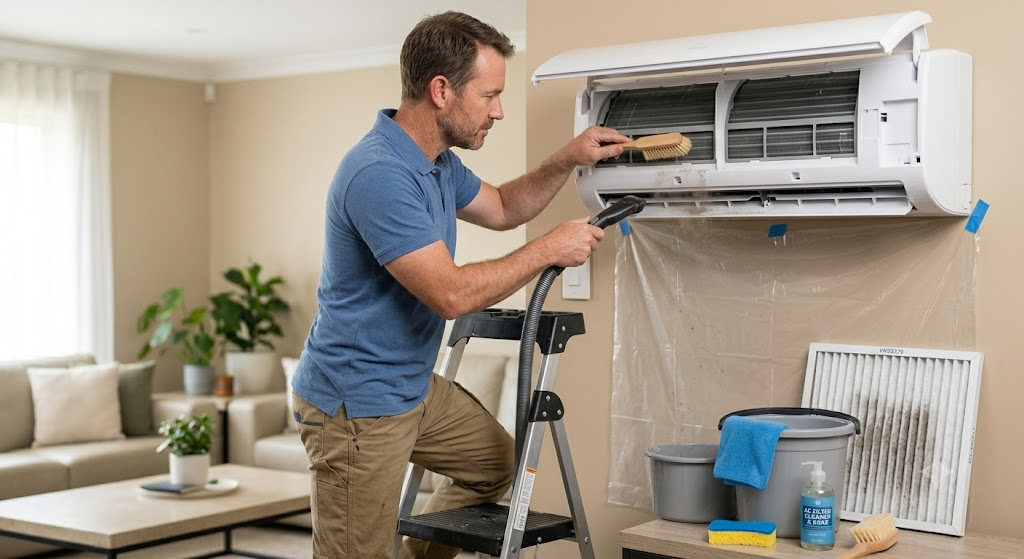
- Open the front panel carefully.
- Remove the air filters gently.
- Vacuum loose dust if possible.
- Wash the filters with normal water.
- Use mild liquid soap if the filters are very dirty.
- Never use hot water or strong chemicals.
- Rinse thoroughly.
- Let the filters dry completely in shade.
- Reinstall the dry filters and close the front panel.
- Turn on the AC and check airflow.
Cleaning your AC filter every 2–4 weeks during summer helps improve cooling, reduces electricity consumption, and increases the lifespan of your air conditioner.
Why Cleaning Your AC Filter Is So Important
Many people believe that AC servicing once a year is enough. In reality, your AC filter collects dust almost every day, especially in Indian cities where pollution levels are higher.
A dirty filter affects almost every part of your air conditioner.
1. Better Cooling Performance
When dust blocks the filter, less cool air reaches your room. Instead of enjoying quick cooling, you may notice:
- Weak airflow
- Uneven cooling
- Longer cooling time
- Hot spots inside the room
A clean filter restores proper airflow almost immediately.
2. Lower Electricity Bills
A blocked filter forces the compressor and indoor fan to work harder.
More effort means:
- Higher power consumption
- Longer running time
- Increased electricity bills
Cleaning the filter regularly can noticeably improve efficiency.
If your goal is to reduce your monthly bill, learning How to Clean AC Filters at Home is just as important as choosing Which Mode is Best for AC to Save Electricity.
3. Cleaner Indoor Air
Your AC filter traps:
- Dust
- Pollen
- Pet hair
- Smoke particles
- Fabric fibres
- Airborne dirt
A dirty filter cannot trap new particles effectively. Instead, these particles circulate inside your room, reducing indoor air quality. This is especially important for:
- Children
- Senior citizens
- Asthma patients
- Allergy sufferers
4. Longer AC Life
Regular cleaning reduces stress on all major AC components. When airflow is restricted:
- Compressor works harder
- Indoor fan motor runs longer
- Cooling coil may freeze
- Overall wear increases
5. Prevent Bad Smell
Have you noticed a musty smell when switching on your AC? Often, the cause is dust trapped in the air filter combined with moisture. Cleaning the filter helps reduce unpleasant odours.
How Does an AC Filter Work?
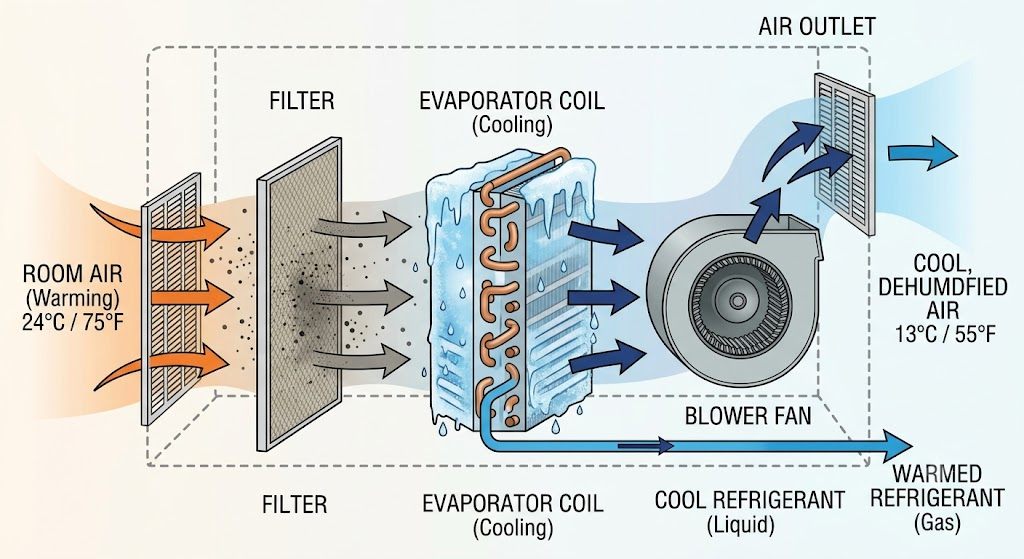
Many people think the filter cools the air. Actually, its main job is to clean the air before it reaches the evaporator coil. Here’s what happens:
- Room air enters the indoor unit.
- Air first passes through the filter.
- Dust and dirt remain trapped.
- Clean air moves across the cooling coil.
- Cool air is blown back into the room.
Without a filter, dust would quickly settle on the cooling coil, reducing efficiency and increasing servicing costs. Think of the filter as the first line of defence for your air conditioner.
Signs Your AC Filter Needs Cleaning
Many homeowners wait until the AC stops cooling properly. Instead, look for these early warning signs.
- Weak Airflow: If the fan speed is high but airflow feels weak, the filter may be clogged.
- Room Takes Longer to Cool: Your AC keeps running, but the room remains warm. This often happens because air cannot pass through the blocked filter.
- Higher Electricity Bill: If your electricity bill suddenly increases without increasing AC usage, check the filter first.
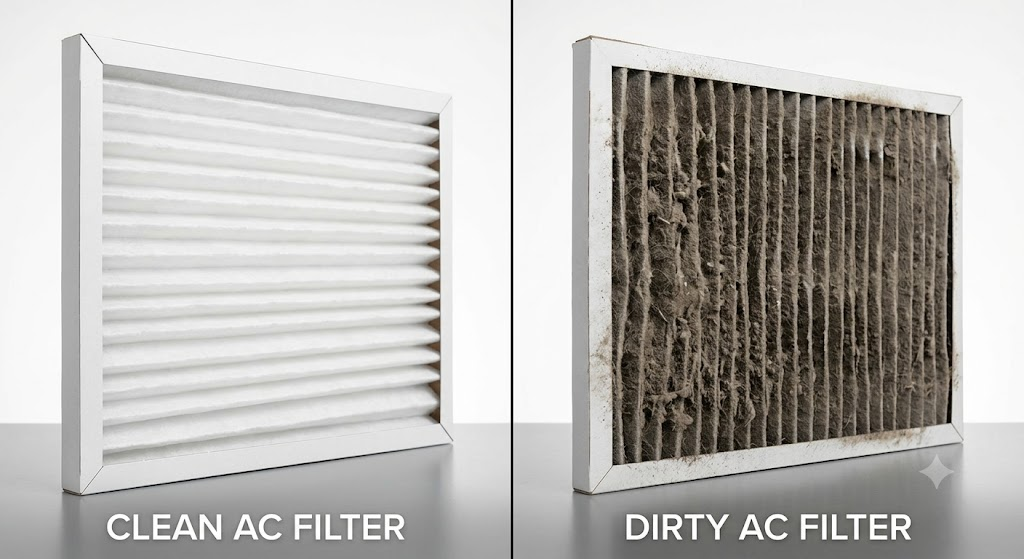
- Dust Visible on Filter: Open the indoor unit. If the filter looks grey instead of black mesh, it needs cleaning.
- Musty Smell: Dust mixed with moisture creates an unpleasant smell. Cleaning usually solves the problem.
- Indoor Unit Makes More Noise: The fan has to work harder to push air through a blocked filter. This sometimes creates unusual airflow noise.
- Water Leakage: Restricted airflow can cause the evaporator coil to freeze. When the ice melts, excess water may drip from the indoor unit.
How Often Should You Clean AC Filters?
The cleaning schedule depends on your environment.
| Usage Condition | Cleaning Frequency |
|---|---|
| Regular home use | Every 2–4 weeks |
| Daily summer usage | Every 2 weeks |
| Dusty areas | Every 10–15 days |
| Homes near construction | Weekly |
| Pet owners | Every 2 weeks |
| Allergy sufferers | Every 2 weeks |
| AC used occasionally | Once a month |
Indian Weather Tip
During summer in cities like Delhi, Jaipur, Ahmedabad, Nagpur, Raipur, Lucknow, and Hyderabad, dust levels are usually much higher. Cleaning the filter every two weeks can significantly improve cooling performance.
Tools Required to Clean AC Filters at Home
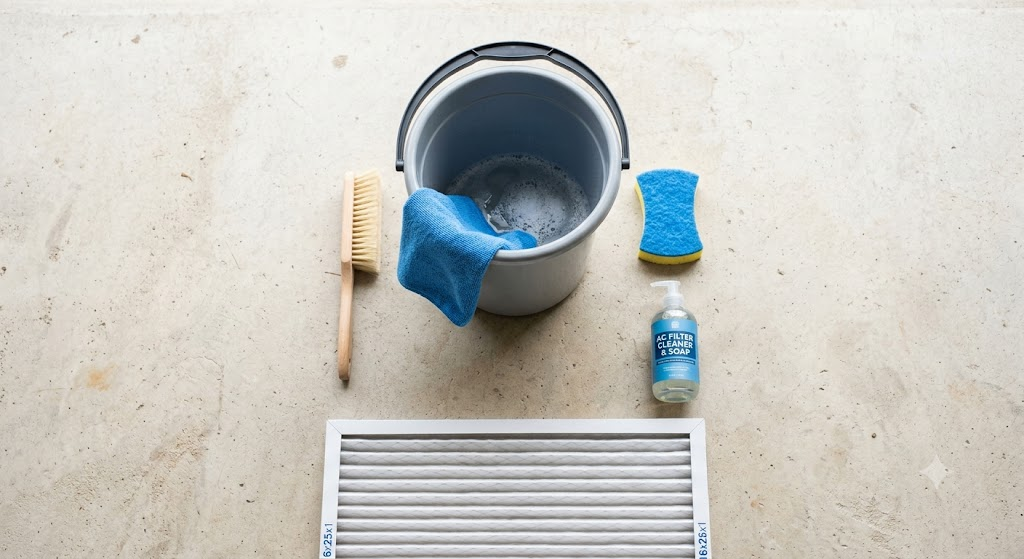
The good news is that you don’t need expensive equipment. Keep these items ready.
- Soft brush
- Vacuum cleaner (optional)
- Mild liquid soap
- Bucket
- Running water
- Microfiber cloth
- Soft sponge
- Dry towel
- Rubber gloves (optional)
Avoid using:
- Bleach
- Acid-based cleaners
- Petrol
- Kerosene
- Hard brushes
- Steel scrubbers
- High-pressure water jets
These can permanently damage the filter mesh.
Safety Checklist Before Cleaning
Safety should always come first. Before opening your indoor unit:
- Switch OFF the AC.
- Turn OFF the main power supply.
- Wait 5 minutes.
- Make sure your hands are dry.
- Use a stable stool if the AC is installed high on the wall.
- Never spray water inside the indoor unit.
- Never touch electrical components.
Following these simple precautions prevents accidents and protects your AC.
Step-by-Step Guide: How to Clean AC Filters at Home
Now let’s begin the actual cleaning process.
Step 1: Turn Off the AC
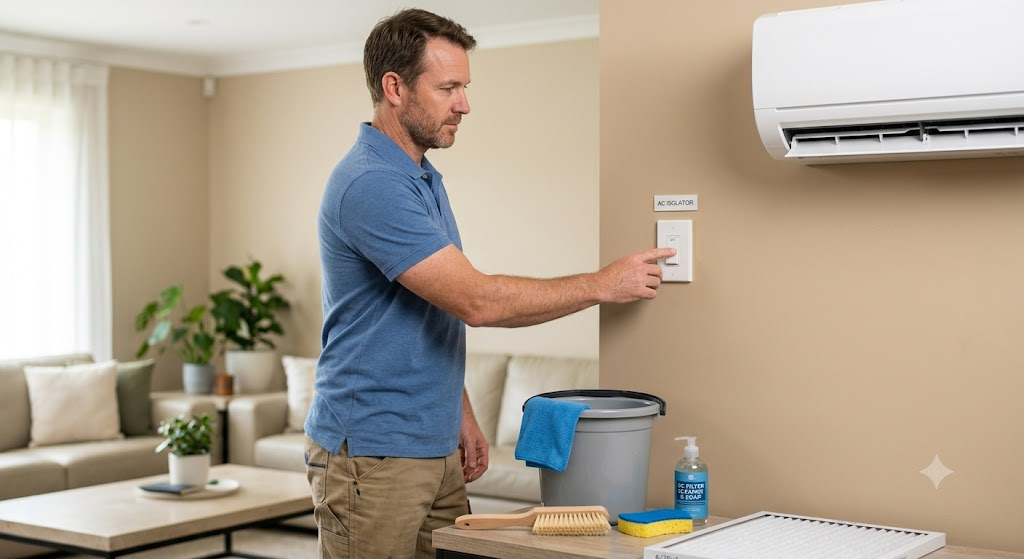
Switch off the air conditioner using the remote.
Then turn off the power from the switchboard.
Wait for a few minutes before opening the indoor unit.
Never clean the filter while the AC is running.
Suggested Image
Person switching off the AC from the wall switch before cleaning.
Step 2: Open the Front Panel Carefully
Most split ACs have a front cover that opens upwards.
Hold both sides gently.
Lift until it locks into the open position.
Do not force it.
If you feel resistance, check your user manual.
Step 3: Remove the Air Filters
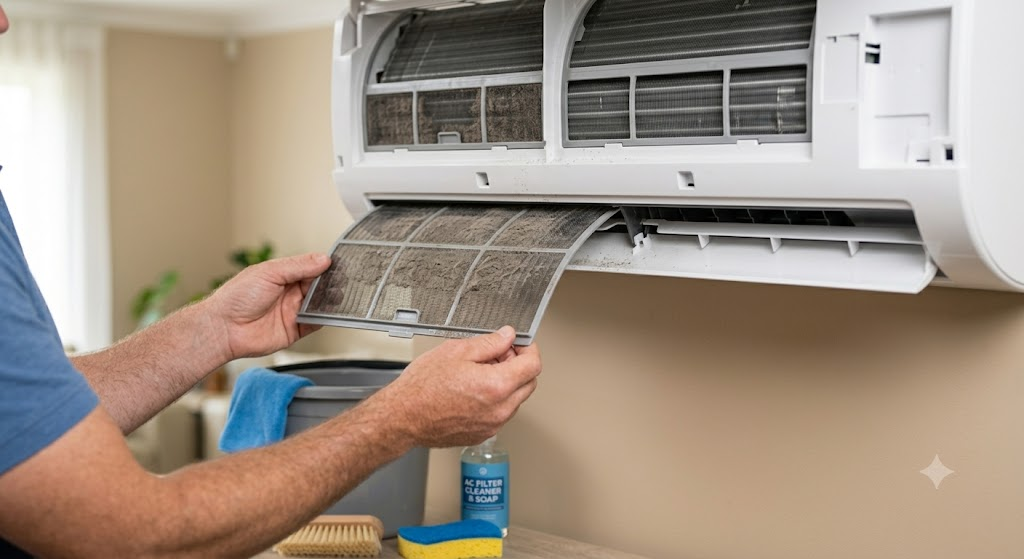
You’ll usually find one or two mesh filters behind the front cover.
Slide them upward slightly.
Then pull them out carefully.
Avoid bending the plastic frame.
If the filter feels stuck, don’t force it.
Step 4: Remove Loose Dust
Before washing, shake the filter gently outdoors.
If available, use a vacuum cleaner with a soft brush attachment to remove loose dust.
This prevents muddy dirt from sticking during washing.
Step 5: Wash the Filter
Rinse the filter under normal running water.
If the filter is very dirty:
- Add a few drops of mild liquid soap.
- Use a soft sponge or cloth.
- Clean both sides gently.
- Pay extra attention to the corners where dust usually collects.
Never scrub aggressively. The mesh can tear easily.
Step 6: Rinse Thoroughly
After cleaning with soap, rinse the filter until all soap residue is removed.
Leftover soap can attract more dust during use.
The water should run clear before drying.
Step 7: Dry the Filter Properly
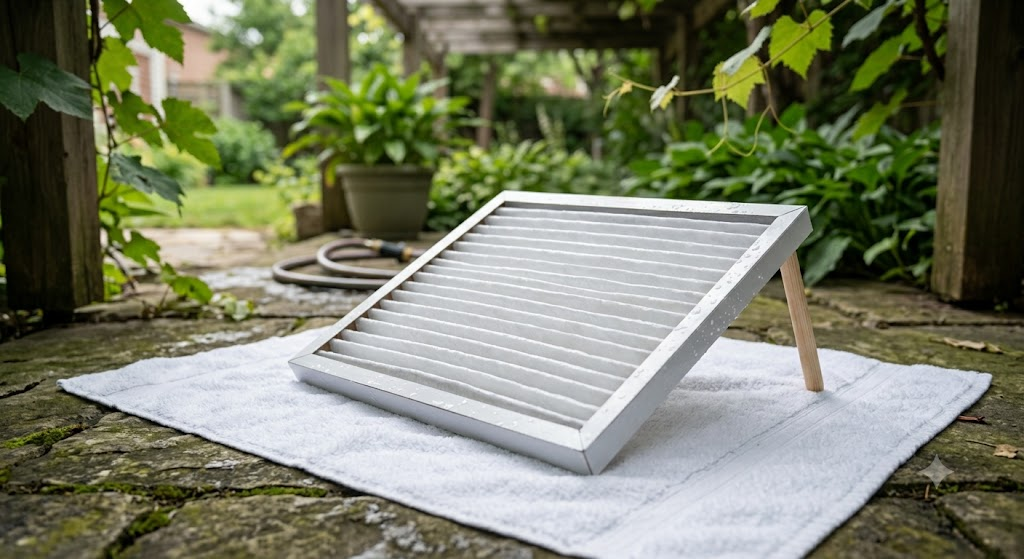
After rinsing, gently shake the filter to remove excess water. Place it in a shaded, well-ventilated area and let it air dry completely.
Avoid drying the filter:
- In direct sunlight
- Using a hair dryer
- Near a heater
- Inside an oven or microwave (yes, some people actually try this!)
High heat can warp the plastic frame or damage the mesh. A completely dry filter also prevents mould and unpleasant odours inside the AC.
Expert Tip: If you’re in a hurry, use a clean microfiber cloth to absorb excess water before air drying.
Step 8: Reinstall the Filter
Once the filter is completely dry:
- Slide it back into its original position.
- Ensure it fits properly into the guide rails.
- Make sure there are no gaps around the edges.
- Close the front panel until it clicks into place.
A poorly fitted filter allows dust to bypass the filter and settle on the cooling coil.
Step 9: Turn On the AC
Switch on the main power supply. Start the AC and check:
- Strong airflow
- Faster cooling
- No unusual noise
- No warning lights
- No bad smell
If everything works normally, you’ve successfully completed the cleaning process.
What Happens If You Don’t Clean Your AC Filter?
Skipping filter cleaning for several months can create multiple problems.
- Reduced Cooling: Dust blocks airflow, so cool air struggles to reach your room.
- Higher Electricity Consumption: A dirty filter makes the compressor work longer. More running time means a higher electricity bill.
- Frozen Cooling Coil: Poor airflow can cause the evaporator coil to become too cold and freeze. Once the ice melts, water may drip from the indoor unit.
- Poor Indoor Air Quality: Instead of trapping dust, a clogged filter may circulate dust particles throughout the room.
- Bad Odour: Dust combined with moisture creates a damp, musty smell whenever the AC starts.
- Costly Repairs: Ignoring a simple filter cleaning may eventually lead to Fan motor problems, Compressor overload, Coil cleaning charges or Reduced AC lifespan.
Cleaning a filter takes only a few minutes, but it can help avoid expensive repairs later. A clogged filter is one of the leading causes of poor cooling. If your AC still isn’t working properly after cleaning, check our complete guide on common AC problems and solutions.
Common Mistakes to Avoid While Cleaning AC Filters
Many people unknowingly damage their AC while trying to clean it. Avoid these common mistakes.
1. Using Hot Water
Very hot water can deform the plastic frame and loosen the mesh. Always use normal or slightly lukewarm water.
2. Using Strong Chemicals
Never use:
- Bleach
- Acid cleaners
- Floor cleaners
- Bathroom cleaners
- Petrol
- Thinner
These chemicals can weaken the filter material.
3. Installing a Wet Filter
A damp filter can encourage mould growth and may allow moisture to enter sensitive electrical parts. Always let it dry completely.
4. Scrubbing Too Hard
The mesh is designed to trap dust, not withstand aggressive cleaning. Use a soft sponge or cloth only.
5. Washing the Indoor Unit Directly
Do not pour water inside the indoor AC unit. Electrical parts can get damaged and may become unsafe.
6. Forgetting to Switch Off the Power
Always disconnect the power before opening the front panel. This is one of the most important safety rules.
7. Ignoring the Filter for Months
Many homeowners only clean the filter during annual servicing. That’s too late. Regular cleaning every few weeks is much more effective.
How to Clean Different Types of AC Filters
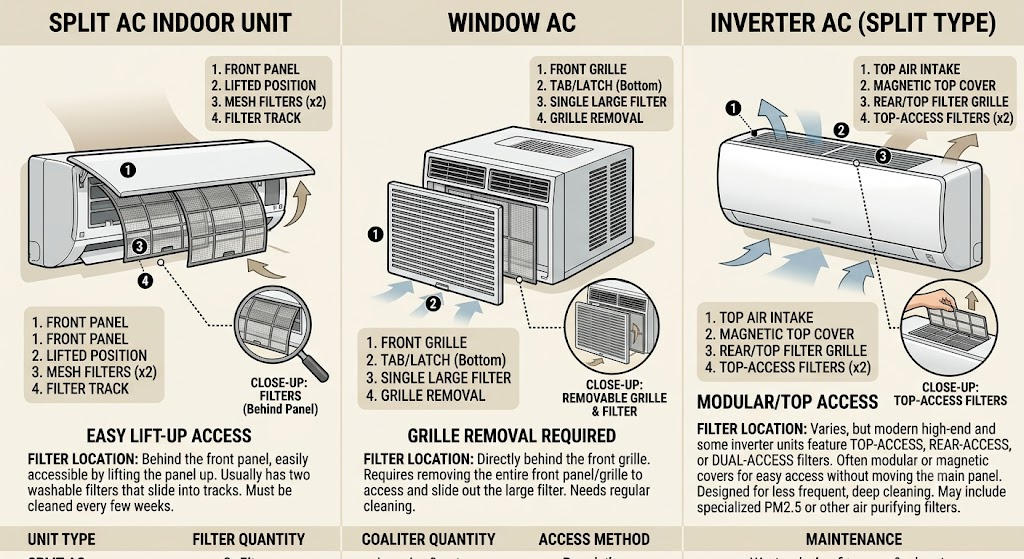
Not all air conditioners use the same filter design. Here’s how to clean each type.
Split AC Filter
This is the most common AC in Indian homes. Cleaning process:
- Lift the front panel.
- Remove the mesh filters.
- Vacuum loose dust.
- Wash gently.
- Dry completely.
- Reinstall.
Cleaning requires 15–20 minutes
Window AC Filter
Window AC filters are usually located behind the front grille. Cleaning process:
- Remove the front cover.
- Slide out the filter.
- Vacuum or wash.
- Dry fully.
- Reinstall securely.
Cleaning requires 20–25 minutes
Inverter AC Filter
The filter cleaning process is almost the same as a regular split AC. However, inverter ACs often include additional filters such as:
- PM2.5 filters
- Anti-bacterial filters
- Activated carbon filters
Always check your user manual before washing these special filters. Some of them are washable, while others need replacement after a certain period.
Can You Wash Every AC Filter?
No. Different filters require different maintenance.
| Filter Type | Washable? | Replace? |
|---|---|---|
| Standard Mesh Filter | Yes | No |
| Nylon Filter | Yes | No |
| PM2.5 Filter | Depends on manufacturer | Sometimes |
| Activated Carbon Filter | No | Yes |
| HEPA Filter | Usually No | Yes |
| Electrostatic Filter | Depends on model | Sometimes |
Always check the instruction manual if you’re unsure.
How Often Should You Deep Clean Your AC?
Cleaning the filter is only one part of AC maintenance. A complete cleaning schedule looks like this.
| Component | Recommended Frequency |
|---|---|
| Air Filter | Every 2–4 weeks |
| Indoor Unit Exterior | Monthly |
| Cooling Coil Inspection | Every 6 months |
| Drain Pipe Check | Every 6 months |
| Outdoor Unit Cleaning | Every 3–6 months |
| Professional AC Service | Once a year |
If you use your AC daily during summer, consider professional servicing before the season begins. Using the right cleaning tools makes a big difference see our expert picks for the 8 Best AC Cleaning Kits in India.
DIY Cleaning vs Professional AC Servicing
Many homeowners think cleaning the filter means the AC has been fully serviced. That’s not true. Here’s the difference.
| DIY Filter Cleaning | Professional Servicing |
|---|---|
| Cleans air filter | Cleans cooling coil |
| Improves airflow | Checks refrigerant level |
| Removes surface dust | Cleans blower fan |
| Takes 20 minutes | Takes 1–2 hours |
| Free or very low cost | Paid service |
| Safe for homeowners | Done by trained technicians |
Regular DIY cleaning reduces the need for emergency repairs, while annual servicing keeps the entire system in good condition.
Does Cleaning the AC Filter Save Electricity?
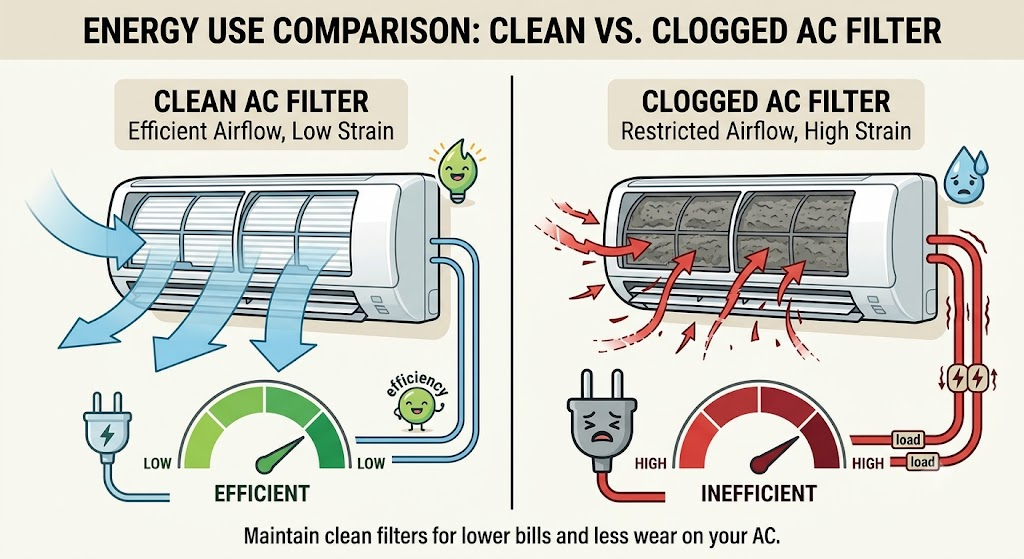
Yes. A clean filter improves airflow, allowing the AC to cool the room faster. When airflow is unrestricted:
- The compressor runs for a shorter time.
- The fan doesn’t have to work as hard.
- Cooling becomes more efficient.
- Electricity consumption can reduce over time.
If you’re searching for Which Mode is Best for AC to Save Electricity, remember that the cooling mode alone isn’t enough. Even Eco Mode or Sleep Mode cannot perform efficiently if the air filter is clogged.
For the best energy savings:
- Keep the temperature between 24°C and 26°C.
- Use Eco Mode whenever possible.
- Clean the air filter regularly.
- Keep doors and windows closed while the AC is running.
- Use ceiling fans to circulate cool air.
These small habits can make a noticeable difference to your monthly electricity bill.
When Should You Replace an AC Filter Instead of Cleaning It?
Cleaning works well for most washable mesh filters. However, every filter has a lifespan. If the filter is damaged or too dirty, replacing it is a better option. Here are the signs that your AC filter needs replacement.
1. Torn or Damaged Mesh
If you notice:
- Holes in the mesh
- Cracks in the plastic frame
- Loose filter material
replace the filter immediately. A damaged filter cannot trap dust effectively, allowing dirt to reach the cooling coil.
2. Filter Remains Dirty After Washing
Sometimes, the filter still looks dark even after a thorough wash. This happens because:
- Fine dust gets embedded in the mesh.
- Grease from kitchen fumes sticks permanently.
- Pollution particles become trapped inside the filter.
If cleaning no longer restores the filter, it’s time for a replacement.
3. Bad Smell Doesn’t Go Away
If your AC continues to produce a musty smell even after cleaning the filter, the filter may have:
- Mould
- Mildew
- Bacteria buildup
Replacing the filter is the safest solution.
4. Reduced Airflow Even After Cleaning
If cooling doesn’t improve after cleaning, check whether the filter has become too old or damaged. The problem could also be elsewhere, such as:
- Dirty cooling coil
- Blocked blower fan
- Low refrigerant level
In such cases, professional servicing is recommended.
5. Manufacturer’s Replacement Schedule
Some filters, especially PM2.5, activated carbon, and anti-bacterial filters, are designed to be replaced after a specific period. Always follow the recommendations in your AC’s user manual.
AC Filter Maintenance Tips for Indian Homes
Indian weather presents unique challenges for air conditioners. Dust, humidity, pollution, and long summers can clog filters much faster than in many other countries.
Here are practical tips to keep your AC running efficiently.
During Summer
Summer is the busiest season for air conditioners.
- Clean the filter every 2 weeks.
- Avoid blocking indoor vents with curtains or furniture.
- Keep windows closed while the AC is running.
- Use ceiling fans to distribute cool air.
During Monsoon
Humidity increases during the rainy season.
- Clean the filter once a month.
- Run the AC in Dry Mode occasionally to reduce indoor moisture.
- Check for mould or fungus on the filter.
During Winter
If you don’t use your AC regularly:
- Clean the filter before storing the AC for the season.
- Cover the outdoor unit if recommended by the manufacturer.
- Run the AC for 10–15 minutes once every few weeks to keep internal parts in good condition.
FAQs
Q. How often should I clean my AC filter at home?
For most Indian homes, clean the AC filter every 2–4 weeks during summer. If you live in a dusty area, have pets, or use the AC daily, clean it every 10–15 days.
Q. Can I wash my AC filter with water?
Yes. Most standard mesh AC filters are washable. Use normal running water and mild liquid soap if required. Avoid using hot water or harsh chemicals.
Q. Can I use detergent to clean the AC filter?
A mild liquid detergent or dishwashing liquid is fine for heavily soiled filters. Do not use bleach, acid cleaners, or strong detergents.
Q. Is it safe to clean an AC filter without professional help?
Yes. Cleaning the air filter is a simple DIY task. Just make sure the AC is switched off and disconnected from the power supply before starting.
Q. How long does it take to clean an AC filter?
The complete process usually takes 15–30 minutes, including drying time before reinstalling the filter.
Q. Can I use a vacuum cleaner instead of washing?
Yes. If the filter has only light dust, a vacuum cleaner with a soft brush attachment is enough. For greasy or stubborn dirt, wash the filter with water.
Q. What happens if I don’t clean my AC filter?
A dirty filter can cause:
- Poor cooling
- Weak airflow
- Higher electricity bills
- Bad odour
- Frozen cooling coil
- Reduced AC lifespan
Q. Why is my AC still not cooling after cleaning the filter?
The issue may be due to:
- Dirty evaporator coil
- Low refrigerant (gas)
- Dirty outdoor unit
- Faulty fan motor
- Incorrect temperature setting
In such cases, professional servicing is recommended. Weak airflow and slow cooling are common warning signs. Read our troubleshooting guide if your AC is not cooling properly even after cleaning the filter.
Q. Can a dirty AC filter increase electricity bills?
Yes. A clogged filter restricts airflow, forcing the compressor and fan to work harder. This increases electricity consumption.
Q. Does cleaning the AC filter improve cooling?
Yes. A clean filter allows better airflow, helping your AC cool the room faster and more efficiently.
Q. Should I clean the AC filter during winter?
If you use the AC occasionally in winter, inspect and clean the filter once before storage and again before the next summer season.
Q. Can I dry the AC filter in direct sunlight?
No. Dry the filter naturally in the shade. Prolonged exposure to direct sunlight can damage or warp the plastic frame.
Q. Is every AC filter washable?
No. Standard mesh filters are washable, but activated carbon, HEPA, and some PM2.5 filters may require replacement. Always check your user manual.
Q. Can I reinstall the filter while it’s still wet?
No. Always wait until the filter is completely dry before reinstalling it to avoid moisture-related issues like mould growth.
Q. How do I know if my AC filter needs replacing?
Replace the filter if:
- The mesh is torn.
- The frame is broken.
- It remains clogged after cleaning.
- The manufacturer recommends replacement.
Q. Should I clean both filters if my split AC has two?
Yes. Always clean both filters together. Cleaning only one can reduce airflow balance and affect cooling performance.
Q. Can cleaning the filter remove bad smells from the AC?
In many cases, yes. If the smell comes from dust and moisture trapped in the filter, cleaning it helps. If the smell continues, the cooling coil or drain pan may need professional cleaning.
Q. Is AC filter cleaning enough instead of annual servicing?
No. Filter cleaning is part of regular maintenance. Annual servicing includes cleaning the evaporator coil, condenser, blower fan, drain line, and checking refrigerant levels.
Q. Which Mode is Best for AC to Save Electricity?
For most inverter ACs, Eco Mode combined with a temperature setting of 24–26°C offers the best balance of comfort and energy efficiency. However, even the most efficient mode won’t save much electricity if the air filter is dirty. That’s why regular filter cleaning should always be part of your energy-saving routine.
Q. Can I clean the AC filter every week?
Yes. There is no harm in cleaning the filter weekly, especially if:
- You live in a dusty city.
- Your home is near a construction site.
- You have pets.
- Someone in your family has allergies.
A clean filter always helps maintain better cooling and cleaner indoor air.
Conclusion
Learning How to Clean AC Filters at Home is one of the easiest and most effective ways to maintain your air conditioner. In just a few minutes, you can improve cooling performance, lower electricity consumption, and enjoy cleaner indoor air.
For Indian households, where dust, pollution, and long summers are common, regular filter cleaning isn’t optional it’s essential. By making it a part of your monthly home maintenance routine, you’ll not only save money on electricity but also reduce the chances of unexpected AC breakdowns.
With just a little care every few weeks, your AC can deliver stronger cooling, healthier air, lower power bills, and reliable performance for years to come.
Recommended Reading:
- Which Mode is Best for AC to Save Electricity?
- 7 Best Stabilizer for 1.5 Ton AC in India (2026)
- 7 Best AC for 10×10 Room in India (2026)
- How to Unlock AC Remote
Sourabh researches and writes about home appliances, kitchen appliances, and common appliance problems to help readers make informed buying decisions. He covers mixer grinders, refrigerators, air conditioners, washing machines, and appliance troubleshooting.
At ReviewSpot, Sourabh compares manufacturer specifications, product features, warranty information, pricing, and customer feedback to turn technical appliance information into practical buying advice. His goal is to help readers understand their options, avoid costly mistakes, and choose products that fit their needs and budget.
ReviewSpot distinguishes manufacturer information, customer feedback, and editorial analysis, and does not describe products as hands-on tested unless they have actually been tested.