Refrigerator Not Cooling: 13 Common Causes, Safe Fixes & Troubleshooting Guide for Indian Homes

If your refrigerator is running but the milk, vegetables, or leftovers aren’t getting properly cold, don’t immediately assume that the compressor has failed. A Refrigerator Not Cooling can be caused by something as simple as a wrong temperature setting or blocked air vent, but it can also point to a faulty fan, defrost system, compressor, or sealed cooling system.
The good news is that you can safely check several things yourself before calling a technician. This guide explains exactly what to check, what different symptoms mean, which fixes are safe at home, and when you should stop troubleshooting and get professional help.
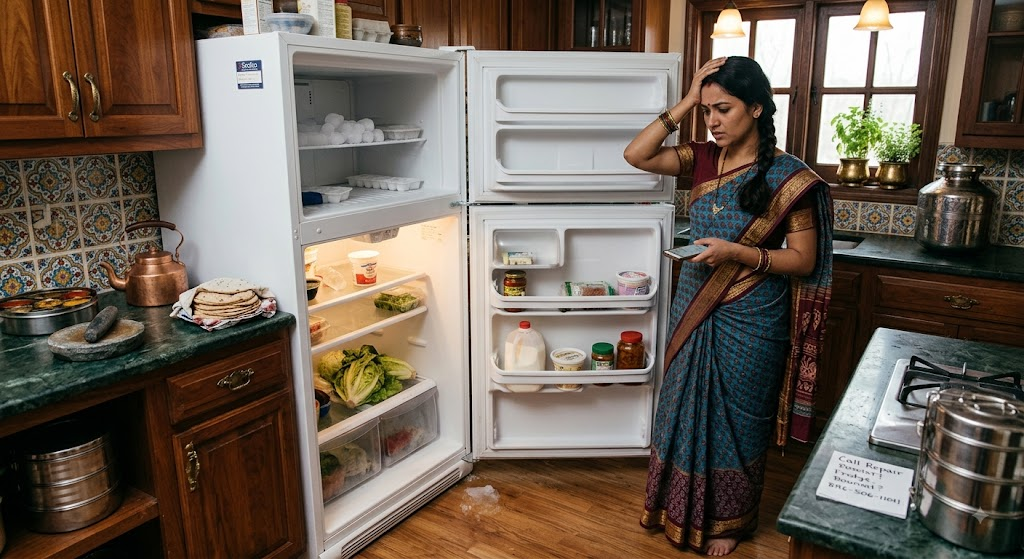
Why Is My Refrigerator Not Cooling?
The most common reasons a refrigerator is not cooling are incorrect temperature settings, blocked air vents, overloading, a damaged door gasket, excessive frost, poor ventilation, dirty accessible condenser areas, power problems, or a failed cooling component.
- Incorrect temperature setting
- Blocked air vents
- Overloaded refrigerator
- Damaged door gasket
- Excessive frost buildup
- Defrost system failure
- Dirty condenser area
- Poor ventilation around the refrigerator
- Evaporator fan failure
- Condenser fan failure
- Power or voltage problem
- Compressor/start relay problem
- Thermostat or temperature sensor failure
- Refrigerant leak or sealed-system problem
- Control board/PCB failure
What Does “Refrigerator Not Cooling” Actually Mean?
A Refrigerator Not Cooling problem means the appliance isn’t maintaining its expected internal temperature despite being switched on.
For example, your refrigerator may still have a working light and display while the food compartment remains noticeably warm. That doesn’t necessarily mean the entire appliance has stopped working.
There are several different cooling situations:
| What you notice | What it may indicate |
|---|---|
| Refrigerator warm, freezer cold | Airflow, fan, damper, frost or defrost problem |
| Both refrigerator and freezer warm | Power, compressor, condenser, controls or sealed-system issue |
| Refrigerator slightly warmer than normal | Settings, door seal, airflow or ventilation |
| Heavy ice on freezer’s rear wall | Defrost or airflow problem |
| Compressor runs almost continuously | Poor heat removal, airflow problem or cooling-system fault |
| Refrigerator clicks repeatedly | Possible compressor starting or electrical problem |
| Cooling returns after defrosting | Possible recurring frost or defrost-system problem |
Why Is Proper Refrigerator Cooling Important?
Proper refrigerator cooling keeps food fresh and safe, reduces spoilage, and helps the appliance work efficiently. If your refrigerator is not cooling properly, perishable foods such as milk, paneer, cooked food, meat, and vegetables can spoil faster, especially during hot Indian summers.
Key reasons proper cooling matters:
- Keeps food safe: Maintains a suitable temperature for perishable foods.
- Prevents spoilage: Helps milk, vegetables, fruits, and leftovers stay fresh longer.
- Reduces food waste: Prevents unnecessary disposal of spoiled groceries.
- Saves electricity: A properly working refrigerator doesn’t need to struggle continuously to maintain temperature.
- Protects food quality: Helps preserve taste, texture, and freshness.
- Prevents excessive frost: Proper cooling and airflow reduce the risk of abnormal ice buildup.
- Detects problems early: Monitoring temperature can help you identify cooling issues before they become serious.
- Important in summer: High kitchen temperatures can make cooling problems worse, particularly when ventilation is poor.
What Are the Most Common Causes of a Refrigerator Not Cooling?
The most common causes include incorrect settings, blocked airflow, overloading, poor door sealing, frost buildup, inadequate ventilation, dirty accessible condenser components, power problems, and internal component failures.
The important point is that these causes aren’t equally serious. Some take five minutes to check, while others require a technician.
1. Incorrect Temperature Setting
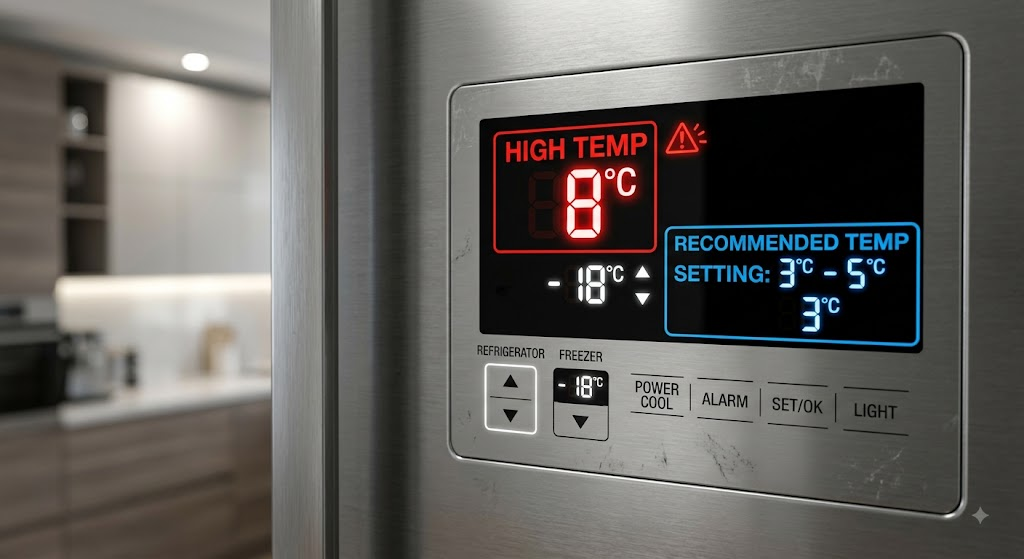
Cause: The refrigerator may not be cooling because the temperature setting is too high, or a cooling mode such as Vacation or Demo Mode has been enabled accidentally.
How to find it:
- Check the refrigerator and freezer temperature settings.
- Use a refrigerator thermometer to check the actual temperature.
- Look for Demo Mode, Cooling Off, or Vacation Mode on the display.
- Check whether someone recently changed the settings.
How to fix it:
- Set the refrigerator according to the manufacturer’s recommended temperature.
- A common target is around 3°C–5°C for the refrigerator compartment and -18°C for the freezer, but follow your model’s manual.
- Turn off Demo or Cooling Off Mode if it has been activated.
- Give the refrigerator several hours to stabilize after changing the setting.
2. Blocked Air Vents
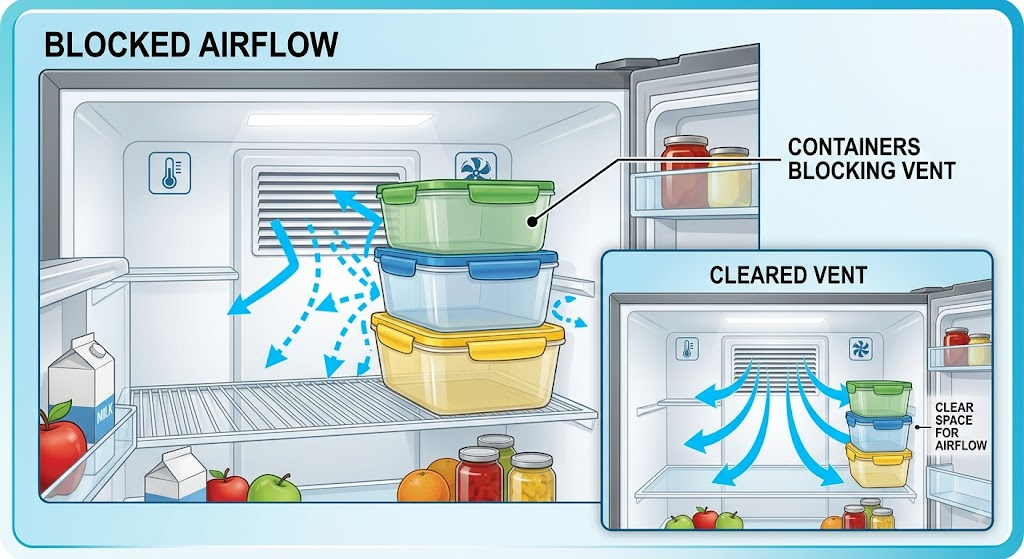
Cause: Cold air cannot circulate properly when food containers block the refrigerator’s internal air vents.
How to find it:
- Locate the cold-air vents inside the refrigerator and freezer.
- Check whether containers, vegetables, or packets are directly covering them.
- Look for a temperature difference between different shelves.
- If the freezer is cold but the refrigerator is warm, restricted airflow is one possibility.
How to fix it:
- Move food away from the vents.
- Avoid pushing containers tightly against the rear wall.
- Leave enough space for air to circulate.
- Do not cover vents with plastic bags or food packets.
3. Overloaded Refrigerator
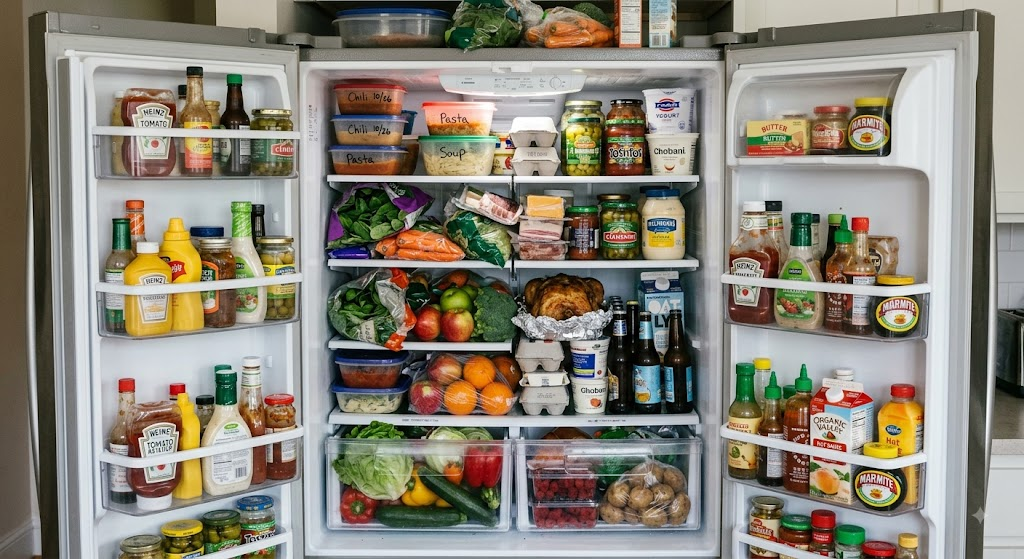
Cause: An overloaded refrigerator can restrict airflow and prevent cold air from reaching all areas evenly.
How to find it:
- Check whether shelves are packed tightly.
- Look for food blocking vents or air passages.
- Notice whether some areas are cold while others remain warm.
- Check whether the refrigerator became warm after adding a large quantity of groceries.
How to fix it:
- Rearrange the food and clear the air vents.
- Avoid filling every available space.
- Allow air to circulate around stored food.
- Let large quantities of freshly purchased food cool gradually instead of blocking the airflow with tightly packed containers.
4. Damaged Door Gasket
Cause: A damaged or poorly sealing door gasket allows cold air to escape and warm air to enter continuously.
How to find it:
- Inspect the rubber gasket around the entire door.
- Look for cracks, tears, loose sections, or hardened rubber.
- Check whether the door closes completely.
- Place a piece of paper between the gasket and cabinet, close the door, and gently pull the paper. If it slides out very easily at several locations, the seal may need attention.
- Look for condensation around the door area.
How to fix it:
- Clean the gasket with a soft cloth and mild cleaning solution.
- Remove food particles or dirt preventing proper sealing.
- Make sure containers aren’t pushing against the door.
- If the gasket is torn, deformed, or no longer seals properly, replace it with the correct model-specific gasket.
5. Excessive Frost Buildup
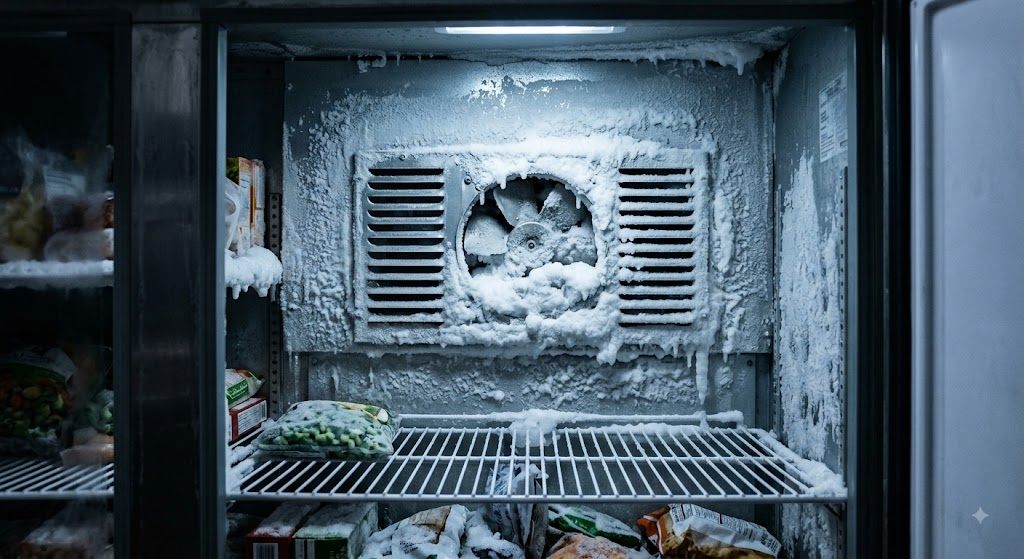
Cause: Heavy frost can cover the evaporator area or block air passages, reducing the flow of cold air through the refrigerator.
How to find it:
- Open the freezer and inspect the rear wall.
- Look for a thick layer of ice or frost.
- Check whether airflow from the freezer to the refrigerator has become weak.
- If cooling improves temporarily after defrosting but the problem returns, a deeper defrost-related problem may exist.
How to fix it:
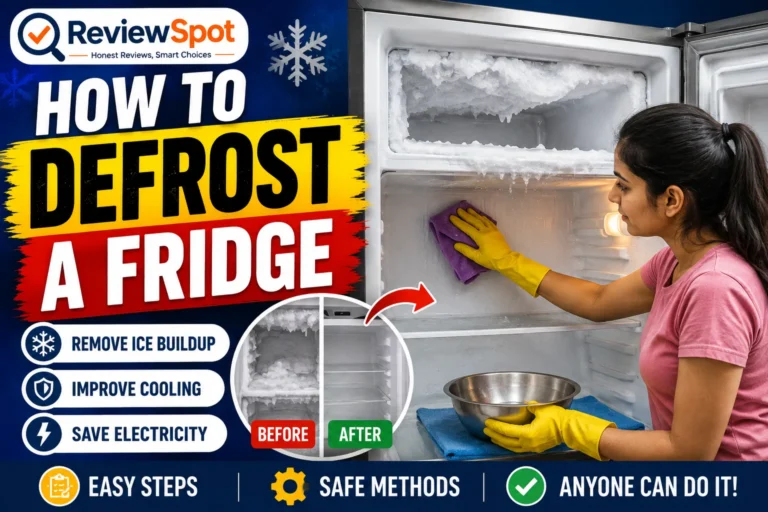
- Follow the manufacturer’s instructions for manual defrosting if your model permits it.
- Remove all food before defrosting.
- Never use a knife, screwdriver, hair dryer, or other sharp/hot object to remove ice.
- If heavy frost returns repeatedly, contact a technician because the automatic defrost system may have failed.
A temporary defrost can help confirm the diagnosis, but repeated frost buildup needs further investigation.
6. Defrost System Failure
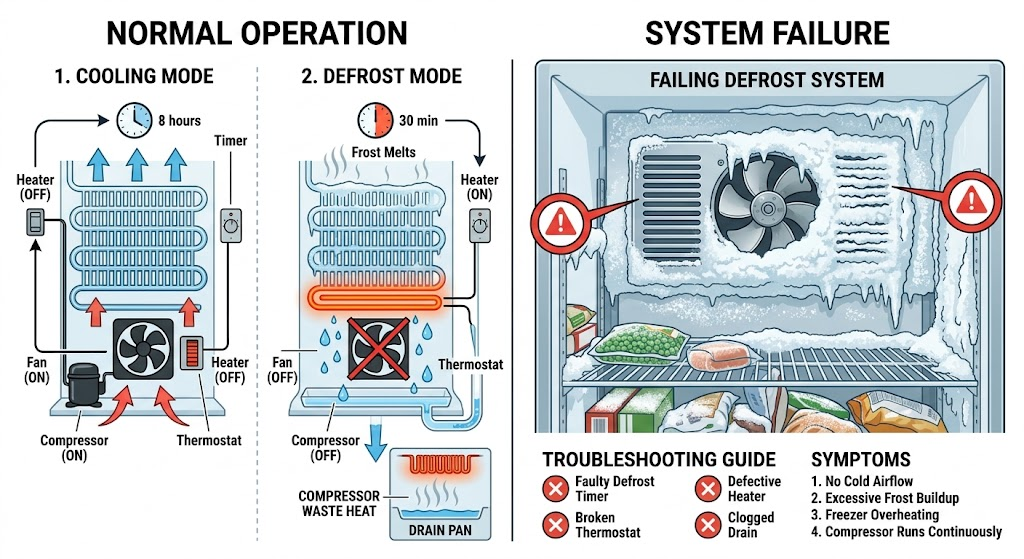
Cause: A faulty defrost heater, sensor, thermostat, timer, or control circuit can allow frost to accumulate until it restricts airflow.
How to find it:
- Look for repeated heavy frost buildup.
- Notice whether the refrigerator works normally immediately after defrosting but becomes warm again later.
- Check whether the freezer’s rear panel develops a thick layer of ice.
- If the same cooling problem repeatedly returns after manual defrosting, suspect a defrost-system issue.
How to fix it:
- A manual defrost can provide temporary relief if the manufacturer allows it.
- If frost returns, don’t keep repeating the same defrosting process.
- A technician should test the defrost heater, temperature sensor/thermostat, wiring, and control board.
- Replace the failed component with the correct model-specific part.
A manual defrost can provide temporary relief if the manufacturer allows it.
Important: Testing or replacing electrical defrost components is not recommended as a DIY repair unless you have the required technical knowledge.
7. Dirty Condenser Area
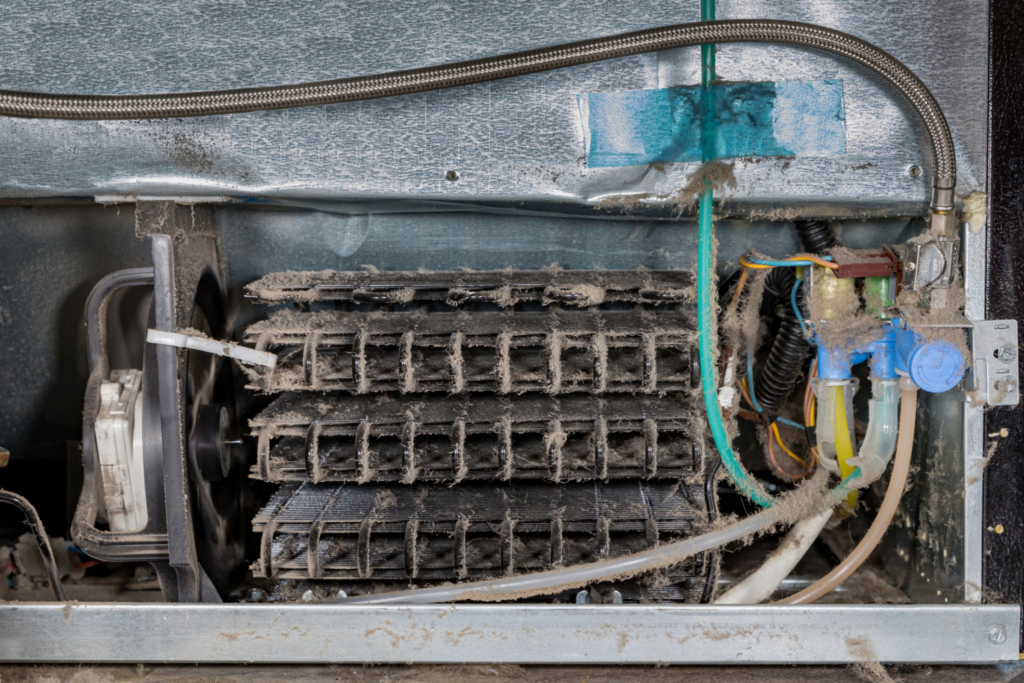
Cause: Dust and dirt around accessible condenser components can reduce the refrigerator’s ability to release heat.
How to find it:
- Check your owner’s manual to see whether the condenser area is accessible.
- Look for visible dust buildup around the designated condenser area.
- Check whether the refrigerator is running for unusually long periods while cooling poorly.
- Homes with pets, construction dust, or heavy kitchen grease may need more frequent cleaning.
How to fix it:
- Switch off and unplug the refrigerator before cleaning accessible areas, following the manufacturer’s instructions.
- Use a soft brush or suitable vacuum attachment to remove loose dust.
- Don’t spray water or cleaning liquid onto electrical components.
- Don’t remove panels unless the manufacturer specifically instructs you to do so.
Regular refrigerator maintenance can help prevent dust buildup and keep the appliance operating efficiently.
Important: Not every modern refrigerator has exposed condenser coils. Follow the model’s cleaning instructions instead of assuming where the coils are located.
8. Poor Ventilation Around the Refrigerator
Cause: A refrigerator needs adequate space around its designated ventilation areas to release the heat removed from inside.
How to find it:
- Check whether the refrigerator is pushed tightly against the wall.
- Look for cabinets blocking the recommended ventilation spaces.
- Check whether the refrigerator is positioned directly beside a stove or other major heat source.
- Compare the installation with the clearance requirements in the owner’s manual.
How to fix it:
- Move the refrigerator if necessary to provide the manufacturer’s recommended clearance.
- Keep ventilation areas free from boxes and other objects.
- Avoid placing the appliance next to a heat-producing appliance where possible.
- Don’t guess the required clearance because it differs between refrigerator models.
9. Evaporator Fan Failure
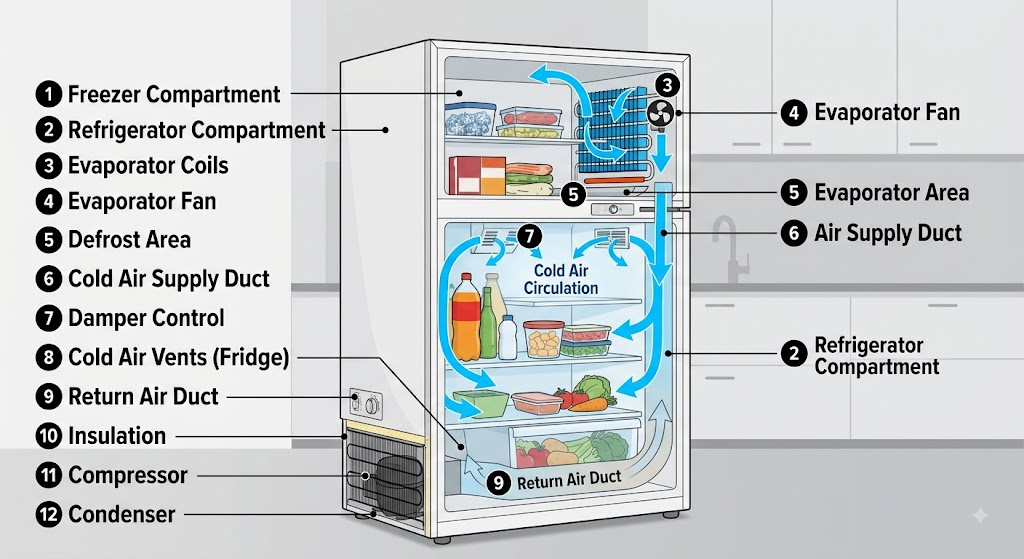
Cause: The evaporator fan circulates cold air through the refrigerator, so a failed or obstructed fan can cause poor cooling, particularly when the freezer remains cold.
How to find it:
- Listen for unusual noises such as scraping, clicking, or repeated stopping and starting.
- Check whether the refrigerator compartment has little or no airflow from its vents.
- Look for heavy ice that could be obstructing the fan.
- A freezer cold but refrigerator warm symptom can point toward an airflow or evaporator-fan problem.
How to fix it:
- If ice is visibly blocking airflow, follow the manufacturer’s defrost procedure.
- If the fan still doesn’t operate normally after defrosting, professional inspection is recommended.
- A technician may need to test or replace the evaporator fan motor or related components.
Don’t remove internal freezer panels just to test the fan unless you know how to work safely around the appliance’s electrical components.
10. Condenser Fan Failure
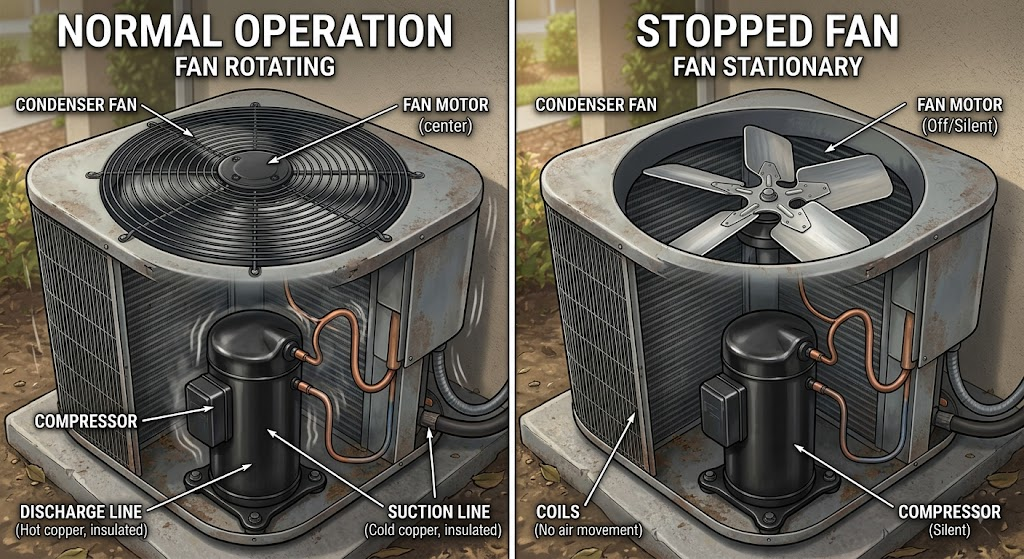
Cause: The condenser fan helps remove heat from the refrigeration system, and a failed fan can contribute to poor cooling and compressor overheating.
How to find it:
- Listen for unusual noises from the condenser area.
- Check for excessive heat around the refrigerator’s external cooling area.
- If your model has an accessible condenser fan, check whether it appears to operate when the cooling system is running.
- Don’t insert your hands or tools near a moving fan.
How to fix it:
- Remove accessible dust only according to the manufacturer’s instructions.
- If the fan doesn’t operate correctly, have a technician inspect the fan motor, wiring, and control circuit.
- Replace the faulty fan or motor with the correct model-specific component.
11. Power or Voltage Problem
Cause: A refrigerator may stop cooling properly because of a power interruption, faulty socket, loose connection, circuit problem, or unstable voltage supply.
How to find it:
- Check whether the interior light or display works.
- Check the refrigerator’s power plug and socket.
- See whether other appliances connected to the same circuit are working.
- Check whether the MCB has tripped.
- Think about whether the problem started immediately after a power cut or voltage fluctuation.
- Watch for repeated tripping or unusual electrical behavior.
How to fix it:
- Make sure the power plug is properly connected.
- Reset a tripped MCB only if you normally do so safely and there is no sign of an electrical fault.
- If the socket appears damaged, loose, burnt, or repeatedly trips, stop using it and call a qualified electrician.
- If the refrigerator behaves abnormally after a voltage fluctuation, have the appliance professionally checked.
Never repeatedly reset a breaker that keeps tripping.
12. Compressor or Start Relay Problem
Cause: The compressor is responsible for circulating refrigerant through the cooling system, while the start relay helps the compressor begin operating; failure of either can cause poor or complete loss of cooling.
How to find it:
- Listen for a normal low humming sound.
- Notice repeated clicking every few minutes.
- Check whether the compressor attempts to start and then stops.
- Look for a refrigerator that remains warm in both compartments.
- A compressor that runs continuously but doesn’t cool properly may also indicate another cooling-system problem.
How to fix it:
- Don’t attempt to open or repair the compressor yourself.
- A technician can test the start relay, overload protector, compressor operation, electrical supply, and refrigeration system.
- Replace the failed start component if diagnosed.
- If the compressor itself has failed, compare the repair cost with the refrigerator’s age and replacement cost.
Important: A humming compressor does not automatically mean the compressor is healthy. Other components can cause the refrigerator to run without cooling properly.
13. Thermostat or Temperature Sensor Failure
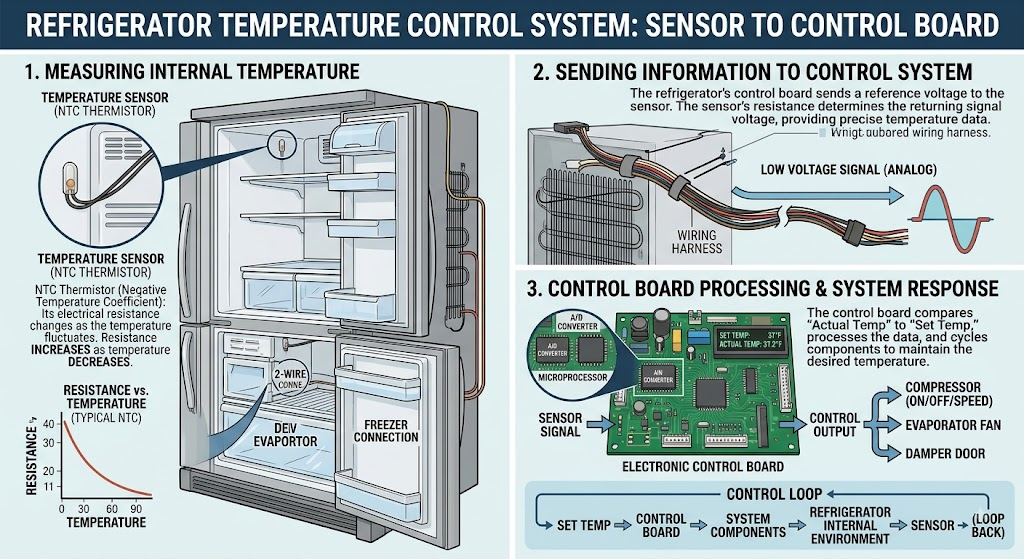
Cause: A faulty thermostat or temperature sensor can send incorrect temperature information to the refrigerator’s control system.
How to find it:
- Check whether changing the temperature setting produces any noticeable change.
- Compare the displayed temperature with the actual temperature measured using a refrigerator thermometer.
- Look for unusual temperature fluctuations.
- Check whether the refrigerator runs continuously or doesn’t seem to start its cooling cycle normally.
- Some refrigerators may display an error code when a sensor fails.
How to fix it:
- Check the owner’s manual for model-specific error codes.
- Restart the refrigerator only according to the manufacturer’s instructions.
- If the temperature remains incorrect despite normal settings and airflow, contact a technician.
- A technician can test the thermostat, thermistor, wiring, and control circuit and replace the defective component.
14. Refrigerant Leak or Sealed-System Problem
Cause: A refrigerant leak, blocked capillary tube, restriction, or other sealed-system fault can prevent the refrigerator from producing adequate cooling.
How to find it:
- Both the refrigerator and freezer may remain warmer than normal.
- The compressor may run for long periods without achieving proper temperature.
- Cooling may gradually become weaker rather than failing suddenly.
- A technician may find abnormal pressure or other signs during professional testing.
How to fix it:
- Do not attempt to add refrigerant yourself.
- Contact a qualified refrigerator technician.
- The technician should identify the underlying problem rather than simply adding refrigerant.
- If a leak is confirmed, the system may need leak repair, evacuation, and correct refrigerant charging using appropriate equipment.
A sealed-system repair requires specialized tools and knowledge. This is firmly in the technician-only category.
15. Control Board or PCB Failure
Cause: A faulty control board or PCB can prevent the refrigerator from correctly controlling the compressor, fans, sensors, defrost system, or other components.
How to find it:
- The refrigerator may have power but behave unpredictably.
- The compressor or fans may not operate when expected.
- Temperature settings may not respond correctly.
- The display may show an error code.
- Multiple functions may stop working at the same time.
- Basic checks for power, airflow, frost, and temperature settings may show no obvious problem.
How to fix it:
- Check the owner’s manual for error codes and recommended reset procedures.
- Don’t open the control panel or attempt to repair the PCB yourself.
- A technician should test the board and connected components before replacing it.
- Replace the PCB only after proper diagnosis because control boards can be expensive.
Quick Refrigerator Not Cooling Diagnosis Table
| What you notice | Possible cause | What to check first |
|---|---|---|
| Fridge warm, freezer cold | Blocked airflow, frost, fan, damper, defrost system | Air vents and frost |
| Both fridge and freezer warm | Power, compressor, condenser, control or sealed system | Power and temperature settings |
| Heavy ice buildup | Defrost-system problem | Frost pattern and defrost cycle |
| Cooling improves after defrosting | Defrost or airflow problem | Whether frost returns |
| Compressor clicks repeatedly | Start relay, overload or compressor | Professional diagnosis |
| Compressor runs continuously | Poor heat removal, airflow or sealed-system problem | Ventilation and condenser area |
| No airflow from vents | Evaporator fan, ice blockage or damper | Air vents and frost |
| Fridge cooling poorly after power cut | Power/voltage/control issue | Socket, display and settings |
| Fridge completely dead | Power, socket, wiring, control board | Electrical supply |
| Temperature fluctuates heavily | Sensor, thermostat, airflow or control issue | Actual temperature with thermometer |
Why Is My Refrigerator Warm but the Freezer Is Cold?
A refrigerator that is warm while the freezer is cold usually has an airflow, evaporator fan, damper, frost, or defrost-system problem.
This is one of the most useful symptoms to identify because the freezer being cold tells you that at least part of the cooling system is still producing cold temperatures.
Check the Air Vents First
First, check whether anything is blocking the vents between the freezer and refrigerator sections.
Move large containers away from the vents and make sure food isn’t packed tightly against the rear wall.
Look for Heavy Frost
Next, inspect the freezer’s rear wall.
If you see substantial frost, airflow may be restricted.
A temporary defrost can help confirm the diagnosis, but repeated frost buildup needs further investigation.
Listen for the Evaporator Fan
You may hear a fan operating when the refrigerator is running.
If the freezer is cold but there is little or no airflow reaching the refrigerator compartment, the evaporator fan or another airflow component may be involved.
Don’t dismantle the freezer to investigate it yourself.
Why Are Both My Refrigerator and Freezer Not Cooling?
When both compartments are warm, investigate the power supply and controls first, followed by possible compressor, condenser, or sealed-system problems.
Start with the simplest checks.
Check the Power
Open the refrigerator and check whether the interior light or display works. If there is no power, check the plug and household electrical supply.
If your circuit breaker repeatedly trips, don’t keep resetting it and hoping for the best. There may be an electrical fault requiring professional attention.
Check the Temperature Settings
Make sure the refrigerator hasn’t been switched into a cooling-off or demo mode. Check the owner’s manual if the display shows an unfamiliar code or symbol.
Check the Compressor Behavior
Listen for the compressor. A normal humming sound doesn’t prove the compressor is healthy, but repeated clicking without successful startup is worth reporting to a technician.
Consider the Cooling System
If power and settings are normal but both compartments remain warm, the problem becomes more likely to involve a major component.
At this point, professional diagnosis makes more sense than randomly replacing parts.
What Should You Do If Your Refrigerator Stopped Cooling After a Power Cut?
After a power cut, first confirm that the refrigerator has power and that its controls are operating normally before assuming a component has failed.
Power interruptions are common in many parts of India, so this scenario deserves special attention.
- Check whether the display and interior light work.
- Verify that the temperature settings haven’t changed.
- Check the owner’s manual for any model-specific restart instructions.
- Keep the doors closed as much as possible while you assess the situation.
Don’t repeatedly unplug and reconnect the refrigerator without a reason.
If cooling doesn’t return normally after power has been restored, or if the appliance repeatedly clicks, trips the electrical supply, or behaves abnormally, contact a qualified technician.
How Can You Troubleshoot a Refrigerator Not Cooling?
The safest troubleshooting approach is to start with simple external checks and move toward professional diagnosis only when those checks don’t solve the problem.
Follow these steps in order:
Step 1: Check the Power
Make sure the refrigerator is receiving power.
Check the plug, socket, display, and interior light.
Step 2: Check Temperature Settings
Verify both refrigerator and freezer settings.
Check for Demo, Vacation, Cooling Off, or similar modes.
Step 3: Measure the Actual Temperature
Use an appliance thermometer.
Don’t rely only on the digital display or how cold the food feels.
Step 4: Clear Air Vents
Remove food blocking internal vents.
Leave sufficient space for cold air to circulate.
Step 5: Check the Door Seal
Inspect and clean the gasket.
Make sure containers aren’t preventing the door from closing.
Step 6: Inspect for Frost
Look for heavy frost inside the freezer.
If your manual permits manual defrosting, follow the manufacturer’s procedure.
Step 7: Check External Ventilation
Make sure the refrigerator isn’t squeezed tightly against surrounding cabinets.
Check the manual for the required clearance.
Step 8: Check Accessible Dust
If your model permits condenser cleaning, remove accessible dust according to the manufacturer’s instructions.
Step 9: Observe Sounds
Note unusual humming, clicking, scraping, or repeated starting noises.
Don’t remove electrical panels to investigate them.
Step 10: Call a Technician
If the refrigerator still doesn’t cool, provide the technician with your observations.
This approach is more useful than randomly replacing parts.
What Can You Safely Fix Yourself?
You can safely handle basic maintenance tasks, but electrical, compressor, refrigerant, and sealed-system repairs should generally be left to qualified professionals.
| Problem | Safe for most users? | Recommended action |
|---|---|---|
| Wrong temperature setting | Yes | Adjust according to manual |
| Blocked food vents | Yes | Rearrange food |
| Dirty door gasket | Yes | Clean and inspect |
| Door blocked by containers | Yes | Remove obstruction |
| Measuring temperature | Yes | Use appliance thermometer |
| Accessible external dust | Usually | Follow manual |
| Manual defrosting | Depends | Follow manufacturer instructions |
| Evaporator fan replacement | No | Technician |
| Compressor repair | No | Technician |
| Refrigerant leak | No | Qualified technician |
| Control board repair | No | Technician |
| Electrical wiring | No | Qualified professional |
What Tools Do You Need to Troubleshoot a Refrigerator?
A refrigerator thermometer is the most useful troubleshooting tool because it tells you the actual internal temperature.
You may also need:
- Flashlight
- Soft cleaning cloth
- Soft brush
- Suitable vacuum attachment
- Owner’s manual
- Smartphone for recording unusual sounds or error codes
Refrigerator Thermometer
A thermometer helps confirm whether your refrigerator is actually maintaining a safe temperature.
For example, if the display says 4°C but the thermometer consistently reads 8°C, you have evidence that the compartment isn’t maintaining the expected temperature.
[Suggested image: Digital refrigerator thermometer placed on the middle shelf | Alt text: “Check refrigerator temperature with a digital thermometer”]
Flashlight
A flashlight makes it easier to inspect the door gasket, vents, frost buildup, and accessible ventilation areas.
[Suggested image: Person inspecting refrigerator door gasket with a flashlight | Alt text: “Inspect refrigerator door seal for cooling problems”]
Smartphone
A smartphone can be surprisingly useful.
Record an unusual clicking or scraping sound and photograph heavy frost buildup. These details can help a technician understand the problem before arriving.
[Suggested image: Smartphone recording unusual refrigerator compressor noise | Alt text: “Record refrigerator noise to diagnose cooling problems”]
When Should You Call a Refrigerator Technician?
Call a qualified refrigerator technician when basic troubleshooting doesn’t restore cooling or when the symptoms indicate an electrical, compressor, fan, control, or sealed-system problem.
You should get professional help if:
- Both refrigerator and freezer remain warm.
- The compressor repeatedly clicks but doesn’t start.
- The refrigerator trips the circuit breaker.
- You notice burning smells or damaged wiring.
- A fan appears to have failed.
- Heavy frost repeatedly returns after defrosting.
- You suspect a refrigerant leak.
- The compressor becomes unusually hot.
- Cooling works temporarily and then fails again.
- The refrigerator makes unusual mechanical or electrical noises.
If the refrigerator is still under warranty, check the warranty conditions before arranging an independent repair.
How Do You Decide Whether to Repair or Replace the Refrigerator?
Repairing makes more sense when the refrigerator has a relatively simple fault, while replacement may make more sense when an older appliance needs repeated or expensive major repairs.
Don’t replace a refrigerator simply because it stops cooling once. A blocked vent or damaged gasket can be inexpensive compared with buying a new appliance.
On the other hand, an older refrigerator requiring a major sealed-system or compressor repair deserves a proper cost comparison. Consider:
- Age of the refrigerator
- Repair estimate
- Previous repair history
- Electricity consumption
- Warranty status
- Availability of spare parts
- Overall condition
- Current replacement cost
If you’re replacing an old refrigerator, don’t choose solely based on the cheapest price. Capacity, energy efficiency, compressor technology, service availability, and warranty all matter.
Does an Inverter Refrigerator Need Different Troubleshooting?
An inverter refrigerator still needs the same basic checks for airflow, temperature, door sealing, frost, ventilation, and power, but its variable-speed compressor changes how normal operation sounds.
An inverter compressor can operate at different speeds instead of simply switching between full operation and complete shutdown.
That means you shouldn’t assume something is wrong simply because you hear the compressor running quietly for a long period.
If an inverter refrigerator is not cooling, use the same symptom-based approach first. Check the temperature, airflow, door seal, frost, and ventilation before assuming that the inverter compressor has failed.
An inverter compressor can operate at different speeds instead of simply switching between full operation and complete shutdown.
How Can You Prevent Refrigerator Cooling Problems?
Regular cleaning, sensible food organization, proper ventilation, good door-seal maintenance, and temperature monitoring can reduce the risk of common refrigerator cooling problems.
Follow these simple habits:
- Don’t block internal air vents.
- Avoid stuffing the refrigerator beyond its usable capacity.
- Keep the door closed as much as possible.
- Clean the door gasket regularly.
- Check for unusual frost buildup.
- Maintain manufacturer-specified clearance.
- Clean accessible condenser areas when the manual recommends it.
- Monitor the internal temperature occasionally.
- Don’t ignore unusual noises.
- Address cooling problems early.
If your kitchen becomes very hot, check whether the refrigerator has adequate ventilation and isn’t sitting directly beside a heat-producing appliance.
FAQs
Why is my refrigerator not cooling but the freezer is working?
A refrigerator that is warm while the freezer works commonly has an airflow, fan, frost, damper, or defrost-system problem. Start by checking vents and heavy frost before calling a technician.
Why is my refrigerator running but not cooling?
A refrigerator can run without cooling properly when airflow is restricted, condenser heat removal is poor, or a refrigeration-system component has failed. Compressor noise alone doesn’t prove that the cooling system is healthy.
Can a dirty condenser cause a refrigerator not to cool?
Yes, significant dust buildup around accessible condenser components can interfere with heat removal and contribute to poor cooling. Only clean components that your refrigerator manufacturer identifies as accessible.
How long should I wait for a refrigerator to cool?
Cooling time varies by refrigerator model and conditions, so follow the manufacturer’s guidance rather than assuming an exact recovery time. A newly installed or recently defrosted refrigerator can take several hours to stabilize.
Should I unplug a refrigerator that isn’t cooling?
Unplugging can be appropriate for certain troubleshooting or defrost procedures, but you should follow the manufacturer’s instructions. Don’t repeatedly unplug and reconnect the appliance without a clear reason.
Why is my refrigerator not cooling after a power cut?
A power cut can interrupt refrigerator operation or require model-specific restart steps. Check power, controls, settings, and the owner’s manual before assuming a major component has failed.
Can low refrigerant cause a refrigerator not to cool?
A problem with the sealed refrigeration system can cause inadequate cooling, but low refrigerant usually indicates a leak or other system issue that requires professional diagnosis. Refrigerant should not simply be added as a DIY fix.
Is it worth repairing an old refrigerator?
Repairing an old refrigerator can make sense when the fault is inexpensive and the appliance is otherwise reliable. For major repairs on an inefficient appliance, compare the repair estimate with replacement costs and expected electricity use.
Final Takeaway
A Refrigerator Not Cooling doesn’t automatically mean you need a new refrigerator or an expensive compressor replacement.
Start with the simple checks: power, temperature settings, blocked vents, food arrangement, door gasket, frost buildup, and ventilation.
If the freezer works but the refrigerator is warm, investigate airflow and frost first. If both compartments are warm, check the power and settings before moving toward professional diagnosis.
And if the problem involves electricity, refrigerant, compressor components, control boards, or sealed refrigeration systems, don’t turn your kitchen into an appliance repair workshop. Get a qualified technician involved.
A few minutes of sensible troubleshooting can save you an unnecessary service call. More importantly, knowing when to stop troubleshooting can save you from an unsafe repair attempt and a much bigger bill.
Recommended Reading:
- How to Defrost a Fridge Safely: Step-by-Step Guide for Indian Homes
- Your Fridge Still Smells? Try These 20 Easy Ways to Remove Smell from Fridge
- How to Remove Odors from Fridge
- 10 Best Refrigerator Brands in India 2026
Sourabh researches and writes about home appliances, kitchen appliances, and common appliance problems to help readers make informed buying decisions. He covers mixer grinders, refrigerators, air conditioners, washing machines, and appliance troubleshooting.
At ReviewSpot, Sourabh compares manufacturer specifications, product features, warranty information, pricing, and customer feedback to turn technical appliance information into practical buying advice. His goal is to help readers understand their options, avoid costly mistakes, and choose products that fit their needs and budget.
ReviewSpot distinguishes manufacturer information, customer feedback, and editorial analysis, and does not describe products as hands-on tested unless they have actually been tested.