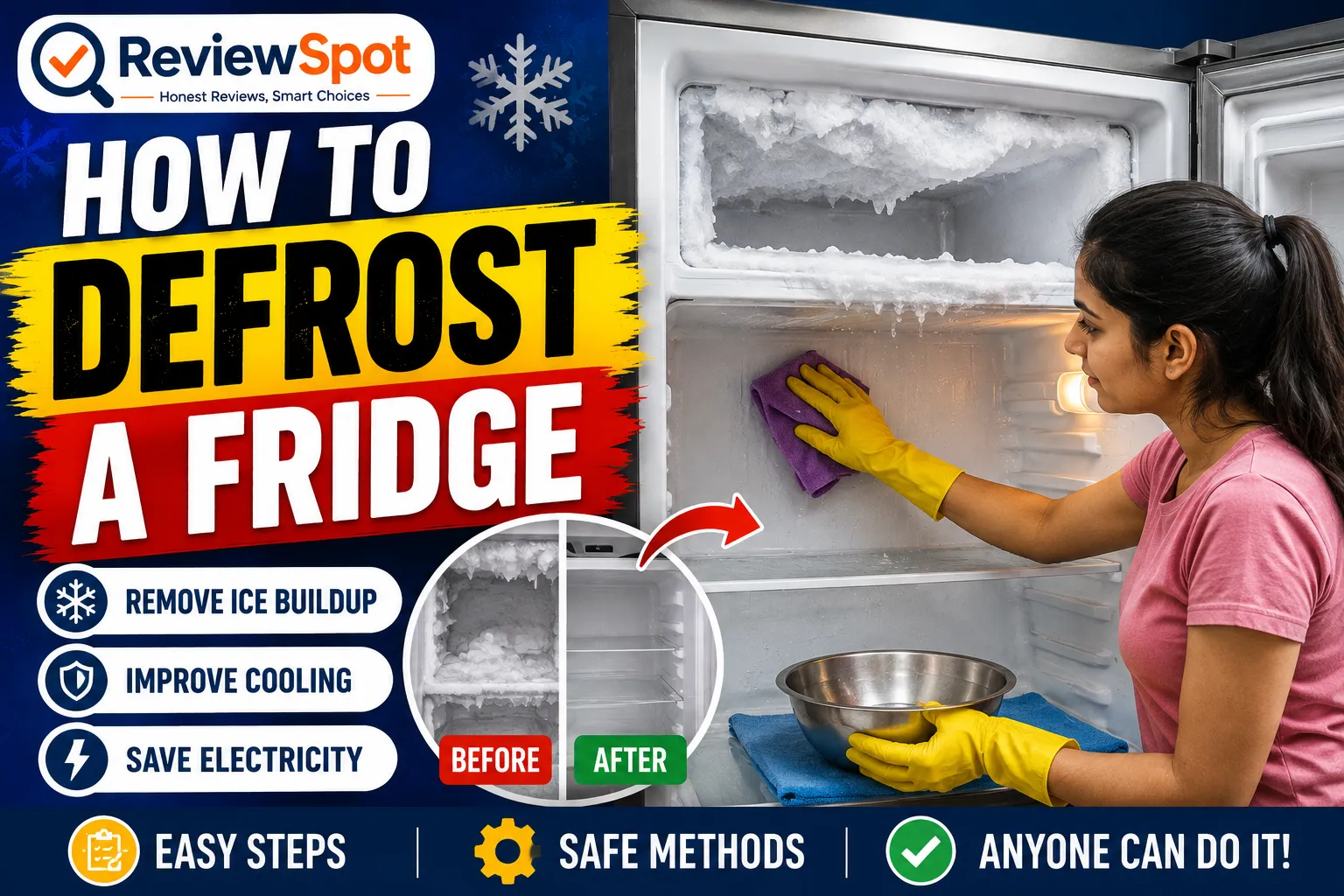
How to Defrost a Fridge Safely: Step-by-Step Guide for Indian Homes

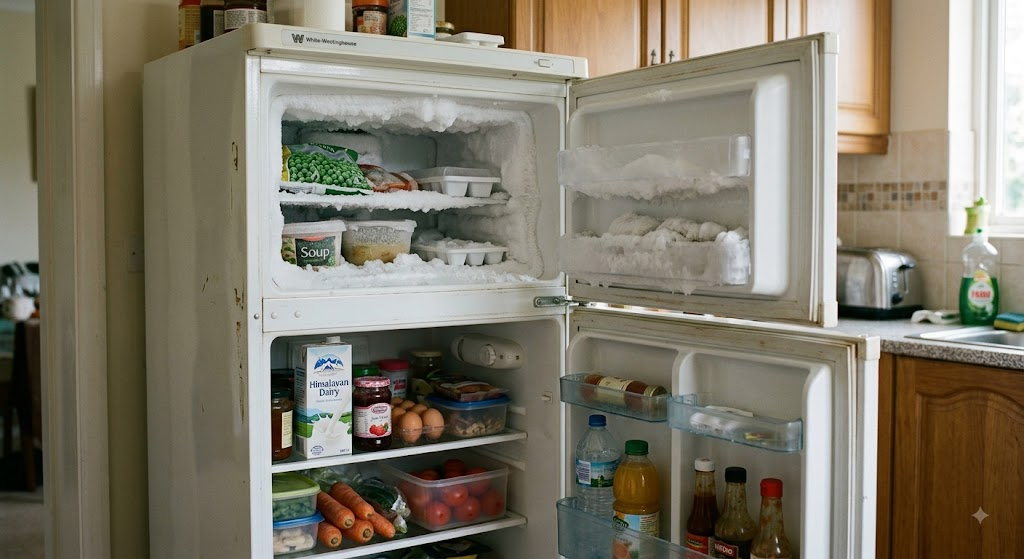
A layer of ice inside your refrigerator may look harmless, but once it becomes thick, it can reduce usable freezer space, restrict cooling and make the appliance work harder. This is particularly common with direct-cool and manual-defrost refrigerators, which are still widely used in Indian homes.
The good news is that how to defrost a fridge isn’t complicated. You don’t need expensive cleaning products or special equipment. With a few towels, a plastic scraper and some patience, you can remove the ice safely without damaging the refrigerator.
How to Defrost a Fridge
- Remove the food – Take out all food, shelves and drawers. Keep perishable items in an ice box.
- Unplug the fridge – Switch it off and disconnect it from the power supply.
- Open the doors – Leave the doors open and place towels around the fridge to collect melting water.
- Let the ice melt – Allow the ice to melt naturally. For faster results, place a bowl of hot water inside the freezer. Never pour hot water directly on the ice.
- Remove loose ice – Use a plastic scraper. Avoid knives or other sharp metal objects.
- Clean and dry – Wipe the interior, shelves and drawers, then dry everything thoroughly.
- Restart the fridge – Plug it back in and let it cool before returning the food.
Important: If you have a frost-free or No Frost refrigerator, you normally don’t need to manually defrost it. Check your owner’s manual before starting. Bosch also states that NoFrost appliances don’t require manual defrosting.
Before learning how to defrost a fridge, it is useful to understand the difference between direct-cool and frost-free refrigerators because the two types handle ice differently.
Why Does Ice Build Up Inside a Refrigerator?
Ice forms when warm, moist air enters the freezer compartment and the moisture freezes on cold surfaces. This can happen when:
- You open the freezer frequently.
- The refrigerator door remains open for too long.
- The door gasket isn’t sealing properly.
- Hot or warm food is placed inside.
- The freezer is heavily loaded.
- Humid weather increases moisture entering the compartment.
- The refrigerator is a direct-cool model that doesn’t have automatic defrosting.
In India, frequent door opening during hot summers and humid monsoon weather can make the problem more noticeable.
A thin layer of frost isn’t necessarily a reason to panic. The problem starts when the ice becomes thick enough to occupy useful storage space or interfere with normal cooling.
If you are still deciding which type of refrigerator suits your home, a refrigerator buying guide can help you compare capacity, energy efficiency, defrosting type and other features.
Which Refrigerators Need Manual Defrosting?
Before learning how to defrost a fridge, identify what type of refrigerator you own.
1. Direct-Cool Refrigerator
Many single-door refrigerators use direct-cool technology. These models can develop visible ice in the freezer compartment and generally require manual defrosting.
If your refrigerator has a Defrost button or similar control, follow the instructions in its manual.
2. Frost-Free Refrigerator
A frost-free refrigerator uses an automatic defrost system, so you normally don’t have to remove ice manually.
If you see unusual or heavy ice buildup in a frost-free model, don’t immediately start scraping it. Excessive frost can indicate a problem with airflow, the door seal, temperature control or the automatic defrost system.
3. Mini Refrigerator
Small refrigerators can also develop frost, particularly around the small freezer box. Because they contain less food and have a smaller compartment, they’re usually quicker to defrost.
What You Need Before Defrosting a Fridge
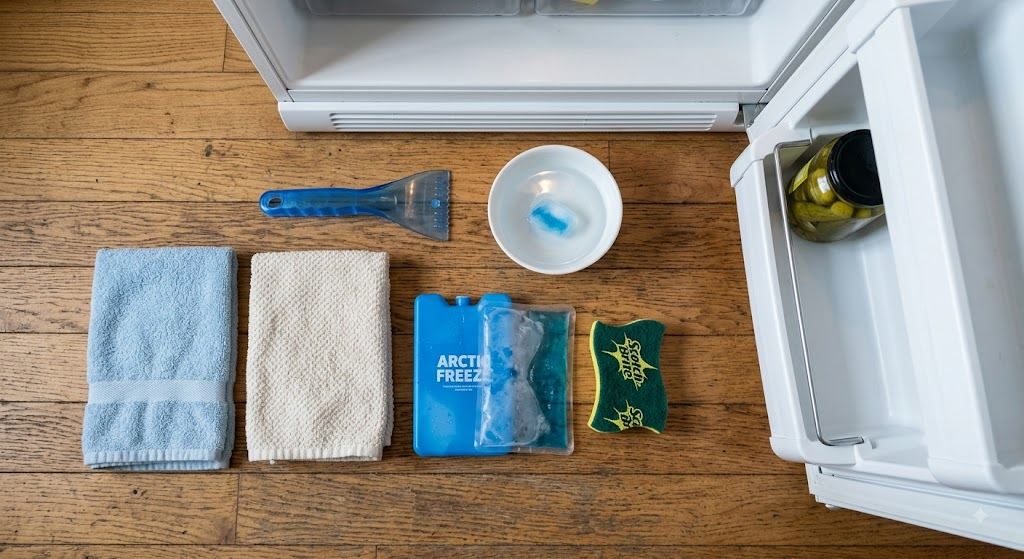
You don’t need a complicated toolkit. Keep these items ready:
- Several old towels or absorbent cloths
- A shallow tray or container
- Plastic scraper or spatula
- Bowl or pan for hot water
- Mild dishwashing liquid
- Clean microfiber cloth
- Insulated bag, ice box or cooler for food
- Ice packs, if available
- A soft sponge
Avoid using knives, screwdrivers or metal objects to remove ice. A little impatience isn’t worth an expensive refrigerator repair.
How to Defrost a Fridge: Step-by-Step Guide
Step 1: Plan Before You Switch Off the Refrigerator
Defrosting isn’t something you want to start five minutes before lunch.
If possible, choose a time when the refrigerator contains less food. Before the day of defrosting, try to use up items that are likely to spoil or that are difficult to store temporarily.
For Indian households, this is especially useful if you have milk, paneer, curd, cooked food, meat or frozen items that need to remain cold.
You should also avoid doing the job when the refrigerator is packed with groceries.
Step 2: Move the Food to a Safe Place
Remove everything from the refrigerator and freezer. Put perishable food into an insulated cooler or ice box with ice packs. If you don’t have one, use another working refrigerator or freezer.
Keep the food away from direct sunlight and heat. This step matters because defrosting can take several hours, depending on the amount of ice.
Home Depot notes that natural defrosting can take several hours or even more than a day depending on ice thickness, appliance size and surrounding conditions.
What About Frozen Food?
Try to keep frozen food together rather than spreading it around the kitchen. A tightly packed group of frozen items stays cold longer than individual items sitting in a warm room.
Don’t repeatedly open the cooler to check what’s inside. Every opening lets warm air in.
Step 3: Switch Off and Unplug the Refrigerator
Turn the refrigerator off according to the manufacturer’s instructions and unplug it from the wall socket. This is an important safety step because you’re dealing with melting water and an electrical appliance.
Don’t simply leave the refrigerator running while trying to remove large amounts of ice manually. If your model has a specific defrost setting, use the method recommended in its manual.
Step 4: Open the Refrigerator and Freezer Doors
Keep the doors open so warmer room air can circulate through the compartments. Remove shelves, drawers and removable trays if your manufacturer’s instructions allow it.
Handle glass shelves carefully. Don’t put a very cold glass shelf directly under hot water because sudden temperature changes can cause glass to crack.
Step 5: Protect the Floor From Meltwater
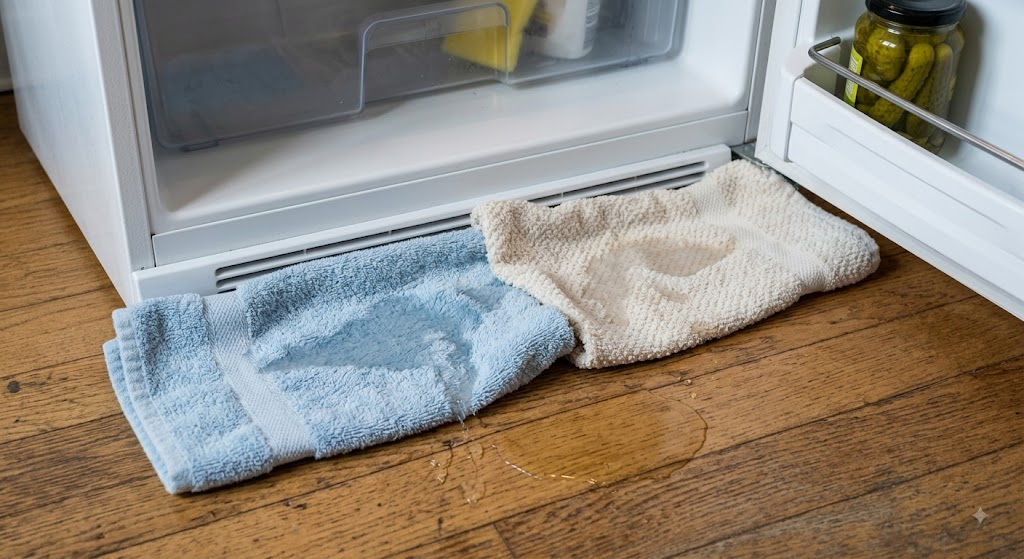
This is the part people often underestimate. As the ice melts, water will collect inside the refrigerator and may eventually reach the floor. Place thick towels around the base of the refrigerator. You can also place a shallow tray or container where the water is expected to collect.
Check the towels every 20–30 minutes during faster defrosting methods and replace them when they become soaked. Bosch recommends placing a shallow dish below the water outlet to collect defrost water and wiping away remaining water after defrosting.
Step 6: Let the Ice Melt Naturally
The safest method is also the simplest: wait.
Leave the refrigerator unplugged with the doors open and allow the ice to melt naturally. Don’t try to force thick ice off the walls while it’s still firmly attached. The exact time depends on:
- Thickness of the ice
- Size of the freezer
- Room temperature
- Amount of frost
- Air circulation around the appliance
Natural defrosting can take several hours. It may take longer if the ice layer is particularly thick. If you have enough time, this is the method I’d recommend because it involves the least risk to the appliance.
Step 7: How to Defrost a Fridge Faster
If you don’t want to wait half the day for the freezer to melt, you can speed things up safely.
Method 1: Use Hot Water Steam
Fill a heat-resistant bowl or pan with hot water and place it inside the freezer. Put the container on a folded towel or suitable heat-resistant surface to protect the interior.
Close the refrigerator/freezer door for a short period so the warm steam can loosen the ice. Replace the water when it cools.
Croma and Bosch both recommend using hot water to help speed up defrosting. Do not pour boiling water directly onto the ice or refrigerator walls. The sudden temperature change can damage plastic components or other parts.
Method 2: Improve Air Circulation
If you have a fan, you can place it near the open refrigerator/freezer compartment to move room-temperature air inside.
The fan doesn’t need to be inside the refrigerator. Keep the electrical appliance away from melting water.
Air circulation can speed up natural melting without exposing the refrigerator’s plastic interior to concentrated heat.
What About a Hair Dryer?
This is where you should be careful.
Some online guides recommend using a hair dryer to speed up defrosting. However, I wouldn’t recommend this as the first choice in an Indian home.
You have a combination of:
electricity + melting water + a high-temperature appliance.
That’s an unnecessary risk. Engineer Fix specifically advises avoiding hair dryers and heat guns because concentrated heat can damage the plastic liner and create an electrical hazard around melting water. Hot-water steam and normal room-temperature airflow are safer options.
Step 8: Remove Loose Ice Carefully
Once the ice has softened and started separating from the walls, you can remove loose pieces.
Use:
- A plastic scraper
- A plastic spatula
- A wooden spatula
Never use:
- Kitchen knife
- Screwdriver
- Metal scraper
- Ice pick
- Any sharp metal object
The cooling components behind or inside the freezer walls can be damaged if you puncture them. A damaged refrigeration line isn’t a DIY problem. Stop immediately and call a qualified technician.
Step 9: Drain and Wipe Away All Meltwater
Once the ice has completely melted, remove the water from the bottom of the freezer and refrigerator.
Use a sponge or absorbent cloth to soak up remaining water. Pay attention to:
- Bottom corners
- Door shelves
- Drain areas
- Shelf tracks
- Rubber door gasket
- Areas underneath drawers
Don’t rush to switch the refrigerator back on while water is still sitting inside.
Step 10: Clean the Refrigerator
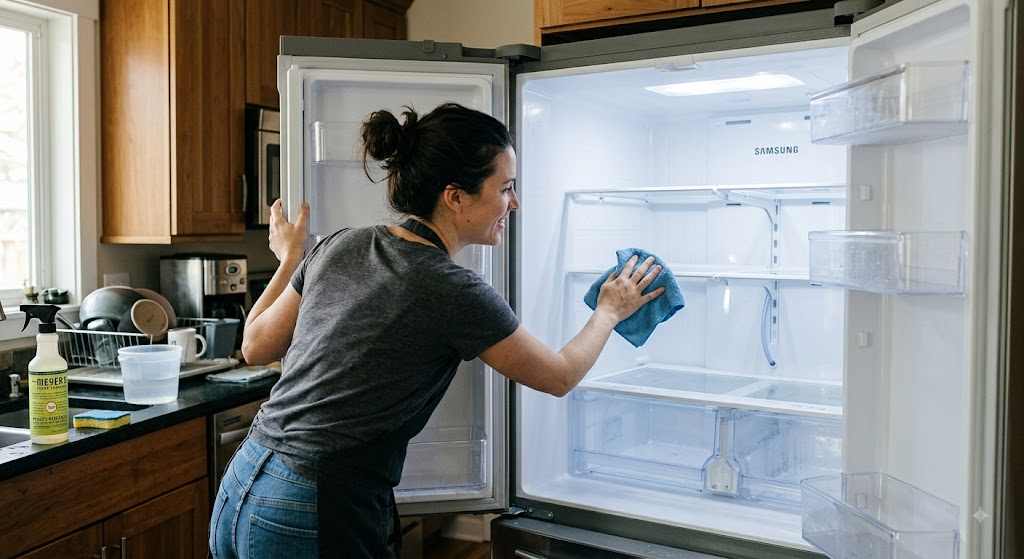
Defrosting is an excellent opportunity to clean the refrigerator. Use warm water with a small amount of mild dishwashing liquid, or follow the cleaning instructions in your refrigerator manual.
You can also use a mild baking-soda solution for odour control. Clean:
- Interior walls
- Shelves
- Drawers
- Door bins
- Freezer compartment
- Door gasket
Don’t use harsh chemicals, abrasive scrubbers or strong cleaning products unless your refrigerator manufacturer specifically recommends them.
After cleaning, wipe everything with a clean damp cloth and then dry the interior thoroughly. Home Depot also recommends cleaning the interior and completely drying the freezer before restarting the appliance.
Step 11: Check the Door Gasket
Here’s a step many basic defrosting guides don’t explain properly. Look at the rubber seal around the refrigerator door. Check for:
- Dirt
- Cracks
- Gaps
- Loose sections
- Areas where the gasket doesn’t make proper contact
A poor seal allows warm, moist air to enter the refrigerator. That moisture can freeze and create frost again. Clean the gasket with a damp cloth and dry it properly.
If the gasket is damaged or doesn’t seal correctly, cleaning alone won’t solve the problem. It may need replacement.
Step 12: Switch the Refrigerator Back On
Once the inside is clean and completely dry, reconnect the refrigerator.
Set the temperature according to the manufacturer’s recommended setting rather than automatically choosing the coldest possible setting.
Give the refrigerator time to cool before putting all the food back. Don’t immediately fill it with a huge amount of warm food.
For a refrigerator that has been off for several hours, allow sufficient time for the temperature to stabilise. Your manufacturer’s manual should take priority because cooling and restart instructions vary by model.
Step 13: Put the Food Back
Return refrigerated and frozen food once the appliance has cooled adequately. Before putting everything back, take the opportunity to throw away:
- Expired food
- Food with unusual smell or appearance
- Old leftovers you’re never going to eat
- Freezer items covered in excessive frost or showing signs of poor storage
There’s no prize for keeping a three-month-old mystery container at the back of the fridge. Arrange food so that air can circulate properly.
How Often Should You Defrost a Fridge?
There isn’t one universal schedule for every refrigerator. The correct frequency depends on the refrigerator model and how quickly frost accumulates.
For a manual-defrost or direct-cool refrigerator, consider defrosting when the ice becomes thick enough to interfere with storage or cooling rather than blindly following a calendar.
Some manufacturers may provide a specific schedule for their models. For example, Samsung India’s current support page for one of its single-door refrigerator guides gives a specific defrosting recommendation, while also advising users to avoid overstuffing for proper air circulation.
So don’t assume that “every fridge should be defrosted once a month” is a universal rule. Your refrigerator manual should win over generic internet advice.
Signs That Your Fridge Needs Defrosting
You may need to defrost your direct-cool refrigerator when:
- Ice is visibly building up inside the freezer.
- The ice layer is becoming thick.
- Freezer storage space is disappearing.
- The door isn’t closing properly because of ice.
- Cooling appears weaker than usual.
- Food is taking longer to freeze.
- Ice is blocking part of the freezer compartment.
If the same problem returns very quickly after defrosting, don’t keep repeating the process without investigating the cause.
If a frost-free refrigerator repeatedly develops heavy ice, understanding how an inverter refrigerator works can help you distinguish normal compressor operation from a potential cooling-system problem.
Why Does Ice Keep Building Up After Defrosting?
If thick ice returns quickly, something may be wrong.Possible causes include:
Door Seal Problem
A damaged or poorly sealing gasket allows warm air to enter.
Frequent Door Opening
Every time you open the freezer, warm and humid air enters.
Overloading
Stuffing the refrigerator can restrict air movement and prevent proper cooling.
Temperature Setting
An unnecessarily low setting may encourage excessive frost formation in some direct-cool refrigerators.
Warm Food
Putting hot food directly into the refrigerator increases moisture inside the compartment.
Faulty Components
If a frost-free refrigerator develops heavy ice repeatedly, the problem could involve its automatic defrost system or another component.
In this situation, repeated manual defrosting is treating the symptom rather than the cause.
Common Mistakes to Avoid While Defrosting a Fridge
Don’t Use a Knife to Remove Ice
This is probably the most dangerous shortcut.
You can damage the refrigerator’s internal components and turn a simple cleaning job into a costly repair.
Don’t Pour Boiling Water Directly on Ice
Use hot water in a container to create steam instead.
Don’t Use a Heat Gun
A heat gun produces far more concentrated heat than you need and can damage plastic components.
Don’t Keep the Refrigerator Plugged In While Removing Large Ice
Switch it off and unplug it before starting.
Don’t Leave Food Sitting on the Kitchen Counter for Hours
Use an insulated bag, cooler or another refrigerator to keep perishable food cold.
Don’t Restart the Refrigerator While It’s Still Wet
Dry the interior thoroughly before reconnecting it.
Don’t Ignore Repeated Heavy Frost
If ice returns unusually quickly, find out why.
How Long Does It Take to Defrost a Fridge?
There is no fixed time. A lightly frosted small refrigerator may defrost relatively quickly, while a heavily iced freezer can take several hours or longer.
Home Depot gives a general range of 2–4 hours for its defrosting project guide, while also noting that passive defrosting can take several hours to more than a day depending on conditions.
The practical rule is simple: Don’t judge the job by the clock. Judge it by the ice.
The refrigerator is ready for cleaning when all significant ice has melted.
Can You Defrost a Fridge Without Turning It Off?
You shouldn’t manually remove heavy ice while the refrigerator is running. Switching the appliance off and unplugging it is the safer approach for manual defrosting.
If your refrigerator has an automatic defrost function, use that according to the manufacturer’s instructions instead of trying to manually recreate the process.
If your refrigerator continues to use more electricity than expected after defrosting, check refrigerator electricity consumption to understand the other factors that can increase power usage.
Does Defrosting a Fridge Save Electricity?
Removing excessive frost can help restore normal cooling performance in refrigerators that require manual defrosting.
Heavy ice takes up storage space and can interfere with normal cooling and airflow. Croma notes that accumulated ice can obstruct airflow and reduce refrigerator effectiveness.
However, don’t expect manual defrosting to magically cut your electricity bill in half.
If your refrigerator is consuming unusually high electricity, other factors may be responsible, including age, compressor efficiency, temperature settings, door-seal problems, ambient temperature and how frequently the door is opened.
If you are choosing a replacement refrigerator, compare the available models after understanding how frost-free refrigerators differ from manual-defrost models.
Direct-Cool vs Frost-Free: Do Both Need Defrosting?
| Feature | Direct Cool | Frost Free |
|---|---|---|
| Manual defrosting | Usually required | Normally not required |
| Ice formation | More common | Normally controlled automatically |
| Price | Usually lower | Usually higher |
| Maintenance | More hands-on | More convenient |
| Common in India | Yes | Yes |
| What to do with heavy ice | Manual defrost according to manual | Check for a possible problem |
What Makes This Guide Different From Other Defrosting Guides?
Most basic articles explain the same seven or eight steps: empty the refrigerator, unplug it, melt the ice, clean it and switch it back on. That’s useful, but it’s incomplete.
For example, the Croma guide covers preparation, removing food, towels, hot water, open doors, plastic/wooden tools, cleaning and restarting.
Bosch provides a concise manufacturer procedure involving switching off the appliance, protecting frozen food, collecting water and using hot water to speed up defrosting. It also clearly points out that NoFrost appliances don’t require manual defrosting.
Samsung India’s current page focuses specifically on single-door refrigerators and also discusses avoiding overstuffing and excess ice formation.
Home Depot goes further by discussing several faster methods, including hot water, fans and hair dryers.
Engineer Fix adds an important safety point: avoid sharp tools and concentrated heat, and allow the appliance to cool properly before restocking.
This guide combines those useful ideas but adds practical India-focused advice about humid weather, food storage, door gaskets, repeated frost formation, direct-cool refrigerators and safer alternatives to hair dryers.
Frequently Asked Questions
How to defrost a fridge quickly?
The safest quick method is to unplug the refrigerator, open the doors and place a container of hot water inside the freezer to create steam. Keep towels underneath to collect meltwater. You can also use a fan outside the appliance to increase air circulation.
Can I use a hair dryer to defrost my fridge?
It’s better to avoid it. Melting ice creates water, and combining water with an electrical hair dryer creates an unnecessary safety risk. Concentrated heat can also damage plastic components.
Can I use a knife to remove freezer ice?
No. Never use a knife or other sharp metal object. Use a plastic scraper or wooden spatula only after the ice has loosened.
Should I unplug the fridge before defrosting?
Yes. For manual defrosting, switch the appliance off and unplug it before beginning.
How long does it take to defrost a fridge?
It can take anywhere from a couple of hours to much longer depending on the amount of ice, refrigerator size, room temperature and defrosting method.
Should I remove all food before defrosting?
Yes. Remove food from both the refrigerator and freezer compartments. Keep perishable food in an insulated cooler with ice packs or another working refrigerator.
Do frost-free refrigerators need defrosting?
Normally, no. Frost-free or No Frost refrigerators are designed to manage frost automatically. If a frost-free refrigerator develops significant ice buildup, check the manual and consider getting the appliance inspected.
Why does my fridge freeze everything?
Possible causes include incorrect temperature settings, blocked airflow, food placed too close to cooling vents, a faulty thermostat or other refrigerator problems. If the problem continues after adjusting the arrangement and settings, professional inspection may be necessary.
Final Verdict
Learning how to defrost a fridge is simple, but doing it safely matters more than doing it quickly.
For a manual-defrost or direct-cool refrigerator, the safest approach is to remove the food, switch off and unplug the appliance, open the doors, protect the floor, allow the ice to melt, remove only loose ice with a plastic or wooden tool, clean the interior and dry everything before restarting it.
If you want to speed things up, use hot water in a container to create steam or improve air circulation with a fan. Avoid knives, metal scrapers, heat guns and unnecessary use of hair dryers.
And if thick ice keeps returning shortly after you’ve defrosted the refrigerator, don’t keep scraping it every few weeks. Check the door seal, temperature setting and airflow, and get professional help if the problem persists.
A few minutes of sensible maintenance can save you from turning a simple frost problem into an expensive refrigerator repair.
Recommended Reading:
- Your Fridge Still Smells? Try These 20 Easy Ways to Remove Smell from Fridge
- How to Remove Odors from Fridge: Easy and Effective Ways
- Inverter vs Non Inverter Refrigerator: Which One Is Better for Your Home?
- Refrigerator Electricity Consumption in India
Sourabh researches and writes about home appliances, kitchen appliances, and common appliance problems to help readers make informed buying decisions. He covers mixer grinders, refrigerators, air conditioners, washing machines, and appliance troubleshooting.
At ReviewSpot, Sourabh compares manufacturer specifications, product features, warranty information, pricing, and customer feedback to turn technical appliance information into practical buying advice. His goal is to help readers understand their options, avoid costly mistakes, and choose products that fit their needs and budget.
ReviewSpot distinguishes manufacturer information, customer feedback, and editorial analysis, and does not describe products as hands-on tested unless they have actually been tested.